Chinese Paper Cutting Templates & Printable Patterns
Looking for a Chinese paper cutting template you can print and use? Start with the free Chinese zodiac templates or explore the complete 12-animal PDF set in A4 and US Letter. Then use this guide to compare pattern types, template structure, difficulty, paper, and cultural context. New to the tradition? Read what Chinese paper cutting is, its history, and traditional uses.
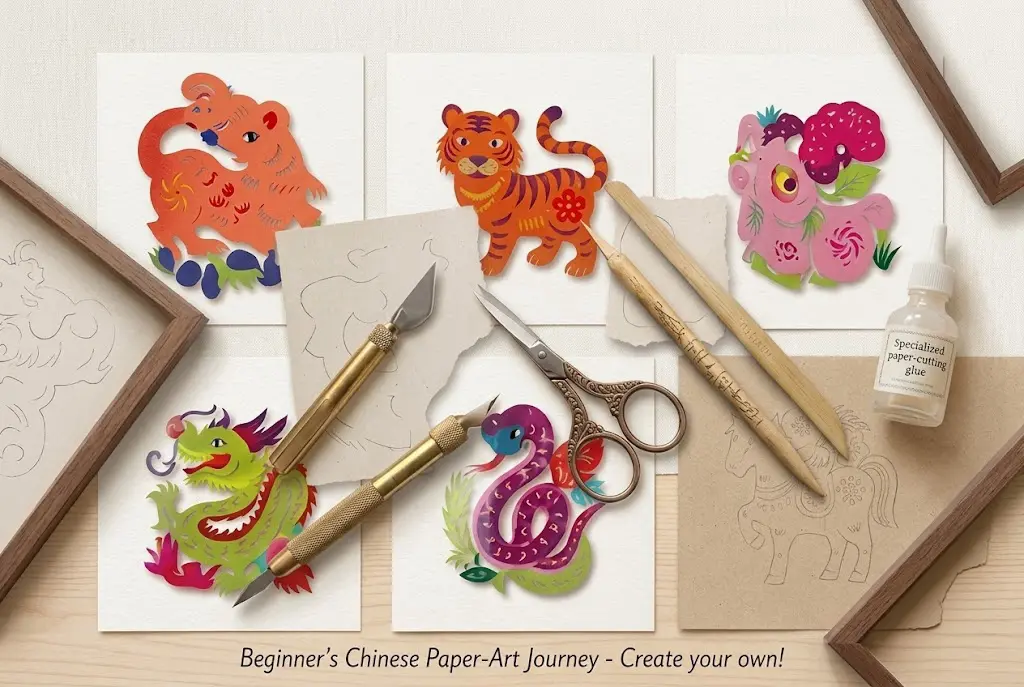
Chinese Paper Cutting Templates: Start Free or Get the Complete PDF Set
If your goal is to print a template now, start here. Try a free zodiac design first, or use the complete collection when you want all twelve animals in coordinated A4 and US Letter PDF formats.
Free Chinese Zodiac Paper Cutting Templates
Browse the twelve zodiac animals, use the year guide to find a sign, and try an individual beginner-friendly printable before moving to a complete collection.
- 12 zodiac animals to browse
- Free individual printable designs
- Beginner-friendly options
- Zodiac-year guidance
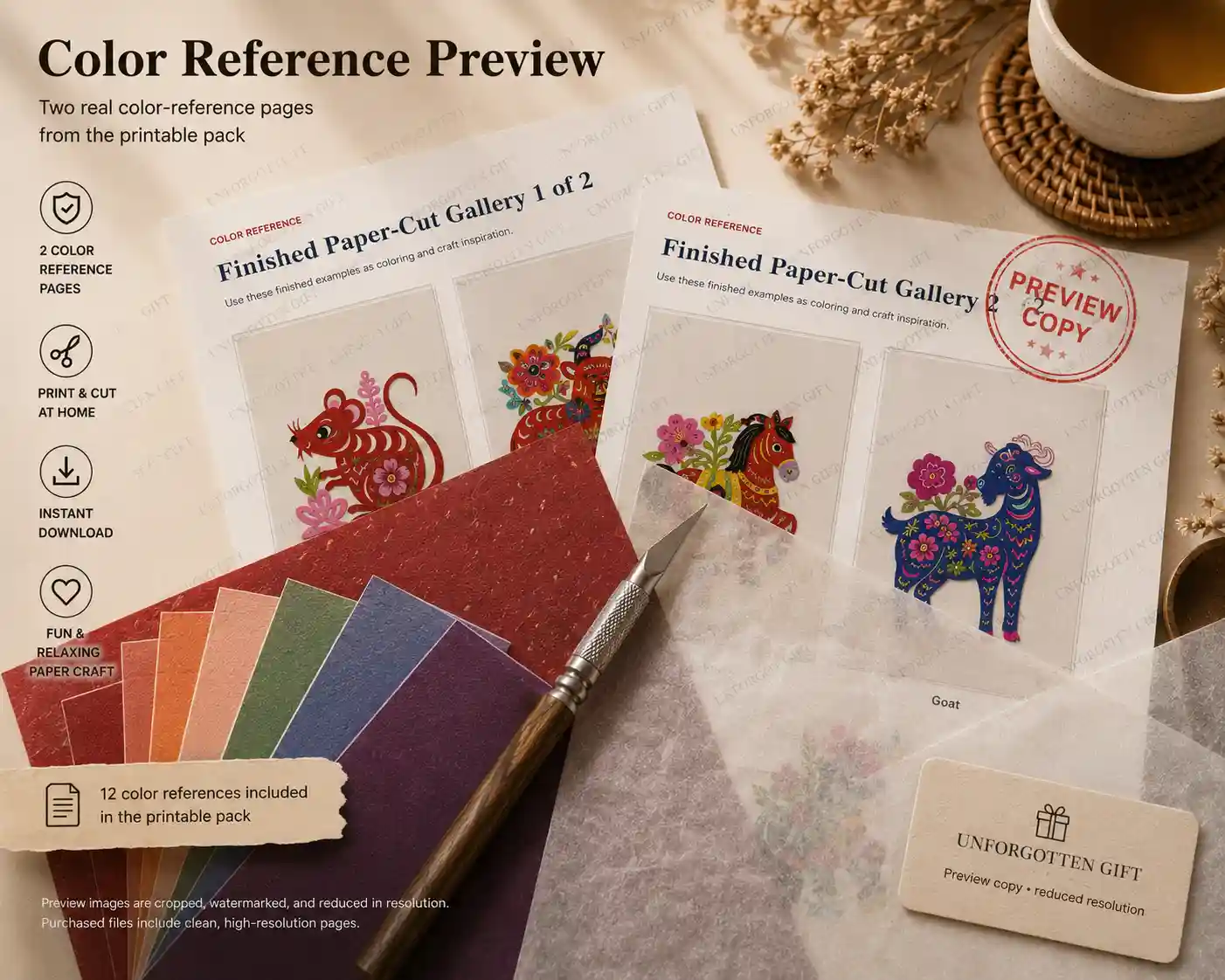
12 Chinese Zodiac Paper Cutting Templates PDF
$2.99 · complete setGet all twelve zodiac animals in one coordinated printable collection for paper-cut inspired crafts, coloring, classroom projects, cards, gifts, and display.
- All 12 zodiac animals
- A4 and US Letter PDF formats
- High-quality color reference
- Personal and classroom use
What Is the Difference Between a Pattern and a Paper-Cutting Template?
These words are often used as if they mean the same thing, but they describe different stages of the design process.
Visual idea or motif
A pattern is the subject or visual arrangement, such as a tiger, flower, butterfly, zodiac animal, border, or lucky symbol.
Prepared cutting guide
A template is a specific outline that can be printed, traced, folded, or cut. It shows the maker where paper should remain and where openings should be removed.
Completed connected artwork
The finished paper cut is the result after exterior and interior spaces have been removed without breaking the connected structure.
Modern adaptation
A paper-cut inspired printable borrows the look of paper cutting but may be designed for coloring, collage, cards, digital use, or decorative display.
More Chinese Paper Cutting Guides and Project Ideas
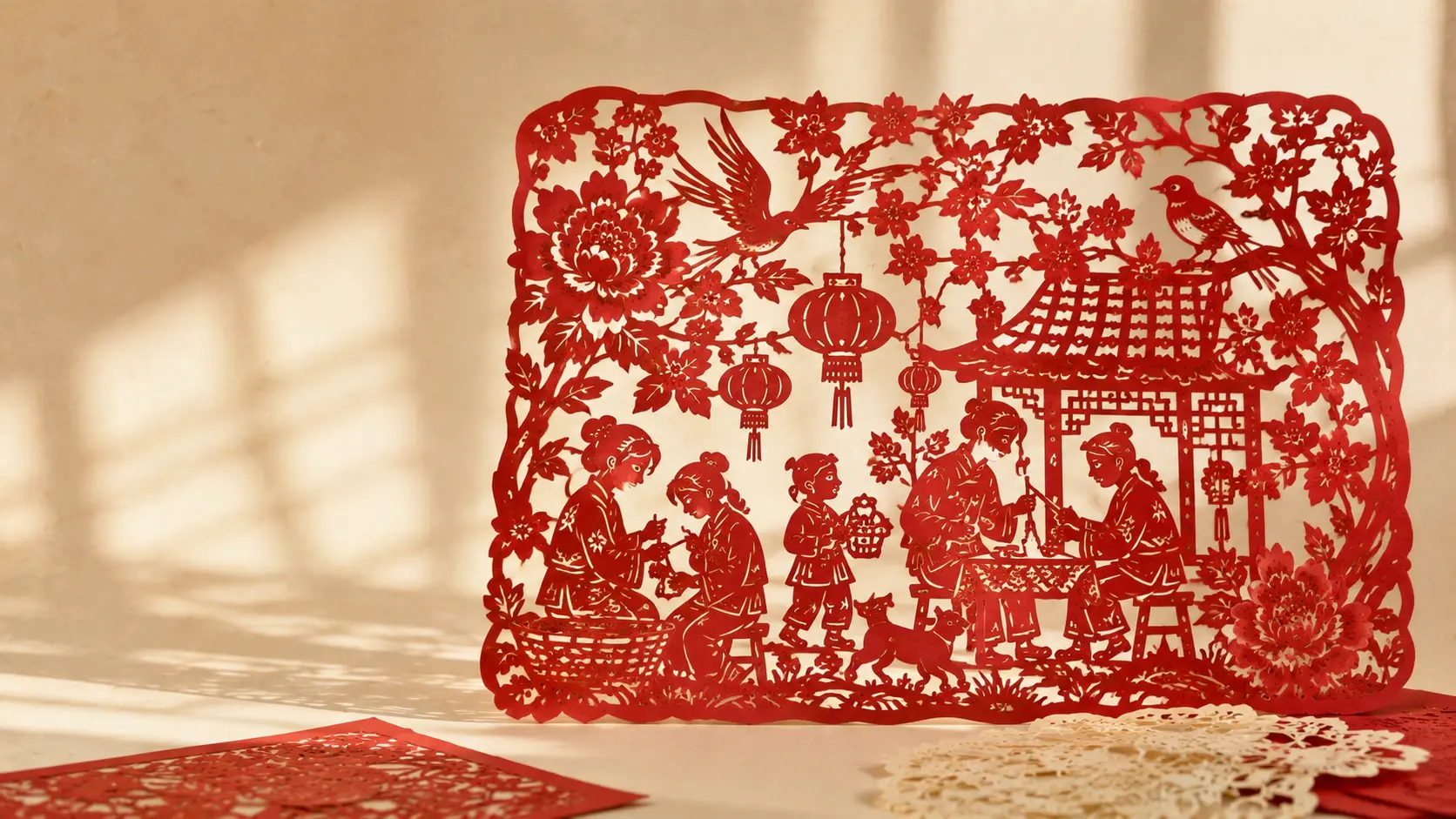 What Is Chinese Paper Cutting?Learn the history, meaning, traditional uses, and cultural context behind jianzhi.Free Chinese Zodiac TemplatesChoose one of the twelve animals, use the year guide, and try a free printable design.Complete Zodiac Printable SetSee the coordinated $2.99 collection with all twelve zodiac animals in A4 and US Letter.
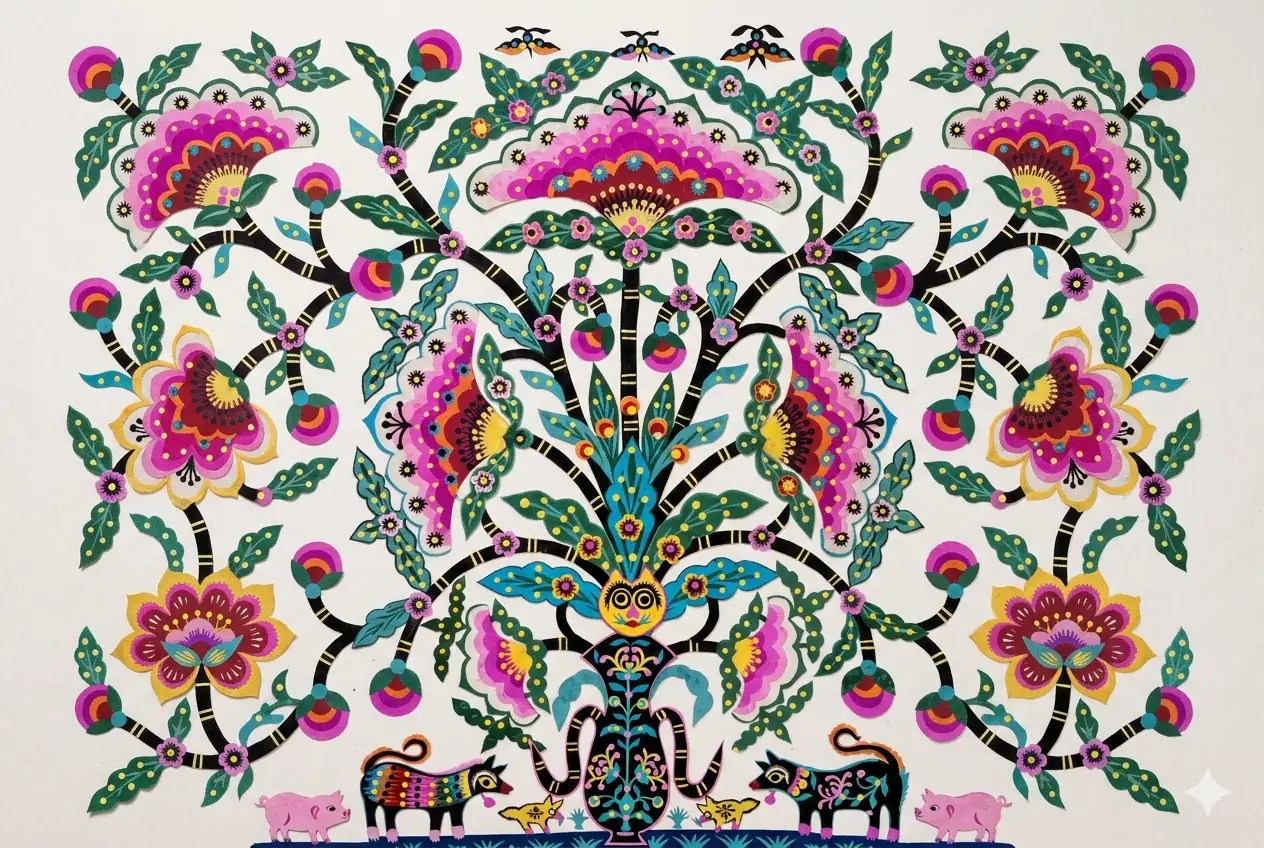 Chinese Paper Cutting IdeasUse color palettes and paper-cut inspired motifs for cards, tags, bookmarks, and gifts.
 Traditional Chinese CraftsContinue into paper cutting, embroidery, dyeing, ceramics, and other living craft traditions.
How Does a Paper-Cutting Template Work?
A successful template must remain physically connected after cutting. Every outline, opening, bridge, and fold affects whether the design stays in one piece.
Outer Contour
The outside edge defines the main silhouette. A clean, bold contour is easier to cut and keeps the finished design visually readable.
Interior Cut
An interior cut creates an opening inside the main shape. Large openings are beginner-friendly; tiny holes and sharp corners require more control.
Positive Space
Positive space is the paper that remains. It forms the visible animal, flower, figure, border, or symbol after cutting.
Negative Space
Negative space is the paper removed to reveal the design. The openings must be planned as carefully as the paper that remains.
Bridge
A bridge is a narrow strip connecting one part of the design to another. If it is too thin, the paper can tear; if it is missing, a section may fall away.
Fold or Symmetry Line
A fold line creates mirrored or repeated shapes. It reduces cutting work, but the fold must stay aligned so the two sides remain balanced.
Six Common Chinese Paper Cutting Pattern Types
Chinese paper cutting does not use one fixed visual vocabulary. Motifs change by region, family tradition, festival, ritual context, and the personal style of the maker. These six groups are practical starting points for beginners.
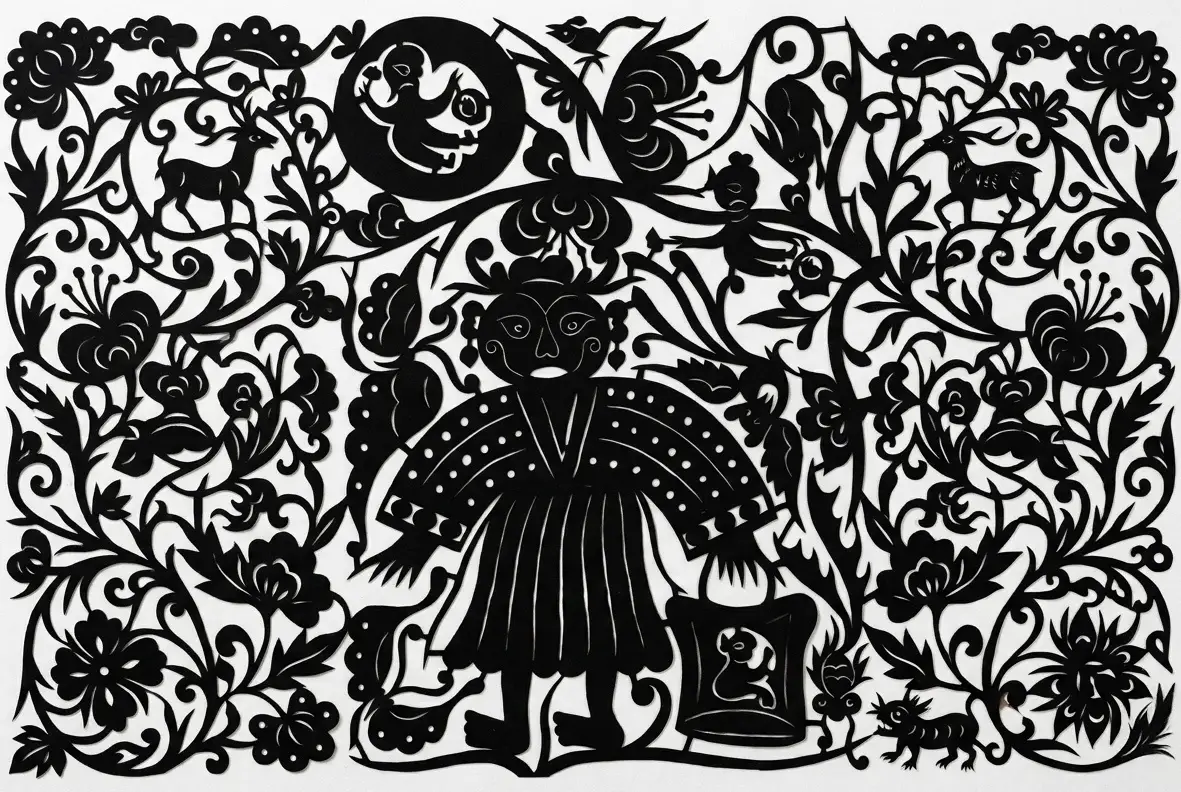
Animal and Zodiac Patterns
Tigers, fish, birds, rabbits, dragons, and the twelve zodiac animals are among the most recognizable paper-cut subjects. Good templates use clear silhouettes and keep legs, tails, horns, ears, or wings securely connected.
Beginner choice: select a large animal with few interior holes and no hair-thin details. You can explore free Chinese zodiac paper cutting templates first, or see the complete 12-zodiac printable PDF set when you want every animal in one collection.
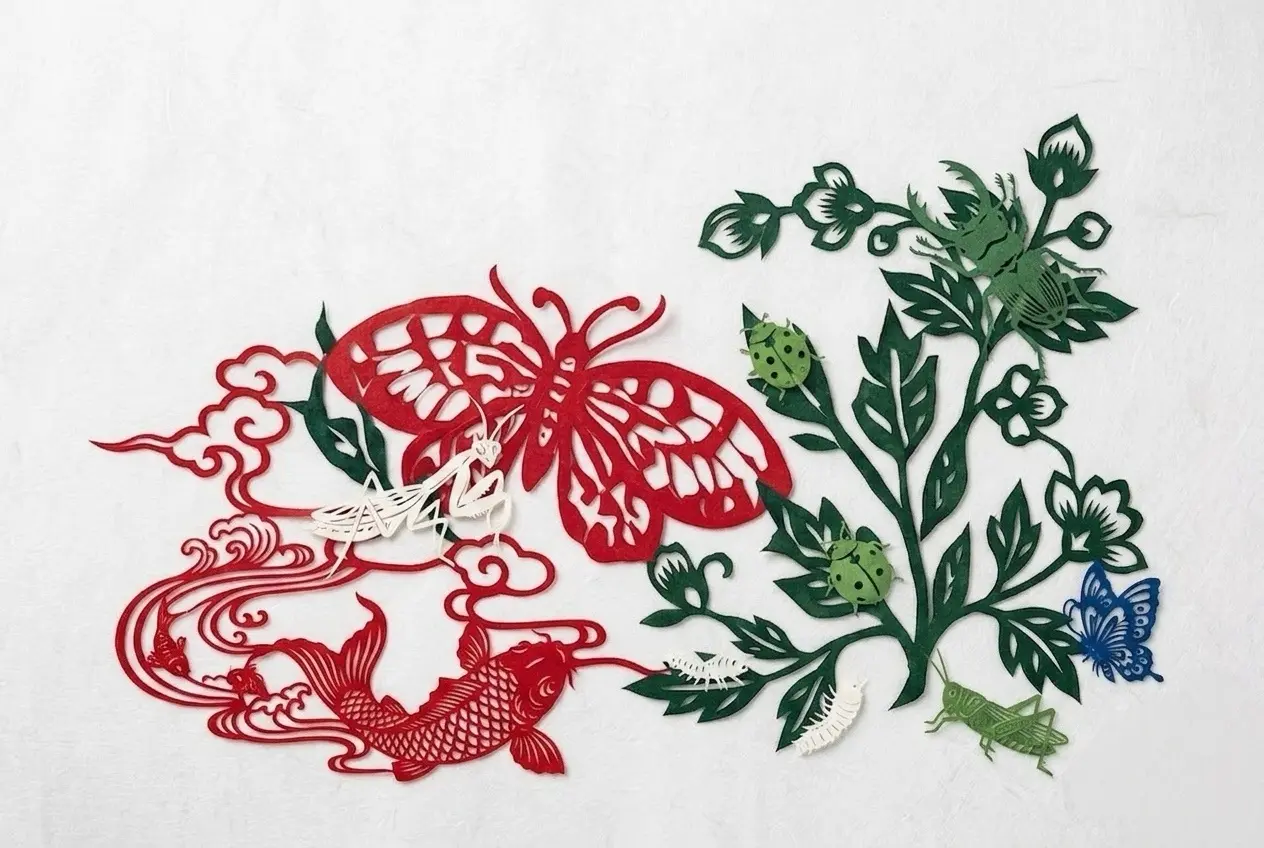
Butterfly, Bird and Insect Motifs
Butterflies, birds, and insects connect paper cutting with nature, seasonal life, textile pattern, and decorative storytelling. Their meaning changes with the species, paired motifs, region, and occasion.
Beginner choice: a simple butterfly is often easier than a bird because the body can sit on the fold and support two mirrored wings.
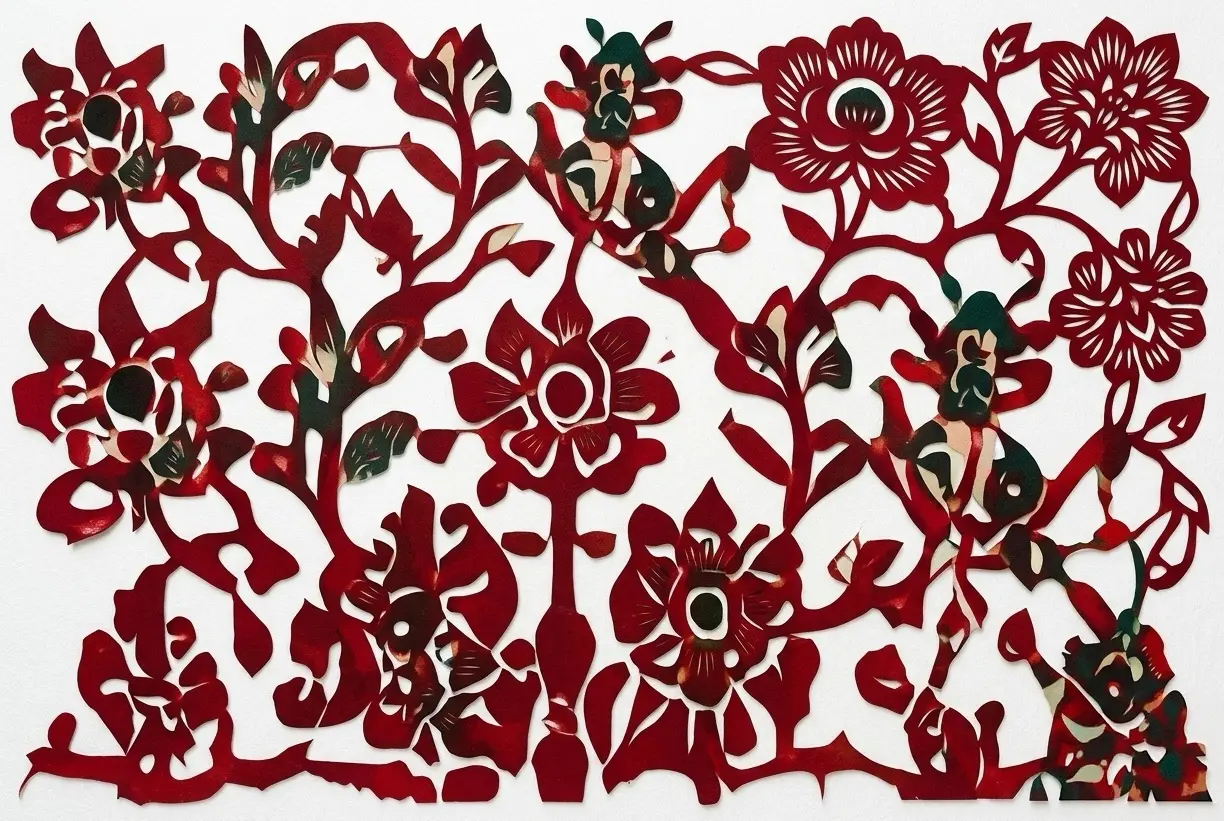
Flower, Vine and Tree Patterns
Peonies, lotus flowers, plum blossoms, vines, branches, and tree-like compositions create some of the most decorative patterns. Meanings depend on the flower, accompanying motifs, festival, and historical context.
Beginner choice: use four- or six-petal flowers with broad petals and a strong center connection.
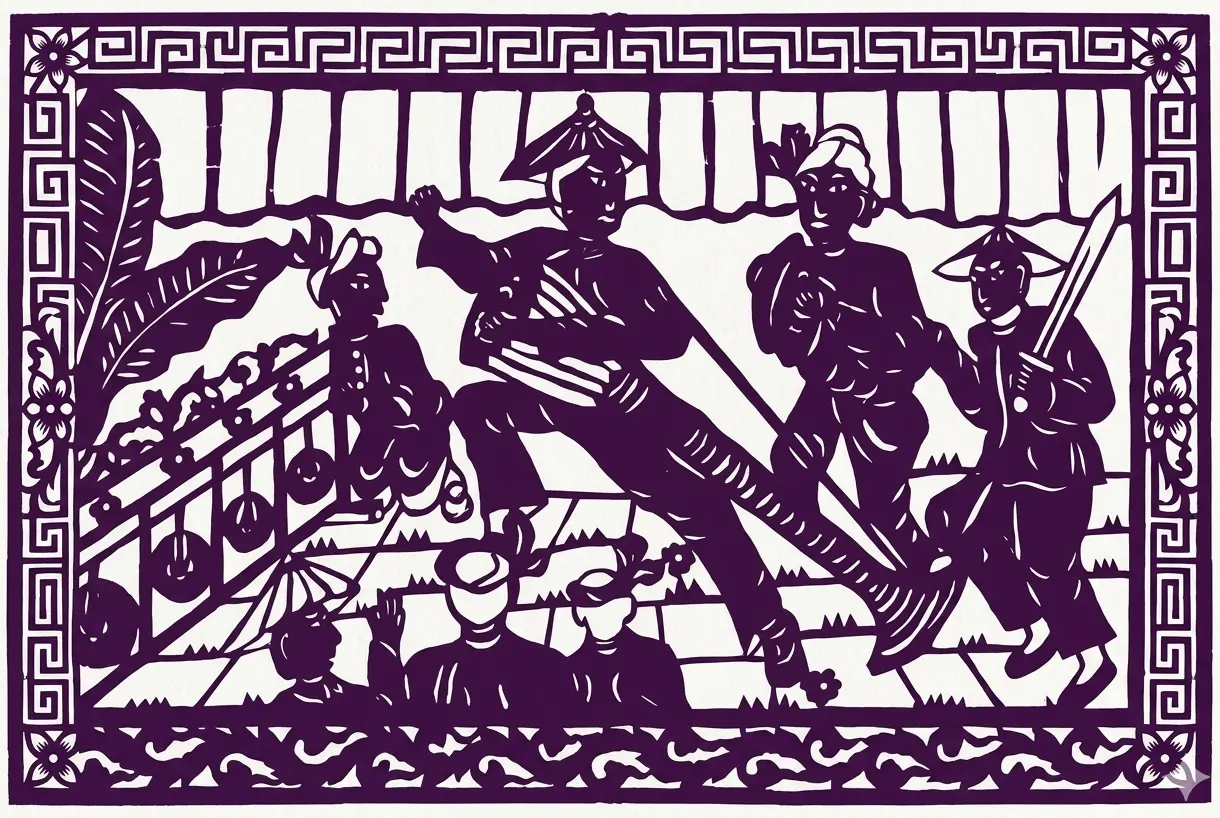
Human Figures and Story Scenes
Some paper cuts show families, festivals, farming, legends, opera characters, or scenes from daily rural life. They can act as records of collective memory as well as decoration.
Beginner choice: start with one simplified figure, a strong outer contour, and no tiny facial features.
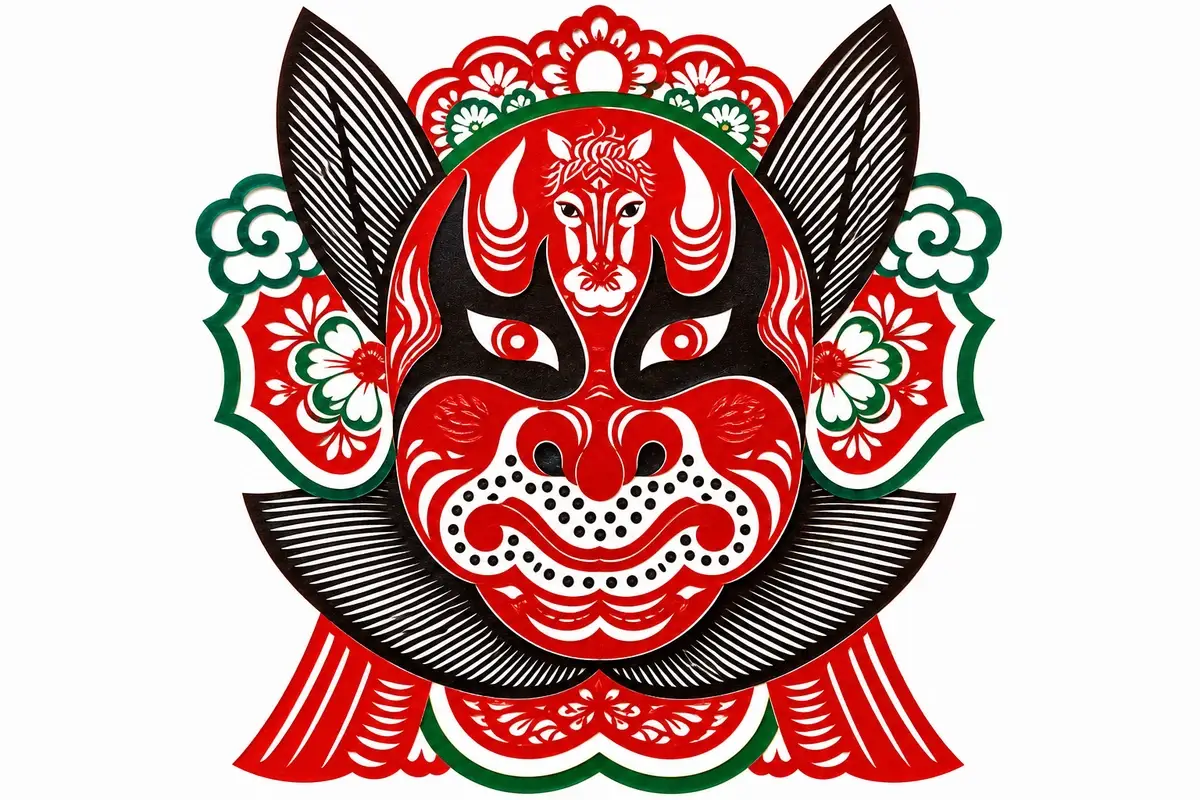
Ritual, Guardian and Protective Designs
Masks, deity figures, guardians, and ceremonial symbols require more context than ordinary decoration. Some belong to specific ritual, religious, family, or community traditions.
Beginner guidance: study the visual structure, but avoid turning an unfamiliar sacred or ritual image into a casual commercial template.
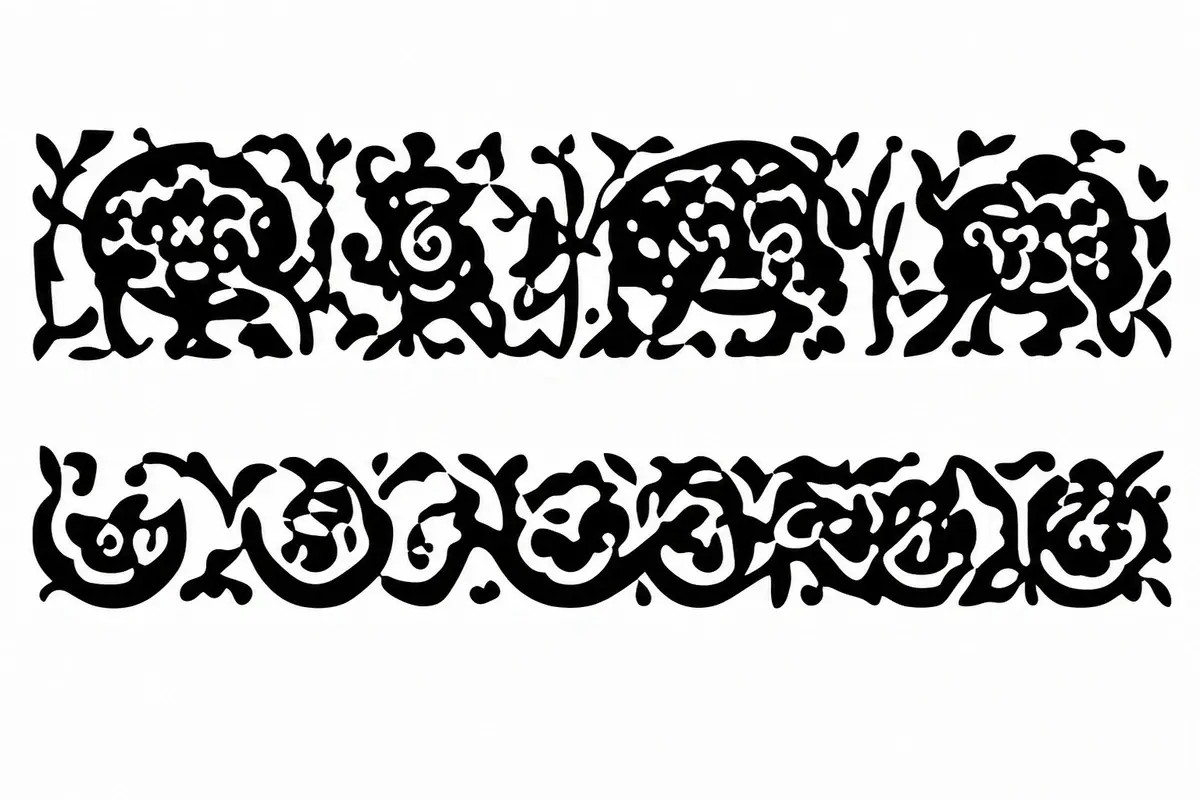
Border and Repeating Strip Patterns
Repeating strips use one unit again and again to create visual rhythm. They are practical for windows, bookmarks, classroom borders, card edges, and gift tags.
Beginner choice: begin with a broad strip and a simple leaf, diamond, flower, or geometric unit.
Is This Paper-Cutting Template Beginner-Friendly?
A beautiful pattern is not always an easy template. Before printing, check the number of small openings, narrow bridges, sharp turns, and disconnected details.
Choose This for Your First Project
- Thick outer lines and broad connections
- Large open spaces
- Fewer interior cuts
- Strong symmetry
- Clearly connected pieces
- Rounded corners
- One main subject
- No tiny facial features
Save This for Later
- Lace-like lines
- Many tiny holes
- Hair-thin bridges
- Sharp interior corners
- Overlapping figures
- Layered color assembly
- Detailed faces and fingers
- Unfamiliar ritual imagery
| Level | Template features | Recommended subjects |
|---|---|---|
| Easy | Large shapes, strong symmetry, broad bridges, fewer than about ten major interior openings. | Flowers, simple butterflies, borders, bold animal silhouettes. |
| Intermediate | More interior cuts, curved detail, several narrow bridges, less obvious symmetry. | Birds, zodiac animals, gift motifs, decorative cards. |
| Advanced | Fine linework, faces, hands, layered color, dense scenes, complex negative space. | Story scenes, portraits, multicolor work, detailed traditional compositions. |
How Chinese Paper Cutting Patterns Change by Region
Chinese paper cutting is not a single national style. Materials, local customs, tools, color, subject matter, and ceremonial use can produce very different visual results. The groups below are practical learning categories, not rigid boundaries.
Bold form and storytelling
Many northern folk traditions are associated with strong silhouettes, window decoration, animals, figures, farming, festivals, and narrative scenes. Yuxian is especially known for colored work, while other northern practices may emphasize monochrome cutting.
Fine line and ornamental rhythm
Traditions associated with places such as Foshan and Yangzhou may show finer linework, flowing floral structure, decorative detail, or different cutting and engraving approaches. Individual works still vary widely.
Context before imitation
Ethnic and community traditions, including Dai paper cutting, may have religious, ceremonial, or community-specific roles. Their symbols should be researched and attributed rather than treated as anonymous decoration.
| Tradition group | Common visual clue | Typical use | Beginner suitability |
|---|---|---|---|
| Northern folk | Bold silhouette, animals, figures, narrative scenes, monochrome or colored work. | Windows, festivals, homes, storytelling. | Medium; choose simplified forms. |
| Southern decorative | Finer lines, ornamental flowers, flowing rhythm, refined detail. | Decoration, display, skilled craft practice. | Medium to advanced. |
| Community-specific | Symbols and structures linked to local ceremonial or social context. | Religious, ceremonial, or community use. | Research first. |
Ku Shulan: A Colorful and Personal Paper-Cutting Language
Ku Shulan is remembered for highly personal, colorful compositions that bring together figures, flowers, animals, symbols, and dense decorative forms. Her work is useful here because it shows why Chinese paper cutting cannot be reduced to one red, symmetrical template style.
Beginners can study the bold central figures, layered color, repeated motifs, and storytelling rhythm. The lesson is not to copy a finished composition, but to notice how a maker builds an individual visual language from familiar forms.
Associated with rural Shaanxi and a deeply personal folk-art practice.
Layered color, central figures, dense flowers, animals, and repeated decoration.
Her work challenges the idea that all paper cuts are anonymous, monochrome, or purely symmetrical.
Choose a Paper-Cutting Pattern by Project
The best template depends on your skill level and what you plan to make. A design that works on a large window may become too fragile when reduced to a small gift tag.
| Project | Best pattern type | Folded or flat | Main skill | Difficulty |
|---|---|---|---|---|
| Window flower | Flower or geometric motif | Folded | Symmetry | Easy |
| Border strip | Repeating border | Folded or flat | Repetition | Easy |
| Gift tag | Flower, bird, or small animal | Flat | Clean outline | Easy |
| Greeting card | Butterfly, flower, or zodiac animal | Flat | Layering and placement | Easy to intermediate |
| Classroom craft | Large animal or simple symbol | Flat | Safe cutting | Easy |
| Framed decoration | Animal, figure, or story scene | Flat | Fine detail | Intermediate |
| Layered color artwork | Figure, flower, or narrative scene | Multiple flat layers | Assembly | Advanced |
Paper, Printing and Cutting Basics
A good template can still fail if the paper is too thick, the print scale changes, or the cutting tool is unsuitable for the smallest openings.
Start light and forgiving
- Ordinary printer paper works for practice.
- About 80-120 gsm suits many beginners.
- Slightly heavier paper can help cards and display.
- Very thick cardstock is harder to fold and cut.
Control size and scale
- Start at 100% scale.
- Check whether the file is A4 or US Letter.
- Avoid automatic enlargement.
- Print a draft before specialty paper.
- Keep fold lines visible.
Match the tool to the opening
- Small scissors suit simple folded patterns.
- A craft knife helps with interior spaces.
- Use a cutting mat beneath knife work.
- A ruler helps size borders and strips.
- Children need age-appropriate tools.
Respectful Use, Attribution and Copyright
Traditional subject matter does not mean every modern drawing, museum photograph, artist composition, or printable file is free to reproduce.
Traditional motifs and modern works
Flowers, animals, zodiac signs, and lucky motifs may have long histories. A specific illustration, photograph, template, or contemporary artwork can still be protected.
Artist work is not a free template
Use museum and artist works for research unless the rights statement clearly allows reproduction. Create your own structure rather than tracing an identifiable composition.
Research ritual imagery
Guardian, religious, ceremonial, and community-specific designs may require attribution and cultural context before adaptation.
State file permissions clearly
Every download should explain whether personal use, classroom use, commercial use, resale, or redistribution is allowed.
Describe modern redraws honestly
If a template is newly illustrated, digitally redrawn, or AI-assisted, identify it as a modern design rather than presenting it as an anonymous historical original.
Do not resell download files
A free or purchased template may permit personal and classroom projects without permitting file resale, sharing, or redistribution.
Frequently Asked Questions
Where can I find free Chinese paper cutting templates?
Start with the free Chinese zodiac paper cutting templates. You can browse all twelve zodiac animals, use the year guide, and choose an individual printable design to try before moving to a complete set.
Are Chinese paper cutting templates available as PDF files?
Yes. The complete 12-zodiac printable set is available in A4 and US Letter PDF formats. The free template page is the better starting point if you want to try an individual design first.
What is the easiest Chinese paper cutting pattern for beginners?
Flowers, simple butterflies, repeating borders, and bold animal silhouettes are usually easiest because they use symmetry, larger open spaces, and fewer fragile connections.
Do Chinese paper cuts have to be red?
No. Red is strongly associated with celebration and good fortune, but Chinese paper cutting can also use black, white, dyed, painted, or layered colored paper depending on region, purpose, and artist.
What paper is best for printable paper-cutting templates?
Ordinary 80-120 gsm printer paper is suitable for practice. Thinner paper folds more easily, while slightly heavier paper can work better for cards and display.
Should beginners use scissors or a craft knife?
Scissors work well for folded patterns and outer contours. A craft knife is better for small interior spaces but should be used with a cutting mat and appropriate safety precautions.
Can children use Chinese paper cutting templates?
Yes, but templates should use large shapes, thick connections, and age-appropriate scissors. Sharp craft knives require direct adult supervision.
Can traditional Chinese paper cutting patterns be used commercially?
Traditional motifs may be old, but specific drawings, templates, museum images, and modern artworks may still be protected. Check the source, rights statement, and license before commercial use.
Sources and Further Reading
These sources provide cultural background and examples. They should support, not replace, careful comparison of individual works and local traditions.
- UNESCO Intangible Cultural Heritage: Chinese paper-cut – background on cultural functions, transmission, and social use.
- Visit Beijing: Ku Shulan and paper-cutting art – artist and cultural context.
- People’s Daily Online: Chinese paper-cutting coverage – examples of contemporary cultural presentation.
- Yunnan cultural resource on paper cutting – regional and community context.