How Long Should Tie Dye Sit Before Rinsing? 6–24 Hour Guide
Getting the timing right is key to bright, long-lasting results. Tie dye usually sits 6–24 hours before rinsing, and for most cotton projects, 12–24 hours or overnight gives the dye more time to bond before the first rinse.
This beginner guide explains when to rinse tie dye, what happens if you rinse too early, whether overnight is enough, and how to rinse your project without washing away the color.
Quick Answer: How Long Should Tie Dye Sit Before Rinsing?
For most cotton projects made with fiber-reactive dye, let tie dye sit for 12–24 hours before rinsing. Overnight is the easiest beginner default. A shorter 6–8 hour wait may work when the dye kit specifically allows it, but it is not a universal rule. Always follow the current instructions for your dye brand and fiber type because one-step kits, fiber-reactive dyes, and all-purpose dyes do not use exactly the same process.
After checking the waiting time, your next step is usually rinsing, washing, or preventing fading. Use our Tie Dye Guide to choose the right next step for patterns, waiting time, first wash, fading, mistakes, or safety.
How Long to Let Tie Dye Sit: 6–24 Hour Timing Chart
Use this timing chart to match your project to the safest rinse window. For most cotton tie dye, overnight is the best default.
6–8 Hours
A common minimum for some one-step kits. Use it only when the package instructions allow a shorter batching time.
8–12 Hours
A practical middle range when the product label permits it and the fabric is staying warm and damp.
Overnight
For cotton with fiber-reactive dye, overnight is the easiest beginner default when the product instructions permit it.
24 Hours
Useful for fiber-reactive cotton in cooler rooms or thicker fabric. Waiting beyond 24 hours rarely improves the result.
Does Every Type of Tie Dye Need the Same Waiting Time?
When deciding how long should tie dye sit before rinsing, first check the dye system, fabric, room temperature, and the current instructions supplied with the product. The 6–24 hour range is a useful overview, but dye chemistry determines the safest timing for the actual project.
Follow the current kit directions. Some kits allow a shorter minimum wait, while others produce stronger results when left longer.
For many cotton projects, 12–24 hours while the fabric stays warm and damp is a practical working range.
These methods may use different temperatures, additives, or setting steps. Do not apply the cotton fiber-reactive rule automatically.
Step-by-Step Guide: From Dyeing to Rinsing
The sitting time matters, but the steps before and after rinsing matter too. Follow this simple order to help the dye bond properly and avoid dull or muddy colors.
Prepare Your Fabric
Pre-wash cotton fabric to remove sizing or residue. Slightly damp fabric usually helps the dye spread more evenly.
Apply the Dye
Saturate each folded section well, but avoid flooding the fabric so much that the colors turn muddy.
Wrap and Wait
Wrap the fabric or place it in a sealed bag so it stays damp. For fiber-reactive dye on cotton, aim for 12–24 hours unless the product says otherwise.
Rinse Safely
Start with cold water and rinse gently until the water begins to run clearer. Do not scrub the fabric harshly.
Dry and Finish
Wash separately with mild detergent, then air dry when possible to help protect the fresh color.
How Long Should Tie Dye Sit Before Rinsing in Different Conditions?
A 6-hour wait and a 24-hour wait can produce very different results. Before rinsing, check these four factors so you do not wash out the color too soon.
Fabric Type
Cotton and other natural fibers usually hold dye better than synthetics, so they are ideal for longer sitting times.
Dye Type and Instructions
Fiber-reactive dye, one-step kits, and all-purpose dye may require different timing. Use the product label as the primary rule.
Room Temperature
A cooler room can slow the dye reaction. If the fabric feels cold, waiting closer to 24 hours is safer.
Desired Color Intensity
For deeper, brighter colors, give the fabric more time before rinsing. Pale or pastel designs may need less time.
Common Problems & Fixes
If your tie dye looks faded, muddy, or uneven after rinsing, the problem often started before the rinse. Use these quick fixes for your next project.
Color Bleeding
Rinse with cold water first, then wash separately. Avoid hot water during the first rinse.
Uneven Color
Make sure the dye reaches both sides of the folds and that the fabric stays wrapped while it sits.
Faded Colors
Wait longer, use enough dye, and wash gently. Rinsing too early is one of the most common causes.
Muddy Pattern
Use fewer colors in one area and avoid over-saturating the folds until every color blends together.
What Happens If You Rinse Tie Dye Too Early?
If you rinse tie dye too early, the dye may not have enough time to bond with the fabric. The project can still look colorful while wet, but the final result may dry lighter, fade faster, or lose contrast after the first wash.
Colors may look faded
Rinsing too soon can wash away dye before it has fully set, especially on cotton fabric.
Patterns may bleed
Loose dye can spread into lighter areas and make the design look muddy or less defined.
The first wash may remove more color
If the dye is not bonded well, more color may rinse away during washing.
You may need a fix
If your project already went wrong, use our guide to fix common tie dye mistakes.
Can Tie Dye Sit Too Long Before Rinsing?
Leaving tie dye overnight is usually fine. But leaving damp fabric sealed for several days is not always better. Once the dye reaction slows down, extra waiting may not make the color much stronger, and damp fabric can start to smell if it sits too long.
- Overnight: usually safe and often ideal for cotton tie dye.
- 24 hours: still common for stronger color, especially in cool rooms.
- Several days: not usually necessary and may cause odor or mildew if the fabric stays damp.
How to Rinse Tie Dye Without Ruining the Color
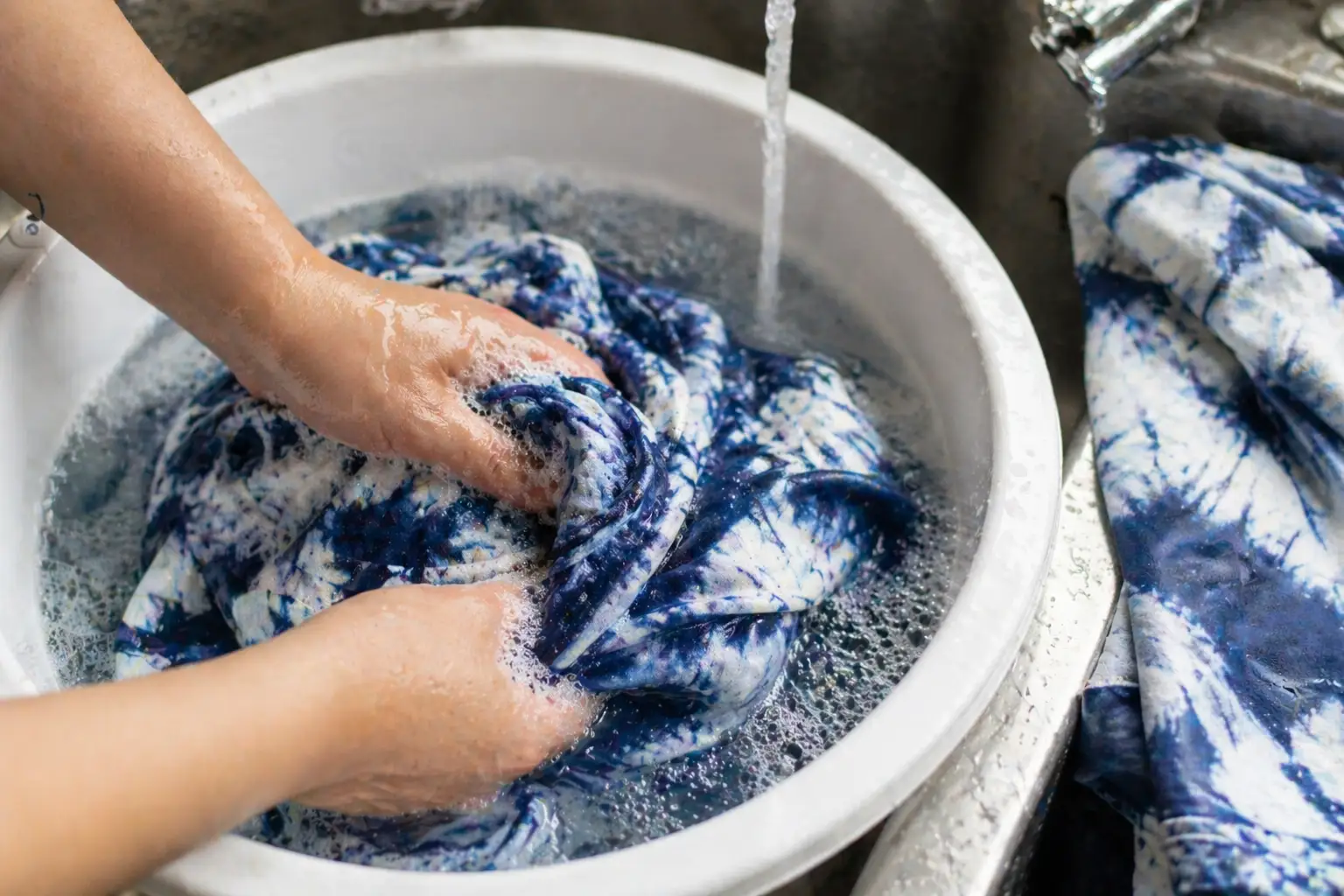
Once the dye has had enough time to sit, rinsing is where many beginner projects go wrong. The goal is to remove loose dye slowly without shocking the fabric or washing away color that has not fully bonded.
Start with Cold Water
Rinse the tied fabric under cold running water first. This helps remove excess dye gradually.
Wash Separately
Wash new tie dye items alone for the first wash, especially if the colors are very saturated.
Use Mild Detergent
Avoid bleach or harsh cleaners. A gentle detergent is enough for the first proper wash.
Air Dry When Possible
Hang dry or use low heat. Strong heat too early can make delicate colors look dull faster.
For a fuller washing guide, read how to wash tie dye without ruining the color.
Is Freshly Rinsed Tie Dye Safe to Wear?
Freshly dyed fabric should be rinsed, washed, and dried before wearing. Wet dye can stain skin, and poorly rinsed fabric may still contain loose dye residue. If you have sensitive skin, wash the item separately once or twice before wearing it for a long time.
If skin contact is your main concern, read our safety guide on whether tie dye is safe for skin. If you are worried about swallowing dye, dye powder, kids, or pets, read is tie dye toxic.
More Questions About Tie Dye Sitting Time
For most cotton projects using fiber-reactive dye, the practical answer to how long should tie dye sit before rinsing is 12–24 hours, with overnight being the easiest beginner default. The answers below cover the most common timing questions.
Is 6 hours long enough for tie dye?
When the question is how long should tie dye sit before rinsing, six hours should be treated as a minimum rather than the standard answer. It can work for light color or some kit instructions, but stronger cotton tie dye is usually safer at overnight or 12–24 hours.
Should tie dye sit overnight before rinsing?
Yes, overnight is usually the best beginner rule for cotton shirts and other natural-fiber projects. It gives the dye more time to bond before the first cold rinse.
Can tie dye sit for 24 hours?
Yes. Twenty-four hours is common when you want stronger color, when the room is cool, or when the fabric is thick. It is usually better than rinsing too soon.
What happens if I rinse tie dye too early?
The colors may look bright while wet but dry lighter, bleed more, or fade quickly after washing because the dye did not have enough time to bond with the fabric.
Does tie dye need to stay wet while it sits?
Yes. The fabric should usually remain damp while the dye reacts. Keep it wrapped or sealed, but do not leave it sitting in a pool of excess dye.
Do I rinse tie dye before washing it?
Yes. Rinse the project first, beginning with cold water, until much of the loose dye is removed. Then wash it separately with mild detergent.
Can tie dye sit longer than 24 hours?
It can, but extra waiting usually adds little once the dye reaction has slowed. Leaving damp fabric sealed for several days can also create odor or mildew.
Does the dye brand change how long tie dye should sit?
Yes. Dye chemistry and kit instructions vary. Use the current product label first, then use the 6–24 hour chart as general context rather than replacing the manufacturer’s directions.
Trusted Resources
Tie dye results can vary by dye brand, fiber content, and technique. These external resources are useful references if you want to compare instructions before rinsing or washing your project.
Tulip Tie-Dye Instructions
Helpful for checking beginner tie dye steps, including setting time, rinsing, washing, drying, and wearing.
Visit resource ↗Rit Dye Tie-Dye Guide
Useful for understanding tie dye methods, folding approaches, dye application, and fabric preparation.
Visit resource ↗Dharma Fiber Reactive Dye Instructions
Useful for natural fibers such as cotton, rayon, hemp, and linen when using fiber-reactive dyes.
Visit resource ↗