56 Ethnic Groups in China: A Beginner Guide
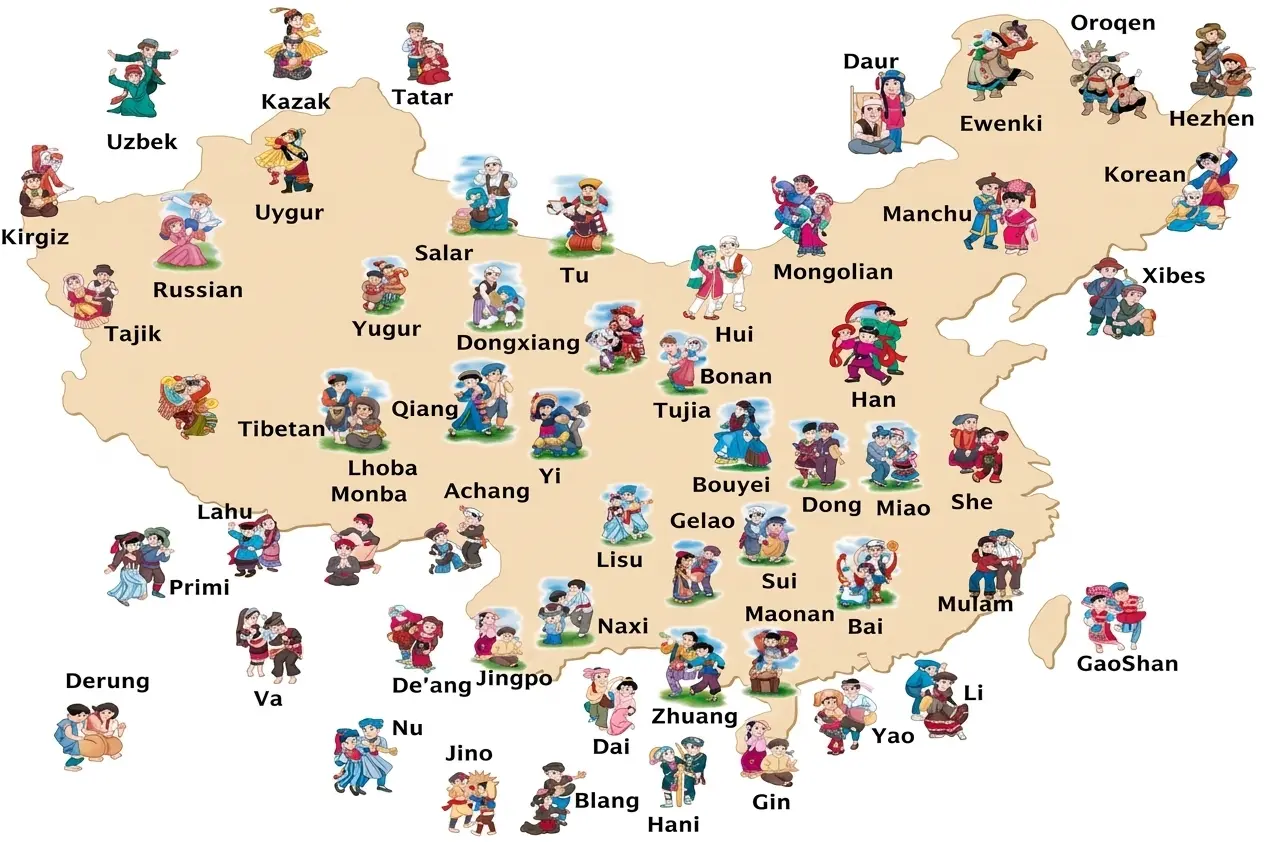
The phrase 56 ethnic groups in China refers to China’s officially recognized ethnic groups, including the Han majority and 55 ethnic minority groups.
This beginner guide explains what the term means, which groups are often mentioned, and how ethnic culture connects to traditional clothing, festivals, crafts, and regional identity.
What Does “56 Ethnic Groups” Mean in China?
“56 ethnic groups” means the officially recognized ethnic groups in China. The Han Chinese make up the largest group, while the remaining 55 groups are often described as ethnic minorities.
These groups are not the same in language, clothing, food, music, festivals, religious customs, or regional traditions. Some communities are widely known for textile arts, silverwork, embroidery, batik, tie dye, architecture, or local festivals.
The Han are the largest ethnic group in China and make up most of the population.
The other 55 recognized groups include communities such as Zhuang, Hui, Tibetan, Uyghur, Miao, Yi, Bai, Buyi, Dong, Yao, and others.
Ethnic culture is not only clothing. It also includes language, memory, family customs, craft skills, festivals, and everyday life.
Major Ethnic Groups in China You May Hear About
China has many different ethnic communities. A beginner guide does not need to memorize all 56 at once. It is more useful to understand a few commonly mentioned groups and how they connect to region, language, religion, clothing, or craft traditions.
The largest group
The Han are the majority population in China and are present across the country.
A large minority group
The Zhuang are one of China’s largest ethnic minority groups, often associated with southern China.
Culture and religion
The Hui are widely distributed and are often associated with Islamic cultural traditions in China.
Highland culture
Tibetan culture is often connected with plateau geography, religious traditions, language, and distinctive visual culture.
Northwestern culture
Uyghur culture is often associated with Xinjiang, Central Asian influences, music, food, language, and regional identity.
Textile and craft connections
These groups are often discussed in relation to embroidery, batik, indigo dyeing, silver ornaments, festivals, and traditional clothing.
How Ethnic Groups Connect to Chinese Traditional Crafts
Ethnic culture often becomes visible through handmade objects: textiles, embroidery, batik, tie dye, silver jewelry, paper cutting, architecture, and festival objects. These crafts are not just decoration. They can carry family memory, regional identity, and symbolic meaning.
Embroidery and batik
Miao culture is strongly connected with embroidery, silver ornaments, and wax-resist batik. Learn more about Miao embroidery meaning and symbolism and how to identify handmade Chinese batik.
Dali indigo tie dye
Bai culture in Dali, Yunnan is closely connected with blue-and-white indigo tie dye. You can explore this craft in our guide to Dali Bai Chinese tie dye.
More than one craft style
Ethnic craft traditions are part of a larger handmade landscape. For a broader starting point, see our guide to traditional Chinese crafts.
How Different Cultures Coexist in China
China is often described as culturally unified, but that does not mean every region or community is the same. Different groups may have their own languages, clothing styles, religious practices, festival customs, foods, music, and craft traditions.
At the same time, these communities also interact with wider Chinese society through shared institutions, education, trade, migration, tourism, and everyday life. Culture is not frozen in a museum case. It changes, adapts, and continues.
Why China’s Ethnic Diversity Still Matters Today
Ethnic diversity matters because it helps explain why Chinese culture is not one flat image. Different communities have shaped regional food, clothing, festivals, music, architecture, and handmade objects.
For a craft and cultural gift website, this background is especially useful. A piece of indigo tie dye, batik fabric, embroidery, or silver jewelry becomes more meaningful when readers understand the culture and community behind it.
This is why articles about ethnic groups should connect naturally to textile guides, craft explanations, and future cultural gift pages, not sit alone as a generic history post.
Related Chinese Culture and Craft Guides
These guides connect this ethnic culture article to your wider Chinese crafts, textile traditions, and cultural gift content cluster.
FAQ: 56 Ethnic Groups in China
What are the 56 ethnic groups in China?
The 56 ethnic groups in China refer to China’s officially recognized ethnic groups. The Han are the largest group, and the other 55 are commonly described as ethnic minority groups.
What is the largest ethnic group in China?
The Han Chinese are the largest ethnic group in China and make up most of the population.
Which ethnic groups are known for textile crafts?
Several groups are known for textile traditions, including Miao embroidery and batik, Bai indigo tie dye, Buyi textile craft, and Yi clothing and pattern traditions.
Are ethnic crafts still made today?
Yes. Many ethnic crafts continue today through family practice, local workshops, tourism experiences, cultural preservation projects, and contemporary design.
Why does this matter for traditional Chinese crafts?
Many traditional Chinese crafts are connected to specific regions and communities. Understanding ethnic culture helps readers understand the meaning behind patterns, materials, and handmade objects.