Is Batik Handmade or Printed? How to Tell the Difference
Batik handmade or printed? Check the back side, wax crack lines, dye depth, fabric texture, and repeated patterns. Handmade batik usually carries small irregularities, while printed batik often looks flatter and more mechanically perfect.
This guide helps you judge batik fabric, scarves, clothing, wall art, and cultural gifts before you buy.
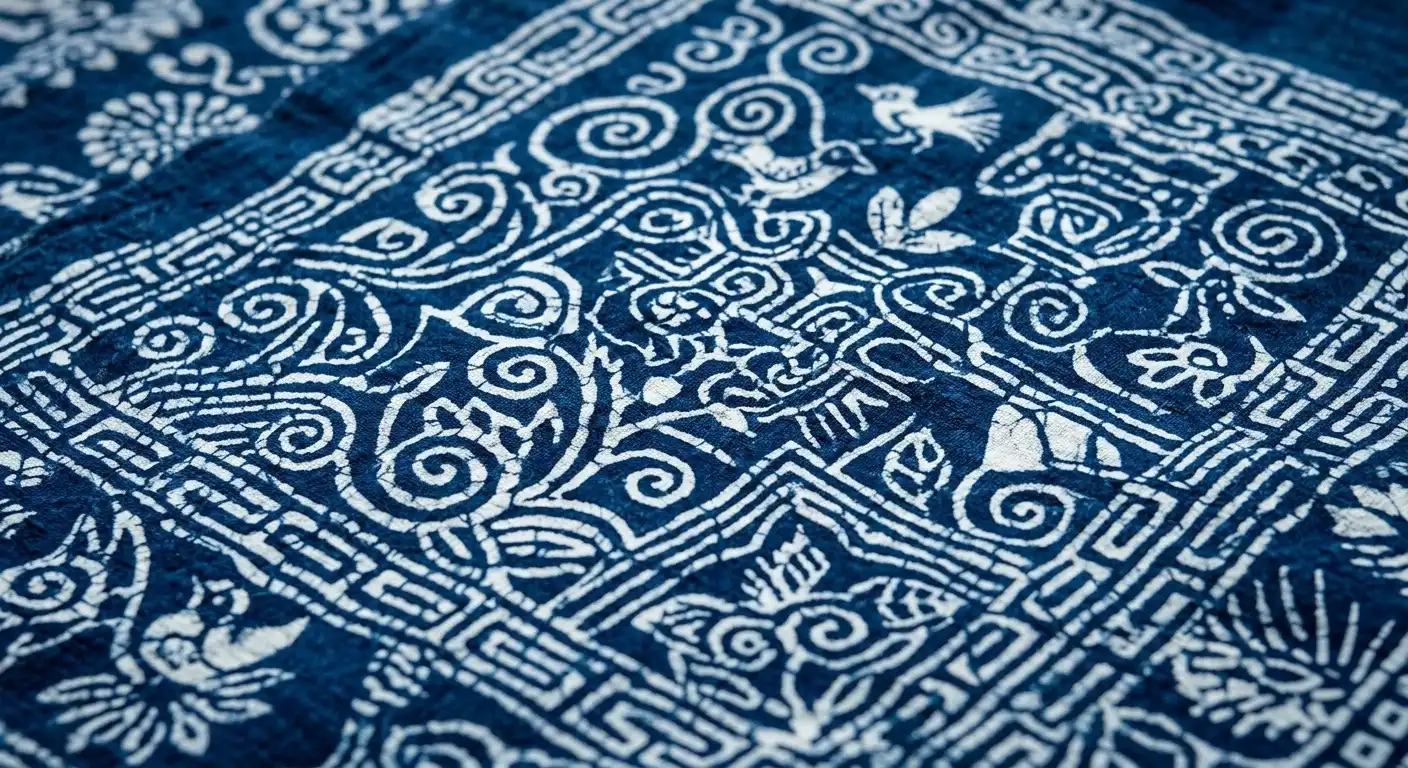
Batik Handmade or Printed? How to Tell If Batik Is Real Handmade
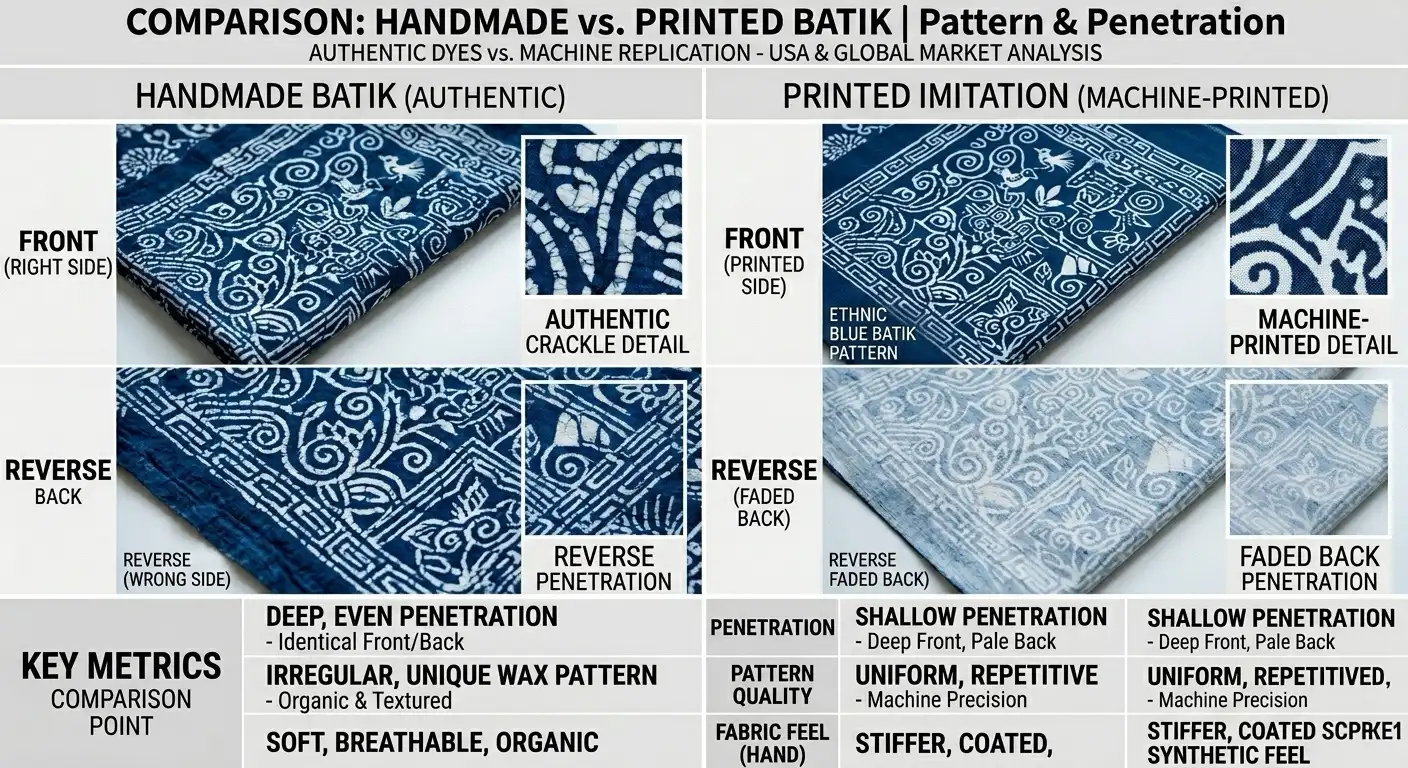
To tell if batik is handmade or printed, check whether the design appears on both sides, whether the lines show wax crackle or small irregularities, and whether repeated motifs look slightly different. Printed batik usually has flatter color, a paler back side, smoother edges, and mechanically identical repeats.
Likely handmade: the fabric has uneven wax-resist lines, visible dye penetration, natural crackle marks, and small variations between repeated motifs.
Likely printed: the pattern looks flat, the back side is pale or blank, and every motif repeats with machine-like consistency.
Flip the fabric over. If the back is much weaker than the front, it may be printed.
Look for organic wax crack lines, uneven dye, and soft hand-drawn edges.
Words like “batik style” or “batik print” often mean printed fabric, not handmade wax-resist batik.
Want to move from batik comparison to an actual tie dye project?
If this handmade batik check made you more interested in folded or bound resist dyeing, use our Tie Dye Guide to choose the right next step for patterns, waiting time, rinsing, washing, fading, mistakes, safety, and eco-friendly care.
Handmade Batik vs Printed Batik: Key Differences
Use this comparison before buying batik fabric, scarves, clothing, home decor, or cultural gifts. No single clue is perfect, but several clues together usually tell a clearer story.
| Feature | Handmade Batik | Printed Batik |
|---|---|---|
| Back side | Pattern often appears on both sides because dye enters the fabric. | Back side may look pale, faded, or nearly blank. |
| Line quality | Lines may be slightly uneven, soft, or hand-drawn. | Lines often look smooth, sharp, or digitally uniform. |
| Wax crackle | Natural crackle marks may appear where wax breaks during dyeing. | Crackle may be absent or printed as a flat imitation. |
| Color depth | Dye often feels absorbed into the textile. | Color may sit more on the surface. |
| Pattern repeats | Repeated motifs usually show small differences. | Repeats may look mechanically identical. |
| Seller details | Good sellers explain process, origin, artisan, material, or wax-resist method. | Listings may use vague wording like “batik print” or “batik style.” |
Handmade: pattern often appears on both sides.
Printed: back side may look pale or blank.
Handmade: lines may be uneven or hand-drawn.
Printed: lines often look smooth and uniform.
Handmade: natural crackle marks may appear.
Printed: crackle may be absent or flatly printed.
Handmade: repeated motifs show small differences.
Printed: repeats may be mechanically identical.
What Is Batik and Chinese Wax Dyeing?
Batik is a wax-resist dyeing technique. Wax is applied to cloth before dyeing, so the wax-covered areas resist color and form patterns.
Many people associate batik with Southeast Asia, but wax-resist dyeing also has a long history in China. In Chinese craft contexts, this technique is often called wax dyeing and is especially connected with ethnic textile traditions such as Miao batik.
Chinese handmade batik is valuable because the final textile records the drawing, waxing, dyeing, cracking, and washing process. The small irregularities are part of the craft, not a defect.
If you are comparing wax-resist batik with tied or folded resist dyeing, read our full guide to batik vs tie dye differences.
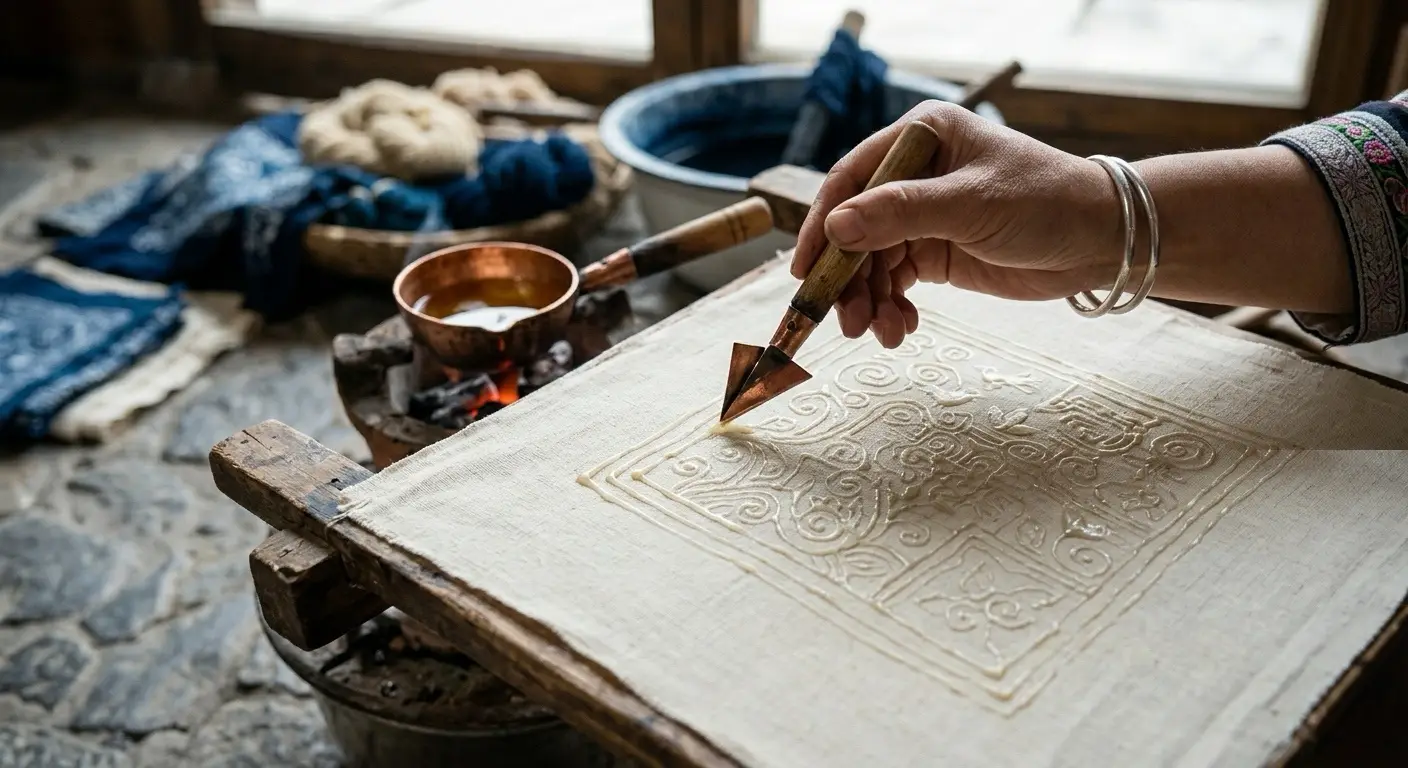
Draw with melted wax
The artisan draws or applies wax onto cloth, protecting selected areas from dye.
Dye the fabric
The fabric is dyed while wax-covered areas resist the color.
Remove the wax
The wax is removed to reveal the pattern, including soft edges and crackle textures.
7 Signs of Handmade Batik
Handmade batik is rarely perfectly uniform. The best clues are often tiny: a softened edge, a broken wax line, a slight dye change, or a motif that does not repeat exactly.
The back side still shows the pattern
Because dye enters the cloth, handmade batik often has visible pattern depth on both sides.
Wax crackle looks organic
Natural crackle lines appear when wax breaks during dyeing. They are irregular, not mechanically repeated.
Lines are slightly uneven
Hand-applied wax can create small wobbles, soft turns, and human variation.
The color has textile depth
Real dye often feels absorbed into the fabric rather than sitting only on the surface.
Repeats are not identical
Handmade motifs may repeat, but they rarely repeat with perfect machine precision.
The seller explains the process
Good listings often mention wax-resist dyeing, origin, artisan work, fabric, or natural dye context.
The price matches the labor
Handmade batik takes time. Extremely cheap “handmade” pieces deserve closer checking.
6 Signs of Printed Batik
Printed batik can still be decorative, but it should not be described as handmade wax-resist batik if the pattern was machine printed.
The back side is pale
The front may look bold while the reverse side looks faded, blank, or weak.
The surface looks flat
The pattern may sit visually on top of the fabric instead of feeling dyed through the cloth.
Motifs repeat perfectly
Mechanical repetition is a common clue, especially in mass-market yardage or low-cost scarves.
No real wax crackle appears
Crackle may be missing or printed as a flat decorative texture.
The listing says “batik print”
This phrase often means the fabric has a batik-inspired printed design, not handmade wax-resist batik.
Origin and process are vague
If the seller gives no process details, no close-up, and no back-side image, check carefully.
What to Check Before Buying Batik
Use this checklist before buying batik fabric, scarves, wall art, clothing, souvenirs, or handmade cultural gifts.
Ask for evidence, not only labels.
Words like “handmade,” “ethnic,” “traditional,” or “artisan” are not enough. A trustworthy batik listing should show close-up texture, the reverse side, process details, material information, or origin.
If your main concern is whether dyed fabric is safe to wear or touch, start with our guide: Is tie dye toxic?
Cultural Meaning of Miao Batik in China
Chinese wax dyeing is more than decoration. In Miao batik and other regional textile traditions, patterns can carry family memory, ethnic identity, local aesthetics, and symbolic meaning.
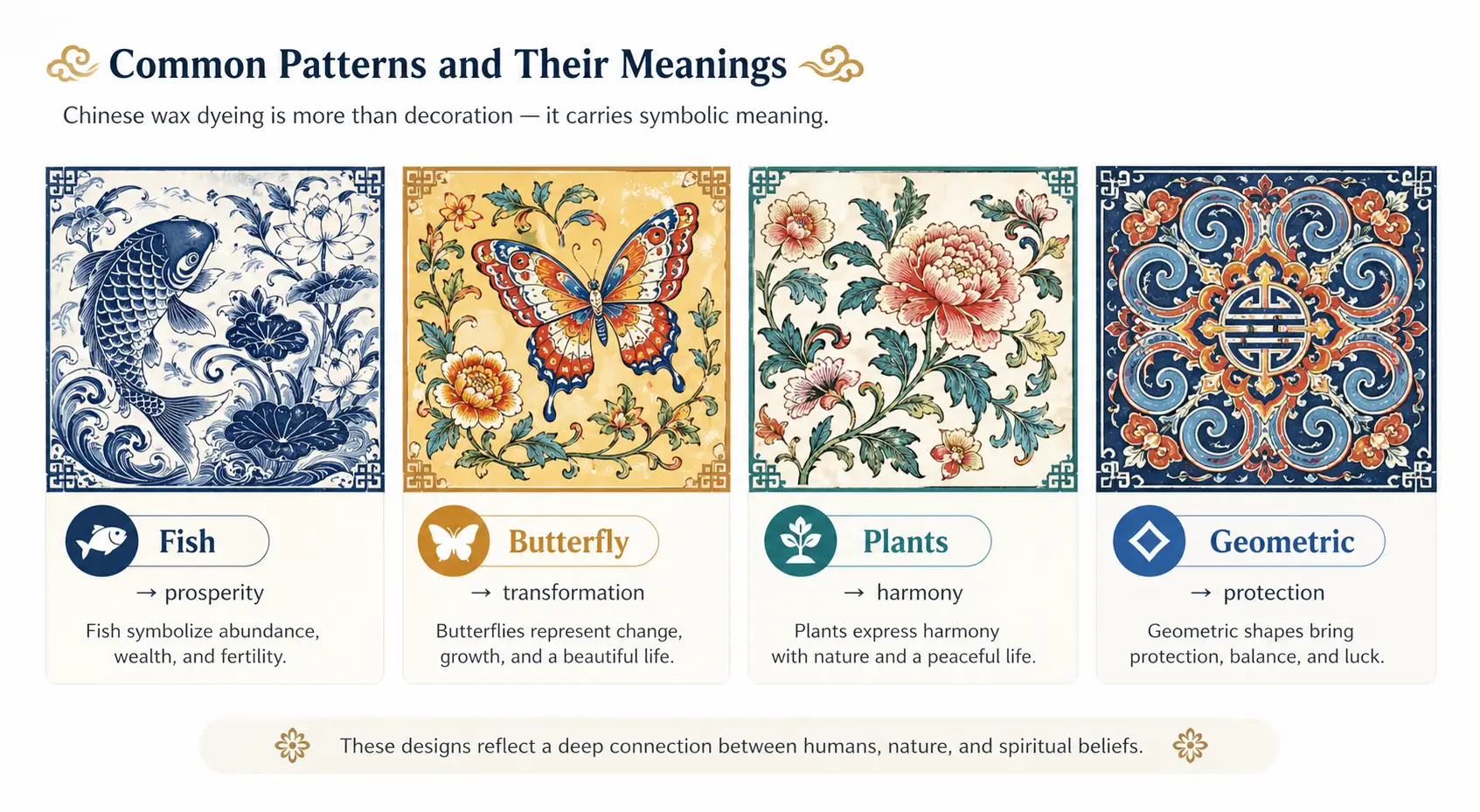
Prosperity and fertility
Fish motifs are often connected with abundance, family continuity, and good fortune.
Life and transformation
Butterfly motifs may suggest origin stories, change, and renewal.
Harmony with nature
Plant motifs connect textile design with landscape, seasons, and rural life.
Protection and balance
Repeated geometry can create rhythm, order, and symbolic protection.
For a related ethnic textile tradition, explore Miao embroidery meaning and symbolism.
Why Handmade Batik Still Matters Today
Handmade batik matters because it preserves visible evidence of human skill. A machine can copy the look of a pattern, but it cannot reproduce every small decision, pause, crack, and variation made by the hand.
Handmade batik is valuable because it cannot be perfectly copied. The slight irregularities are part of the craft, not flaws.
In regions such as Guizhou, artisans still practice wax-resist dyeing using fabric, wax, dye, and inherited pattern knowledge.
Each line is created through slow wax drawing and dyeing.
Patterns can carry local identity, inherited meanings, and community memory.
A handmade textile feels more meaningful when the receiver understands the story behind it.
You can explore broader intangible cultural heritage topics through UNESCO.
Is Handmade Batik a Good Cultural Gift?
Yes, handmade batik can be a meaningful cultural gift when the piece has clear craft context, visible handwork, and a story behind its pattern or material.
Choose meaning, not only decoration.
A handmade batik scarf, textile panel, fabric piece, or small home object becomes stronger as a gift when you can explain how it was made and what the pattern suggests.
Choose Batik with Your Eyes and Hands
The most important clue is not whether batik looks perfect. It is whether the textile still carries evidence of the hand.
When deciding whether batik is handmade or printed, look for back-side pattern visibility, wax crackle, dye depth, irregular lines, fabric texture, and clear seller information.
If you also care about whether traditional dyed textiles use plant-based or synthetic color, read: Is Chinese tie dye natural?.
This handmade batik guide also connects naturally with broader traditional craft learning. You can start from our traditional Chinese crafts guide to explore paper cutting, embroidery, porcelain, bamboo weaving, shadow puppetry, and other living craft traditions.
Related Batik, Tie Dye, and Cultural Craft Guides
Follow these paths to compare techniques, understand Chinese craft context, or continue into fabric safety and care.
FAQ: Handmade Batik vs Printed Batik
How can I tell if batik is handmade?
Look for a design that appears on both sides, slight line irregularities, wax crackle texture, dye variation, and repeated motifs that are not perfectly identical.
Does real batik look the same on both sides?
Real handmade batik often shows more pattern visibility on both sides than printed batik. The two sides may not be exactly identical, but the back should usually show dye penetration rather than a nearly blank surface.
What does “batik print” mean?
“Batik print” usually means a fabric printed with a batik-inspired pattern. It may look decorative, but it is not the same as handmade wax-resist batik.
Is printed batik fake?
Printed batik is not always fake, but it should not be sold as handmade if it was machine printed. The issue is misleading labeling.
What is Chinese wax dyeing?
Chinese wax dyeing is a wax-resist textile technique used in some ethnic traditions, including Miao batik. Wax is applied to fabric before dyeing to create patterns.
Why does handmade batik have crackle lines?
Crackle lines appear when wax cracks during dyeing, allowing dye to enter small broken lines. This creates natural texture that is hard to copy perfectly.
Is handmade batik a good gift?
Yes. Handmade batik can be a meaningful cultural gift because it combines textile skill, symbolic patterns, and cultural storytelling.