Batik vs Tie Dye for Beginners: Which Is Easier?
Batik and tie dye may look similar at first, but they are very different for beginners. Tie dye is usually faster, easier, and more forgiving, while batik gives more controlled patterns but requires wax, heat, and more patience.
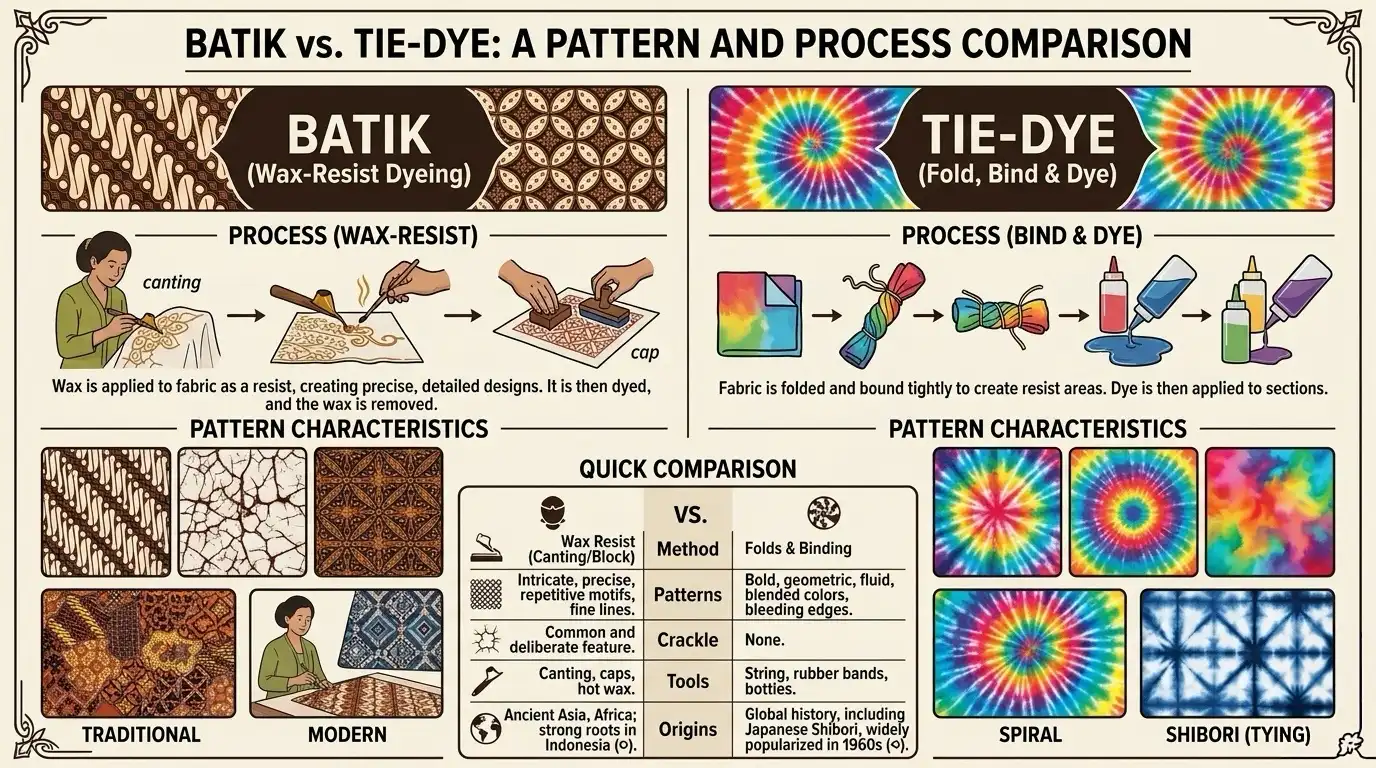
Which is easier for beginners, batik or tie dye?
Tie dye is usually easier for beginners. You can start with fabric, dye, rubber bands, gloves, and a simple folding method. Batik is more controlled and detailed, but it usually requires wax, heating tools, and more practice.
This batik vs tie dye for beginners guide is designed to help you choose the easier first textile craft before buying tools or starting a project.
If you are completely new to fabric dyeing, start with tie dye first. Once you understand how dye spreads through fabric, how folds affect color, and how resist patterns work, batik becomes easier to understand as a more advanced craft.
Ready to try tie dye instead of only comparing methods?
If you decide tie dye is the easier first craft, use our Tie Dye Guide to choose the right next step: beginner patterns, waiting time, rinsing, washing, fading, mistakes, safety, and eco-friendly care.
Open the Tie Dye Guide →Batik vs tie dye: quick comparison for beginners
The key difference is simple: batik uses wax to block dye, while tie dye uses folding, tying, twisting, or binding to shape the pattern. Both methods belong to the broader world of resist dyeing, but they feel very different for a first-time maker.
The batik vs tie dye for beginners question usually comes down to tools, time, pattern control, and how much mess you are willing to handle.
Which one should you choose as a beginner?
Your first choice depends on what you want from the project. A fast craft afternoon and a precise textile study are not the same thing, so the best beginner choice depends on time, tools, mess, and patience.
Choose tie dye if you want fast results
Tie dye is better when you want a simple first project, fewer tools, and a playful result without learning wax control.
Choose batik if you want detailed patterns
Batik is better when you care about controlled lines, traditional motifs, and a slower handmade process.
Start with tie dye if you are completely new
Most beginners should try tie dye first, then explore batik after they understand how dye spreads through fabric.
What is tie dye?
Tie dye is a fabric dyeing method where cloth is folded, twisted, tied, or bound before dye is applied. The tied areas resist some of the dye, creating soft edges, rings, spirals, stripes, or abstract color fields.
This is why tie dye is beginner-friendly. The process can be imperfect and still look interesting. You do not need to draw exact lines or control every edge. The surprise is part of the result.
China also has a long tie dye tradition, especially in Dali among the Bai ethnic group. You can explore that tradition in our guide to Dali Bai tie dye.
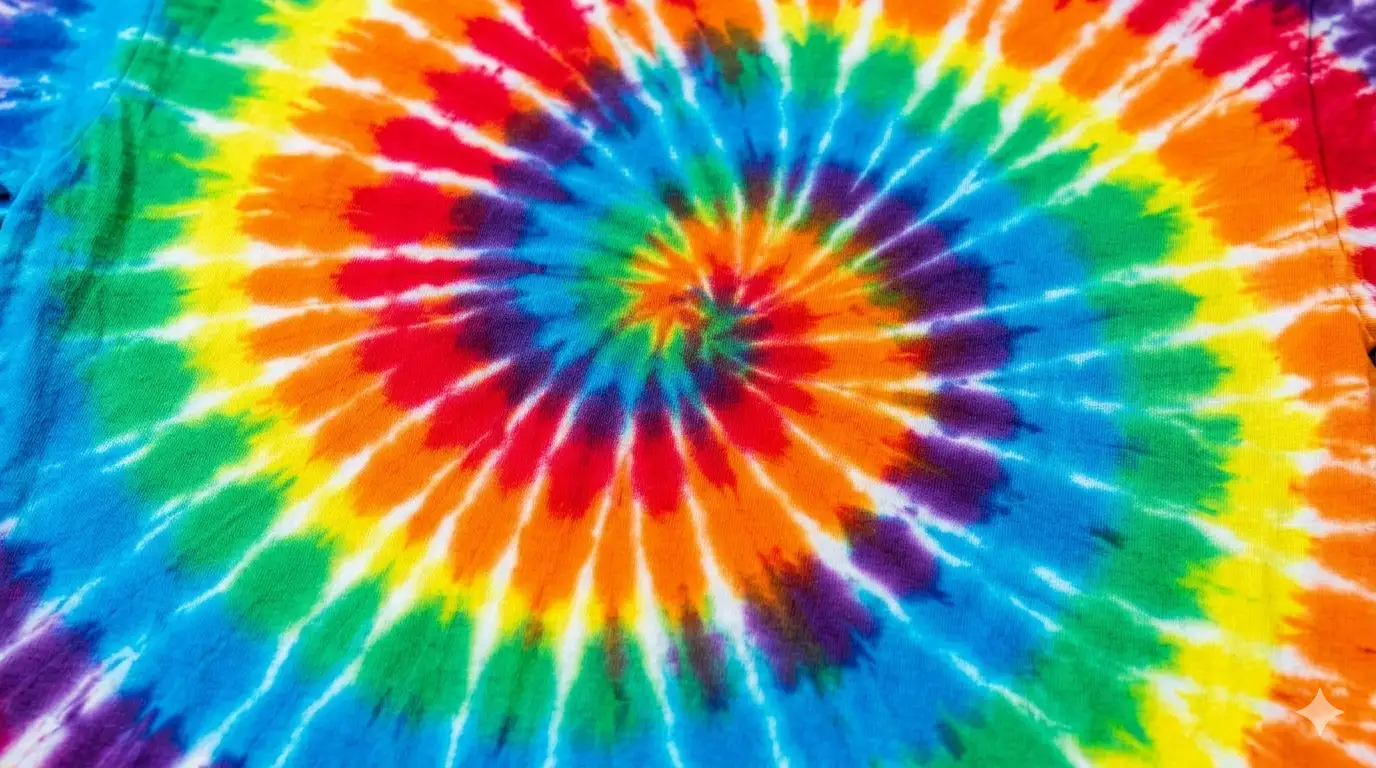
Tie dye usually creates softer and more spontaneous patterns because the fabric is folded or tied before dyeing.
What is batik?
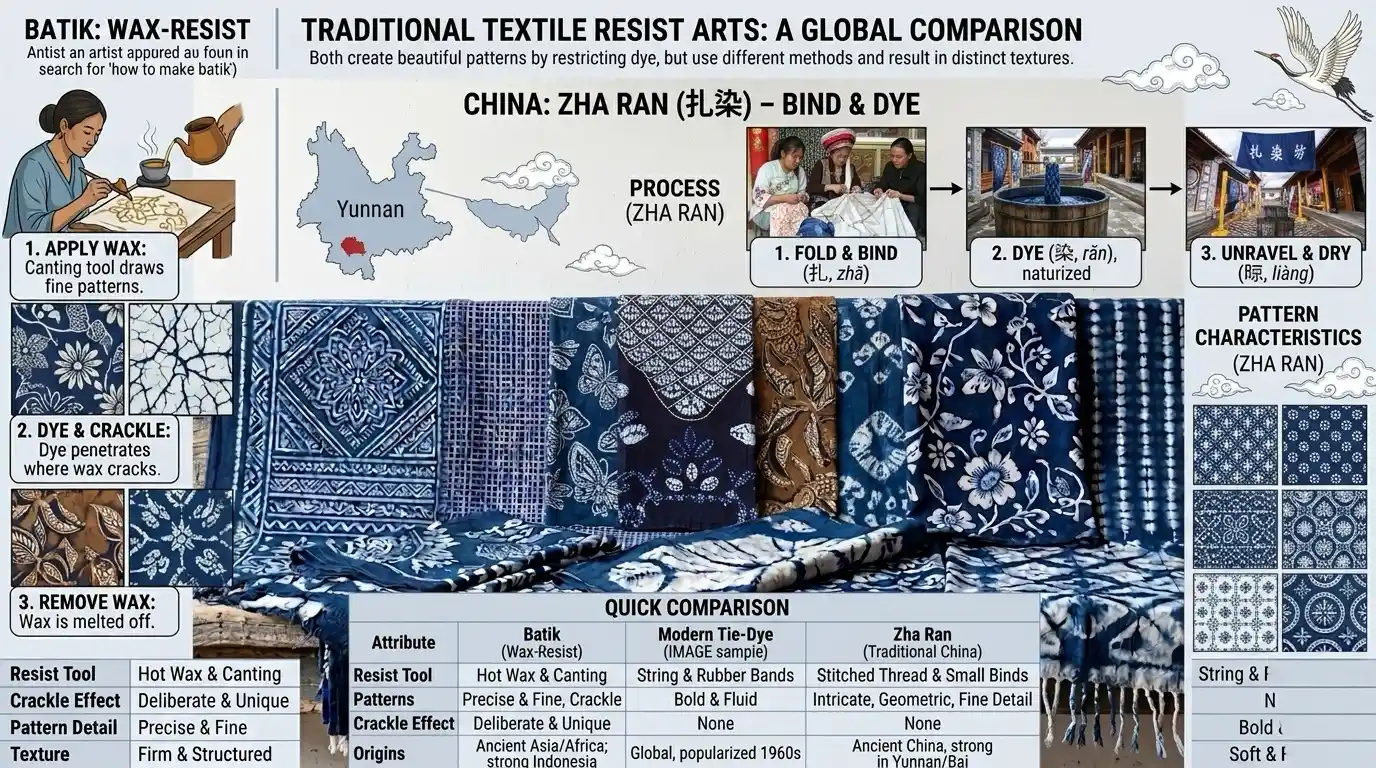
Batik uses wax as a resist, which helps create sharper motifs and more controlled pattern edges.
Batik uses wax to block dye from entering selected parts of the fabric. Hot wax is applied with a tool, brush, or stamp before dyeing. When the wax is removed, the protected areas remain lighter or keep an earlier color.
This gives batik more precision than tie dye, but it also makes the process more demanding. Beginners need to think about wax temperature, tool control, fabric handling, and dye steps.
If you want a general background on batik, you can read this overview of Batik. For a more practical buying and identification guide, see our article on how to tell handmade batik from printed batik.
Is batik a type of tie dye?
No. Batik and tie dye are both resist dyeing techniques, but they use different methods. Batik uses wax to block dye and create controlled designs. Tie dye uses folding and tying to create more spontaneous and unpredictable patterns.
They belong to the same broader craft family, but they are not the same technique. If you want a wider comparison of tools, pattern control, and visual results, read our full guide to batik vs tie dye differences.
How can you tell batik from tie dye?
You can usually tell by looking at the pattern edges. Batik often has cleaner lines, drawn motifs, repeated shapes, or wax-crackle effects. Tie dye usually has softer edges, circular spreads, folds, and more accidental color movement.
Batik often has cleaner lines
Look for controlled motifs, drawn edges, wax cracks, and repeated decorative forms.
Tie dye often has softer edges
Look for folds, rings, spirals, blurred color movement, and surprise patterns.
Printed fabric is different again
Printed patterns may repeat too perfectly and may not show handmade dye variation.
When you want to judge whether a textile is handmade or printed, read our guide on how to tell handmade batik from printed batik.
Is tie dye more natural than batik?
Tie dye is not automatically more natural than batik. Either method can use natural dyes or synthetic dyes. The environmental impact depends on the dye type, fabric, water use, rinsing process, and how carefully the materials are handled.
Traditional Chinese tie dye is often associated with indigo and plant-based dyeing, but modern tie dye kits may use synthetic fiber-reactive dyes. To understand the Chinese natural dye question more clearly, read our guide on whether Chinese tie dye is truly natural.
For a broader environmental view, see our related guide on whether tie dye is eco-friendly.
A simple beginner path: start here
For most beginners, the best path is to try a simple tie dye project first, learn from the mistakes, then move into more controlled resist dyeing methods such as batik.
- Start with tie dye. Try a simple shirt, scarf, or cotton fabric square.
- Learn basic dye behavior. Notice how fabric absorbs color and how folds affect the result.
- Fix beginner mistakes. Uneven color, muddy results, and fading are part of the learning process.
- Move toward batik. Once you want more control, explore wax-resist dyeing and more detailed motifs.
If your first fabric project goes wrong, use our guide to common tie dye mistakes before giving up on the technique.
Related guides for your next step
Use these guides to move from comparison into action. This page helps you choose the method; the next pages help you understand the craft, fix problems, and explore the cultural background.
If you are still comparing batik vs tie dye for beginners, use the guides below to explore technique differences, beginner mistakes, and traditional craft background.
FAQ: Batik vs tie dye for beginners
What is the main difference between batik and tie dye?
The main difference is the resist method. Batik uses wax to block dye and create controlled patterns. Tie dye uses folding, tying, twisting, or binding to create softer and more unpredictable patterns.
Which is easier for beginners, batik or tie dye?
Tie dye is easier for most beginners because it needs fewer tools, less setup, and no wax-heating process. Batik gives more control, but it takes more practice.
Can beginners try batik at home?
Yes, beginners can try batik at home, but it requires more care because hot wax and special tools are involved. A simple tie dye project is usually a safer first step for complete beginners.
Why does batik look more detailed than tie dye?
Batik often looks more detailed because wax can be applied in lines, dots, motifs, and repeated shapes before dyeing. Tie dye depends more on folds and bindings, so the results are usually softer and more accidental.
Is tie dye more eco-friendly than batik?
Not always. Tie dye and batik can both use natural or synthetic dyes. The environmental impact depends on dye type, fabric, water use, washing, and how carefully the process is handled.