Is Chinese Tie Dye Natural?
Chinese tie dye can be natural when it uses plant-based indigo, cotton or linen fabric, and traditional hand-dyeing methods.
But not every Chinese tie dye product is fully natural. This guide helps you check dye source, fabric material, safety, and eco-friendly claims before buying or wearing it.
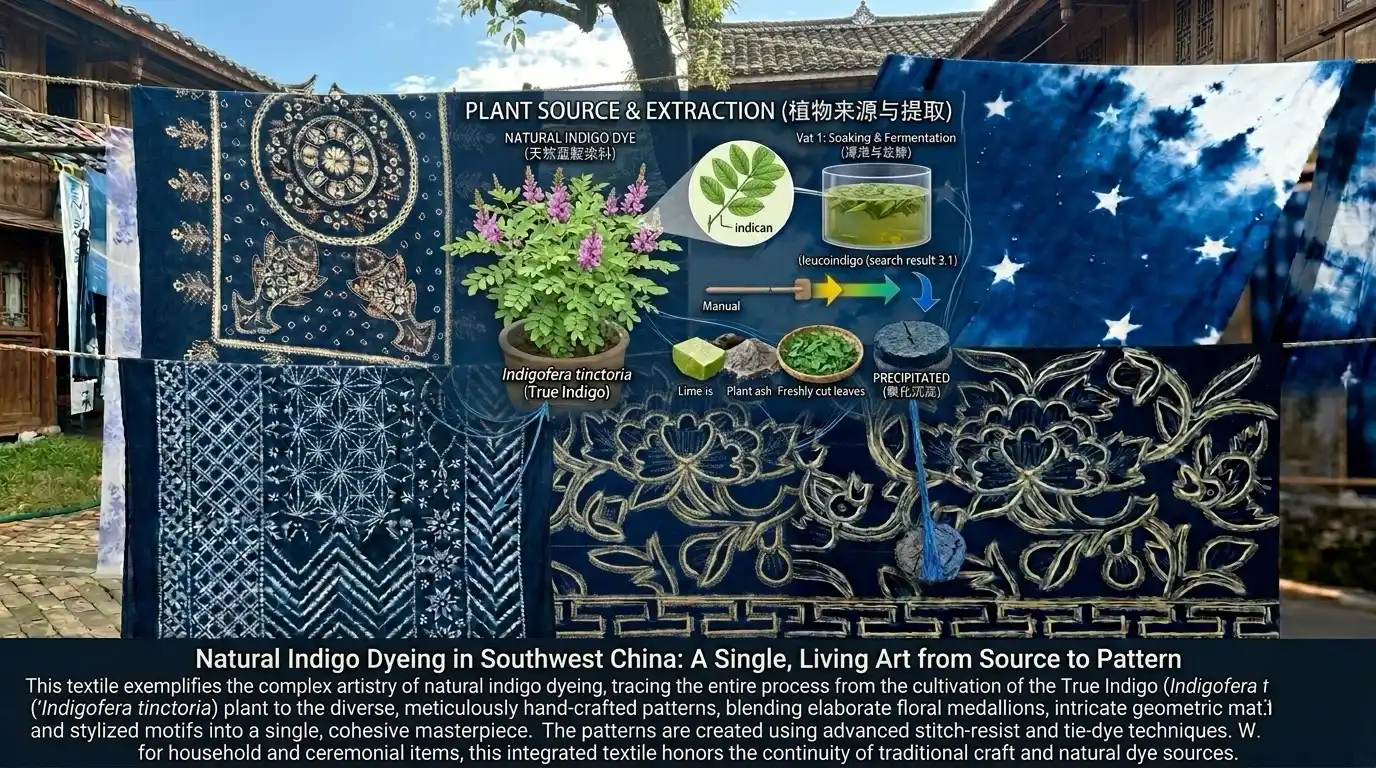
So, Is Chinese Tie Dye Natural?
Chinese tie dye can be natural, but it is not automatically natural. Traditional Chinese tie dye often uses natural plant-based dyes such as indigo, but modern commercial tie dye products may use synthetic dyes, chemical fixatives, or industrial colorants.
The safest answer is this: judge the piece by its dye source, fixing process, fabric material, and production method, not only by the words “traditional” or “handmade.”
Plant-based indigo, cotton or linen fabric, handmade dyeing, and transparent material claims.
Bright chemical-looking colors, unclear product labels, machine printing, or unknown dye sources.
Traditional-looking patterns do not always mean the dye itself is natural.
Need the Full Tie Dye Path?
If your natural dye question is part of a bigger tie dye project, use our Tie Dye Guide to choose the right help for patterns, waiting time, rinsing, washing, fading, mistakes, safety, and low-waste care.
Traditional Materials Used in Chinese Tie Dye
In places like Dali, traditional tie dye often relies on simple materials: plant-based dye, natural fabric, and hand-controlled resist techniques.
Traditional Chinese tie dye may use plant-derived indigo, cotton, linen, and tying or stitching methods to create areas that resist the dye. These materials are one reason people associate Chinese tie dye with natural craft.
Plant-based dye
Indigo is one of the best-known natural dye sources in traditional blue textile craft.
Natural fabric
Cotton and linen absorb dye well and are commonly used in handmade textile work.
Handmade resist
Folding, tying, and stitching create the white areas that resist the dye.
To see this craft in a cultural context, read our guide to Traditional tie dye in Dali.
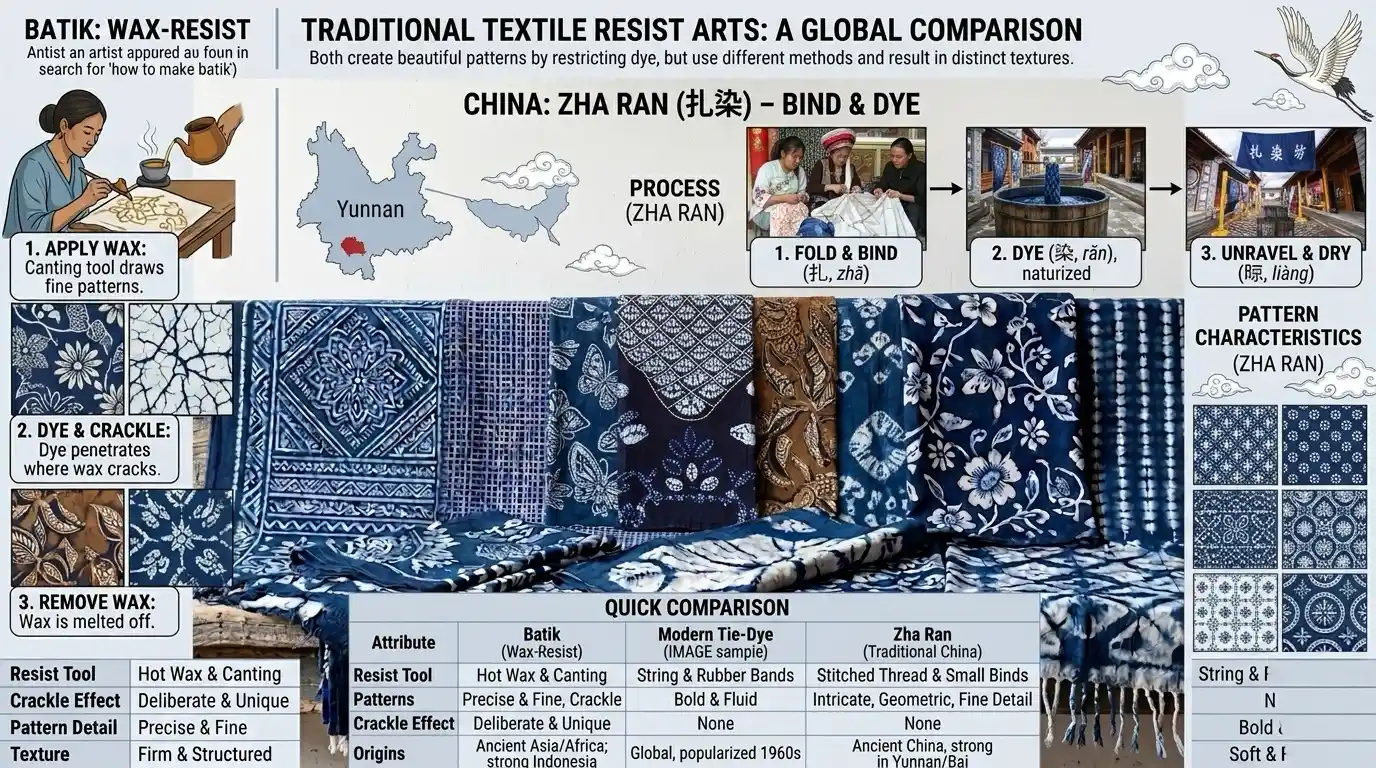
Are All Chinese Tie Dye Products Natural?
No. Not all Chinese tie dye products are natural. Traditional pieces may use plant-based dyes, but modern commercial products can use synthetic colorants and faster production methods.
Traditional natural dye
Often uses plant-based indigo, natural fibers, and slower handmade processing. The color may feel softer and less uniform.
Modern chemical dye
May use brighter colors, faster production, chemical fixatives, or synthetic dyes. This can make the product cheaper and more consistent.
If you want a basic scientific explanation of dye as a coloring substance for textiles and other materials, you can check Encyclopaedia Britannica’s dye overview.
Is Chinese Tie Dye Safe?
Many traditional Chinese tie dye pieces are considered safe because they use natural dye sources and gentle textile materials. But safety depends on the actual dye, mordant, fixer, and washing process.
Traditional tie dye is generally low-risk when properly washed and made with safe dyes. The main concerns usually come from poor dye fixing, unknown chemical residues, or synthetic dyes used in mass production.
Clear material labels, plant-based dye claims, washed fabric, and soft natural fibers.
Strong chemical smell, color rubbing onto skin, unclear dye source, or very cheap mass-produced items.
For skin concerns, read is tie dye safe for skin?
Is Chinese Tie Dye Eco Friendly?
Chinese tie dye can be eco-friendly when it uses natural plant-based dyes, durable fabrics, careful handwork, and low-waste production. But the eco impact depends on how the piece is actually made.
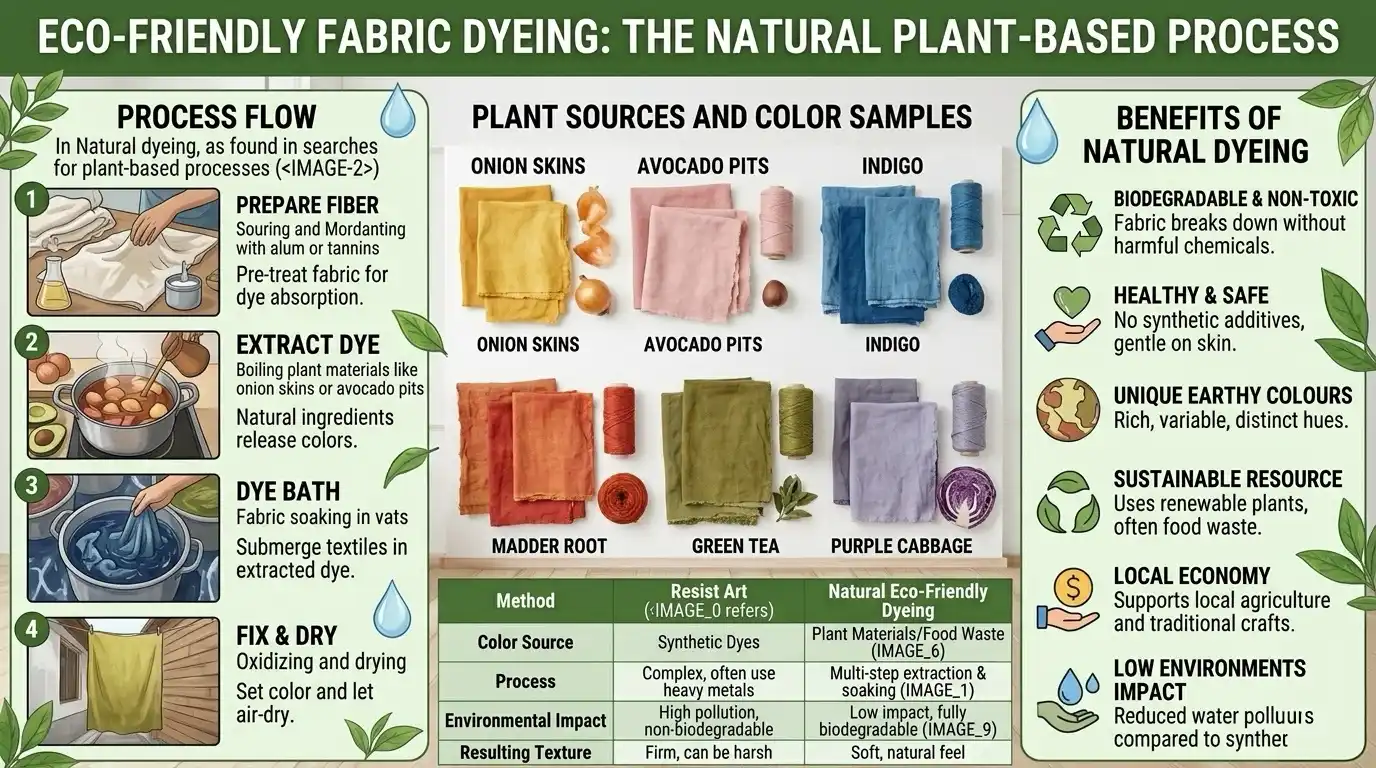
Compared with synthetic dyeing methods, natural dyes from plant and other natural sources are often seen as a more traditional option, especially when paired with durable fabrics and responsible water use.
- Plant-based dye can reduce dependence on synthetic colorants.
- Handmade production may avoid some fast-fashion waste.
- Durable textiles can be kept, repaired, gifted, and used longer.
- Environmental impact still depends on water use, fixing agents, and production scale.
Natural Dye, Tie Dye, and Batik: What Is the Difference?
Natural dye describes the color source. Tie dye describes a resist-dyeing method using folding, tying, or stitching. Batik describes a wax-resist method. These ideas can overlap, but they are not the same.
Tie dye
Pattern comes from tied, folded, or stitched cloth. Traditional Chinese tie dye often uses indigo blue and white resist patterns.
Batik
Pattern comes from wax-resist drawing. Some batik may use natural dyes, but batik and tie dye are different techniques.
For a beginner-friendly comparison, read differences between batik and tie dye.
Conclusion: Chinese Tie Dye Can Be Natural, But Check the Details
Chinese tie dye can be both natural and modern. Traditional versions are mostly associated with plant-based indigo, cotton fabric, and handmade dyeing. However, modern products may use chemical dyes for faster production, brighter colors, or lower costs.
If you want a more natural piece, look for plant-based dye information, natural fibers, handmade process details, and transparent material descriptions. You can also read more about natural dye history and sources before comparing plant-based and modern synthetic dye claims.
Related Tie Dye and Natural Craft Guides
These guides connect this natural dye article to your wider Chinese tie dye, safety, eco-friendly textile, and batik comparison cluster.
FAQ: Is Chinese Tie Dye Natural?
Is Chinese tie dye natural?
Chinese tie dye can be natural when it uses plant-based dyes such as indigo and natural fabrics such as cotton or linen. However, some modern products may use synthetic dyes.
Is Chinese tie dye eco-friendly?
Traditional Chinese tie dye can be eco-friendly when it uses plant-based dye, durable fabric, and responsible production methods. The actual impact depends on water use, fixing agents, and production scale.
Is Chinese tie dye safe for skin?
Many traditional tie dye pieces are safe after proper washing, but safety depends on the dye, fixing process, and whether chemical residues remain in the fabric.
Are all natural dyes safe?
Not automatically. Natural dyes can still require mordants or fixing agents, and some people may react to plant materials. Natural does not always mean risk-free.
How can I tell if a tie dye product is natural?
Look for clear material information, plant-based dye descriptions, natural fibers, handmade process details, and care instructions. Avoid vague claims without material details.