How to Fix Tie Dye Mistakes: Save Faded, Patchy, or Muddy Shirts
If you want to know how to fix tie dye mistakes, start by identifying what went wrong: faded colors, patchy spots, muddy dye, bleeding fabric, uneven color, or a pattern that disappeared after rinsing.
If your tie dye went wrong, do not add more color everywhere at once. Many bad tie dye results can be improved with one controlled repair: a second dye layer, spot-dyeing, a darker shade, better rinsing, or a careful re-dye plan. This guide helps you choose the smallest fix that matches the actual problem.
Match the shirt problem first, then choose the smallest safe fix. Adding more dye everywhere usually makes the problem harder to control.
Quick Answer: How to Fix Tie Dye Mistakes
Yes, many tie dye mistakes can be fixed. If the color is too light, let the shirt dry so you can judge the true result, then re-dye the pale areas. If the shirt looks patchy, spot-dye the blank spots. If the colors look muddy, use one deeper shade to restore contrast instead of adding several new colors. If the pattern disappeared, re-tie the shirt and add a controlled second layer of color. If the dye bled or keeps bleeding, rinse longer and wash the shirt separately before wearing it.
Tie Dye Gone Wrong? Use This 3-Step Rescue Plan
If a tie dye shirt did not turn out right, the safest approach is to diagnose the failure before you start fixing it. A faded shirt, a muddy shirt, a bleeding shirt, and a patchy shirt do not need the same repair.
1. Judge the final result first
If the project is still wet or has not finished its normal setting, rinsing, and washing process, the colors can look different from the final shirt. Avoid making a second repair before you can clearly see the problem.
2. Name the failure
Decide whether the main problem is fading, blank spots, muddy colors, bleeding dye, an unclear pattern, or uneven color. Fixing tie dye is easier when you solve one problem at a time.
3. Make one controlled fix
Use the smallest repair that can improve the shirt: spot-dye a blank area, add one darker shade, re-tie a weak pattern, or rinse and wash out excess dye. Recheck the result before adding anything else.
Find Your Tie Dye Problem First
Before you add more dye, match the problem to the right fix. A pale shirt, a muddy shirt, and a bleeding shirt need different solutions.
Faded or too light
Usually caused by weak color, rinsing too early, short setting time, or incomplete saturation.
Muddy colors
Usually caused by too many colors mixing together or opposite colors blending into brown or gray areas.
Patchy or blank spots
Usually caused by dry folds, uneven dye application, or tight sections that dye could not reach.
Dye bled or keeps bleeding
Usually means excess dye still needs to be rinsed out or the shirt needs a careful separate wash.
Pattern disappeared
Usually caused by loose folds, too much moisture, or dye spreading so far that the original contrast became weak.
Harsh or uneven color
Usually means one shade dominates, the saturation is inconsistent, or adjacent colors need a more controlled transition.
Use This Tie Dye Mistake Guide First
This infographic summarizes the most common problems and fixes. Click the image to enlarge it, then use the detailed sections below for step-by-step repair advice.
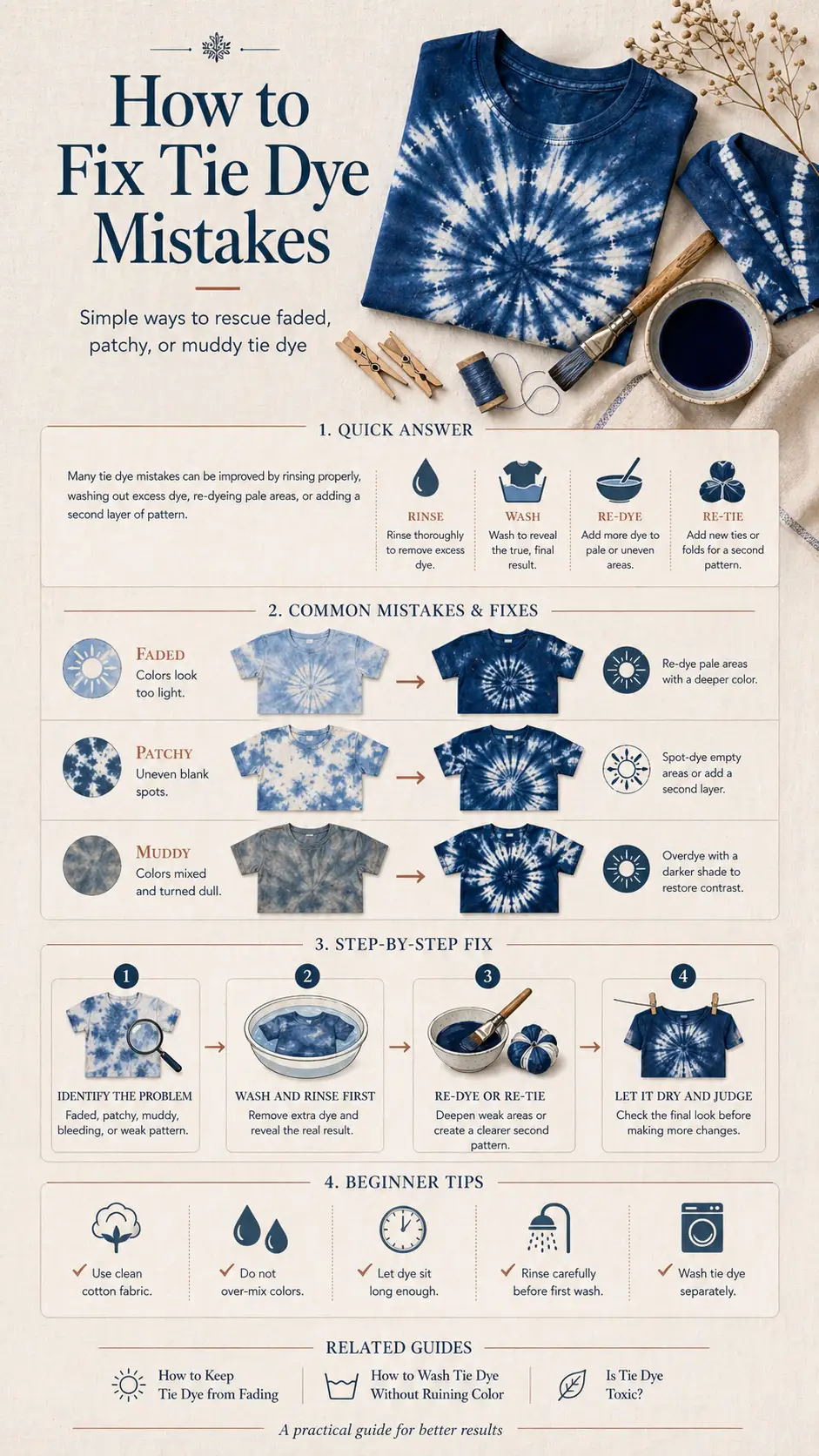
Common Tie Dye Mistakes and Quick Fixes
Here is a quick text version of the most common tie dye problems and what to do next.
How to Fix Each Tie Dye Mistake Step by Step
How to Fix Faded or Too-Light Tie Dye
A tie dye shirt may look too light if the dye was weak, the fabric was too wet, the setting time was too short, or the fabric did not absorb the dye well.
Once the shirt is fully dry, you can re-dye the pale areas or add a second layer of color. Choose one or two deeper colors that match the original design. If the shirt already has blue and purple, add navy, deep blue, or violet.
- Let the shirt dry so the pale areas are easy to see.
- Choose a deeper version of a color that is already in the design.
- Apply the new dye only where the shirt needs more saturation, then reassess before adding more.
How to Fix Muddy Tie Dye Colors
Muddy tie dye usually happens when too many colors mix together. This is common when opposite colors blend, such as red and green, blue and orange, or purple and yellow.
Add a darker color such as navy, black, dark purple, or deep brown to create contrast. You can also overdye the whole shirt with one darker shade if the design looks too chaotic.
- Stop adding new bright colors that may create more mixing.
- Pick one deep shade that works with the existing palette.
- Add contrast to selected muddy areas first; only consider a full overdye if the entire shirt needs one unified direction.
How to Fix Tie Dye That Bled or Keeps Bleeding
Some bleeding is normal during the first rinse. But if color keeps transferring to your hands, other clothes, or the washing machine, you need to wash out the excess dye more carefully.
Rinse the shirt in cold water until the water becomes much clearer. Then wash it separately with a small amount of mild detergent. Do not wash it with white clothes, light clothes, towels, or expensive fabrics.
- Keep the shirt separate from other laundry while excess color is still coming out.
- Rinse until the runoff becomes much clearer.
- Wash the shirt by itself and check again before combining it with other clothes.
How to Fix a Tie Dye Pattern That Disappeared
Sometimes a tie dye pattern does not show clearly after rinsing. The folds may have been too loose, the fabric may have been too wet, or the dye may have spread too much.
Let the shirt dry completely, then re-tie it using a stronger folding method, such as a spiral, crumple, stripe, or bullseye pattern. Add darker dye to selected areas instead of covering the whole shirt.
- Identify where the original pattern lost contrast.
- Re-tie the shirt with a clear fold or binding structure.
- Add a darker color selectively so the second layer creates definition instead of hiding the first design.
How to Fix Patchy Tie Dye or White Spots
White spots can happen when dye does not reach folded areas. Sometimes this is part of the charm of tie dye, but if the blank areas look accidental, you can fill them in.
Use a small squeeze bottle, brush, or sponge to apply dye only to the blank spots. Choose a color that already exists in the shirt so the repair does not look random.
- Let the shirt dry and mark the areas that look unintentionally blank.
- Use a color already present in the design.
- Spot-dye only the empty areas and stop once the repair blends into the surrounding pattern.
How to Fix Uneven Tie Dye Colors
Sometimes the problem is not that the shirt is too pale or too muddy. It may simply look unbalanced. One color may dominate too much, or one side may look heavier than the other.
Add a controlled transition or balancing color between harsh areas. For example, add purple between red and blue, green between blue and yellow, or orange between red and yellow.
- Choose the area that looks most unbalanced.
- Use one compatible transition shade rather than several new colors.
- Apply a small amount, then check whether the design looks more balanced before continuing.
If You Are Worried the Shirt Is Unsafe to Wear
If your tie dye shirt smells strongly of chemicals, feels irritating, or still releases a lot of color, do not wear it directly on your skin yet.
Wash the shirt separately until the smell and excess dye are gone. Let it dry fully before wearing. If you have sensitive skin, wear the shirt over another layer first, or avoid wearing it until you are sure it is fully rinsed.
Can You Re-Dye or Redo Tie Dye?
Yes. You can re-dye a tie dye shirt, and this is often one of the simplest ways to rescue pale, patchy, or unfinished results. Re-dyeing works best when the new color is dark enough to show over the existing design. A light yellow may not cover a muddy blue area, while navy, purple, black, or dark green can help reshape the design.
Before you redo tie dye, make sure the shirt is clean and dry enough to show the true color. This helps you decide where to add dye instead of guessing while the shirt is still wet.
Re-dye when
- The shirt is too light but the design is still usable.
- Blank spots can be repaired with a matching shade.
- The pattern needs darker contrast to become visible again.
Do not rush to re-dye when
- The shirt is still wet and the final color is not clear yet.
- The design is already very dark and more dye may hide the pattern.
- The main issue is excess dye bleeding, which should be rinsed and washed out first.
When Should You Stop Trying to Fix It?
Not every tie dye mistake needs to be corrected. Some imperfect designs look better after drying, washing, or pairing with the right outfit.
- The colors already look balanced.
- More dye would make it too dark.
- The shirt has a natural handmade look.
- The mistake actually gives the design character.
Beginner Tips to Avoid Tie Dye Mistakes Next Time
To avoid the same problem in your next project, focus on preparation, timing, rinsing, and washing.
Let the dye sit long enough
Most cotton projects need 12–24 hours for stronger color. Read how long should tie dye sit before rinsing.
Rinse and wash gently
Cold water and separate washing reduce bleeding. See how to wash tie dye without ruining the color.
Limit color chaos
Use fewer colors, avoid mixing opposite colors too much, and leave enough white space in the design.
FAQ: How to Fix Tie Dye Mistakes
How do you fix tie dye that went wrong?
Let the shirt reach its final rinsed, washed, and dry appearance first, then identify the biggest problem. Re-dye faded areas, spot-dye blank areas, add one deeper shade to muddy sections, re-tie a weak pattern, or rinse and wash out excess dye if the shirt keeps bleeding.
How do you fix tie dye that bled?
If the dye bled during rinsing or washing, keep the shirt separate from other laundry, rinse until the runoff becomes much clearer, and wash it separately. If the colors also blurred together, wait until the shirt is dry before deciding whether selected areas need darker contrast.
Can you redo tie dye if the first attempt failed?
Yes. Many tie dye fails can be reworked. Re-dyeing is usually most useful for pale, patchy, or weak-pattern results. Use a darker compatible shade and make one controlled change at a time instead of covering the entire shirt immediately.
What should I do when tie dye is done sitting?
Follow the dye or kit instructions for the normal rinse and wash process, then let the shirt reach a condition where you can judge the true color. If it still looks faded, patchy, muddy, or uneven afterward, use the matching repair section in this guide.
Can I fix tie dye after washing it?
Yes. You can still fix many tie dye mistakes after washing. Let the shirt dry first, then decide whether it needs re-dyeing, spot-dyeing, a darker overdye, or a better rinse and separate wash.
Why did my tie dye turn brown?
Tie dye often turns brown when too many colors mix together, especially opposite colors. You can improve it by adding darker dye, creating stronger contrast, or turning it into an intentional earthy design.
Can I make faded tie dye bright again?
You can often make faded tie dye look brighter by re-dyeing pale areas with stronger color. However, if the dye has already washed out completely, the new result may look different from the original design.
How do I fix patchy tie dye?
Let the shirt dry, then spot-dye blank areas with a squeeze bottle, brush, or sponge. Use a color that already exists in the shirt so the repair looks intentional.
Can I fix muddy tie dye?
Usually, yes. The safest fix is to add one darker shade, such as navy, dark purple, deep brown, or black, to restore contrast. Do not keep adding many bright colors, because that often makes the muddy effect worse.
Should I wash a tie dye mistake before fixing it?
Usually, yes. Washing helps remove excess dye and shows the real color. Once the shirt is clean and dry, it is easier to see what actually needs fixing.
Is a tie dye mistake still wearable?
In most cases, yes. If the shirt is fully rinsed, washed, and comfortable on your skin, it is usually wearable even if it still looks uneven or imperfect.
Related Tie Dye Guides
These guides connect this rescue article to the larger tie dye problem-solving cluster.
Final Thoughts
Most tie dye mistakes are not the end of the shirt. Pale colors can be strengthened, muddy areas can be darkened, blank spots can be filled, and unclear patterns can become layered designs.
The best tie dye troubleshooting strategy is to identify the problem first, then choose the simplest repair. Do not rush to add more dye everywhere. A careful second step often works better than a complete restart.
If you are new to tie dye, save this guide and read the washing and fading guides before your next project. A little preparation can prevent most common tie dye mistakes before they happen.