Chinese New Year Paper Cutting: Lucky Meanings, Window Decorations, and 5 Easy Craft Ideas
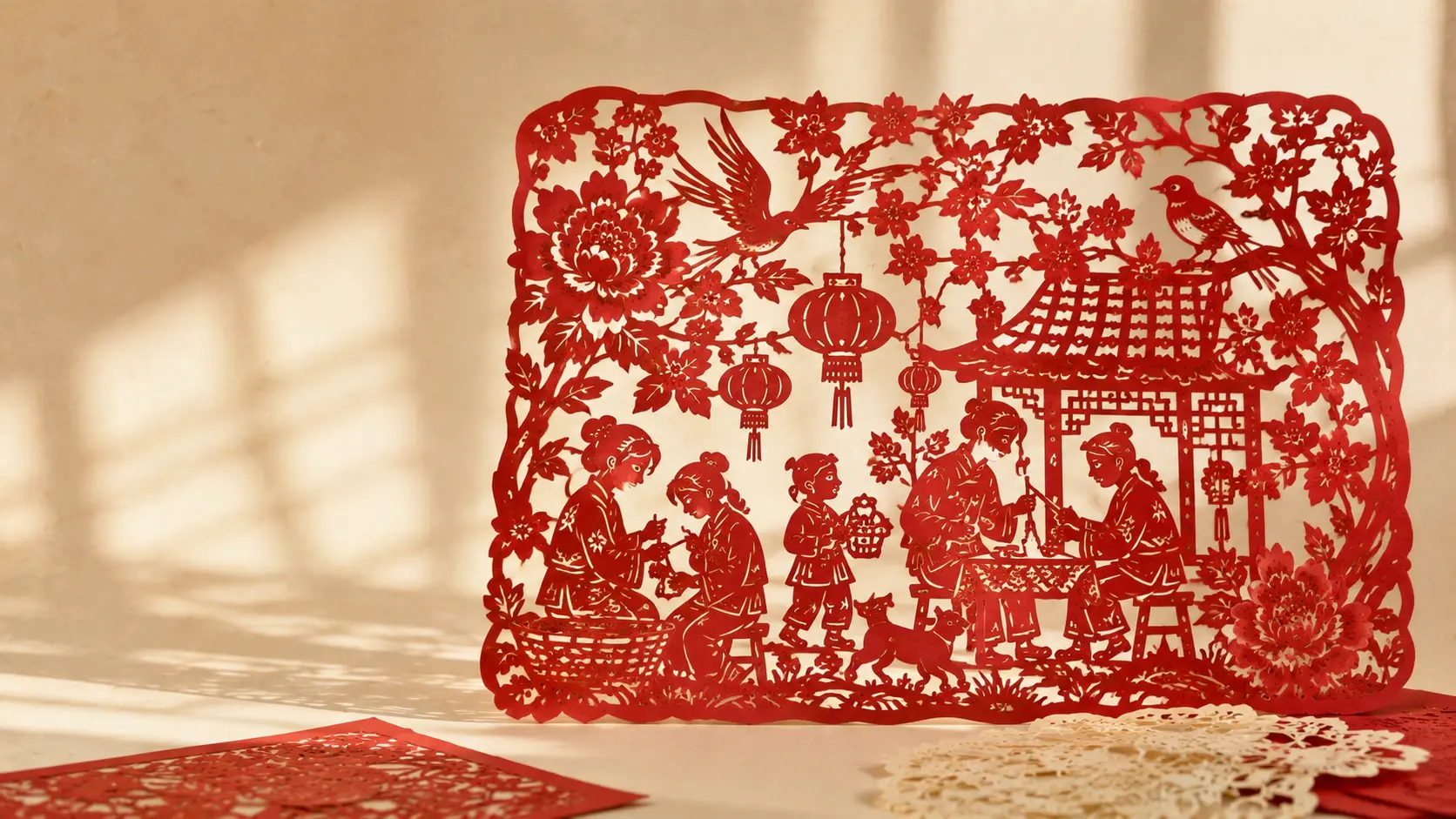
Chinese New Year paper cutting is festive cut-paper art used on windows, doors, walls, cards, lanterns, and gifts during the Spring Festival. Chinese New Year paper cutting is especially recognizable for its red window decorations, bold festive motifs, and connected cut-paper structure. This guide explains six common designs, where they are displayed, and how beginners can complete five simple projects.
What Is Chinese New Year Paper Cutting?
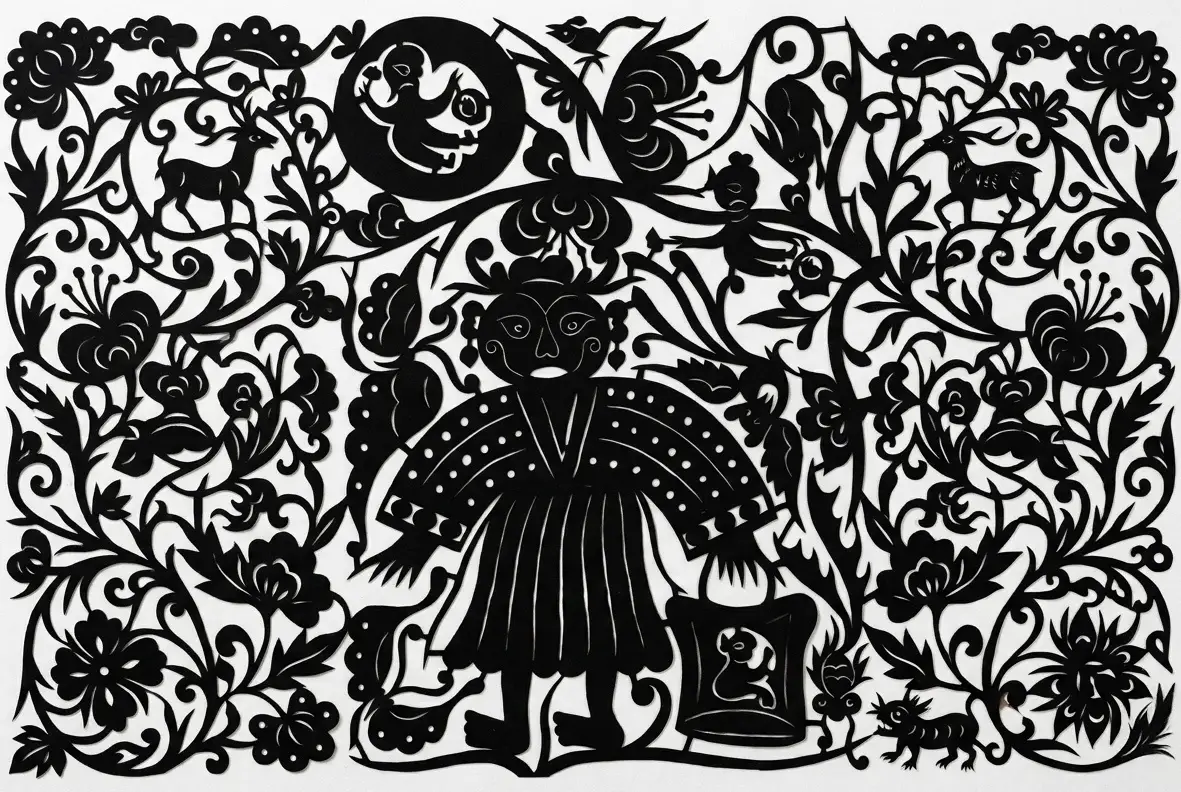
Chinese New Year paper cutting is a form of decorative cut-paper art associated with the Spring Festival. It combines visual meaning with connected structure: the image must communicate clearly, and the paper must remain in one piece after cutting.
Windows, doors, walls, lanterns, cards, and gifts
Some designs are cut freehand by experienced makers. Others begin with folded paper, a drawn outline, or a printable template.
Meaning and structure work together
A fish, flower, zodiac animal, or lucky character must still hold together when surrounding and interior spaces are removed.
Why Is Paper Cutting Used During Chinese New Year?
The Spring Festival marks a fresh beginning in the traditional Chinese calendar. Paper cutting fits naturally into customs centered on renewal, family reunion, celebration, gift giving, and hopes for a fortunate year.
Preparing the household
Window and door decorations visually renew the home for the festival.
Sharing wishes and memories
Motifs may express hopes for happiness, continuity, abundance, prosperity, or harmony.
Making celebration visible
Paper cuts connect personal craft, household display, classroom learning, and festival activity.
What Are Chinese New Year Window Flowers?
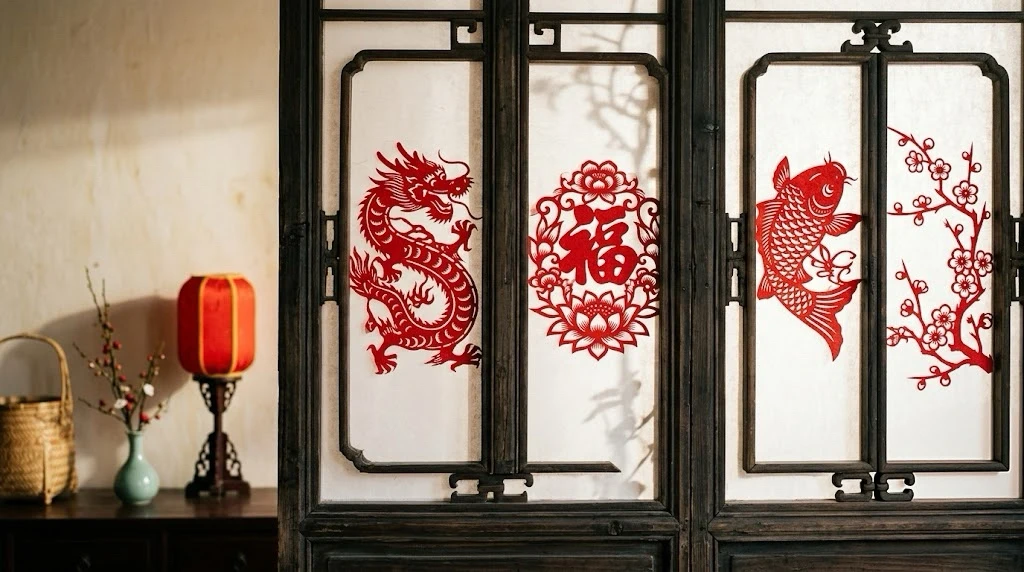
Paper cuts attached to windows are commonly called window flowers, or chuanghua. In Chinese New Year paper cutting, these window decorations are designed to remain visible against glass while staying strong enough to display. They may show zodiac animals, fish, birds, butterflies, children, flowers, lucky characters, family scenes, and geometric patterns.
Open spaces allow light to pass through, making the design visible from inside and outside.
The design must remain strong enough to lift, flatten, and attach to glass.
Use broad contours, visible bridges, large openings, rounded corners, and limited interior detail.
Why Is Red Paper Common at Chinese New Year?
Red is strongly associated with celebration, happiness, vitality, and good fortune in many Chinese festive settings. It also creates clear contrast against windows, pale walls, doors, envelopes, lanterns, and gift boxes.
Why red works
- Strong contrast on glass and pale surfaces
- Easy coordination with couplets, lanterns, and envelopes
- Immediate festive recognition
Other valid colors
- Gold, green, black, or white paper
- Dyed or painted paper
- Layered colors and contrasting backing paper
Six Common Chinese New Year Paper Cutting Designs
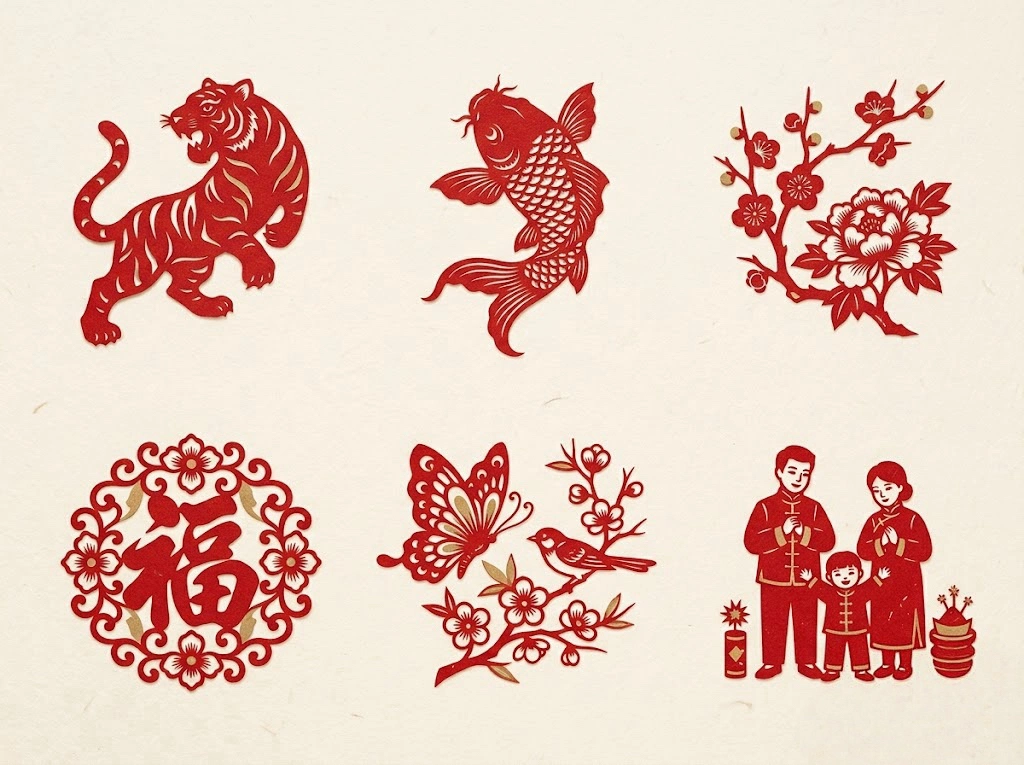
The most common Chinese New Year paper cutting designs combine recognizable festive subjects with broad, connected shapes. These meanings are practical starting points, not fixed cultural codes. Interpretation can change according to language, region, pairing, occasion, and maker.
Seasonal identity and birth-year connection
The twelve zodiac animals work well for windows, cards, classroom activities, and framed displays.
Abundance and continued plenty
Fish may appear alone or with lotus flowers, waves, children, coins, or decorative borders.
Renewal, beauty, and flourishing life
Plum blossoms, peonies, lotus flowers, and simple folded flowers are adaptable festive subjects.
Direct written wishes
Characters connected with good fortune, spring, happiness, longevity, and prosperity need careful bridge planning.
Joy, seasonal life, and decorative rhythm
Butterflies are established traditional subjects, but they work best as secondary festive or spring-themed motifs.
Family happiness and shared life
These designs may show children, greetings, food preparation, music, dancing, or household celebrations.
Which Design Should You Choose?
| Design | Best for | Difficulty | Main challenge |
|---|---|---|---|
| Folded flower | First projects and classrooms | Easy | Keeping folds aligned |
| Folded butterfly | Windows, cards, children’s crafts | Easy | Keeping the body connected |
| Fish | Cards and family decorations | Easy | Avoiding fragile fins |
| Zodiac animal | Birth-year and seasonal displays | Easy to intermediate | Legs, horns, and tails |
| Lucky character | Doors and bold display | Intermediate | Connecting every stroke |
| Family scene | Framed or exhibition work | Advanced | Faces, hands, overlapping detail |
Where Are Chinese New Year Paper Cuts Displayed?
Use circular flowers, zodiac animals, butterflies, fish, or lucky characters.
Choose a large zodiac animal or lucky character readable from farther away.
Use framed work, contrasting backing paper, grouped animals, or borders.
Choose broad designs that can follow a curved surface without tearing.
Flowers, fish, butterflies, birds, and zodiac animals work well.
Simplify the pattern before reducing it to tag or envelope size.
Five Easy Chinese New Year Paper Cutting Ideas
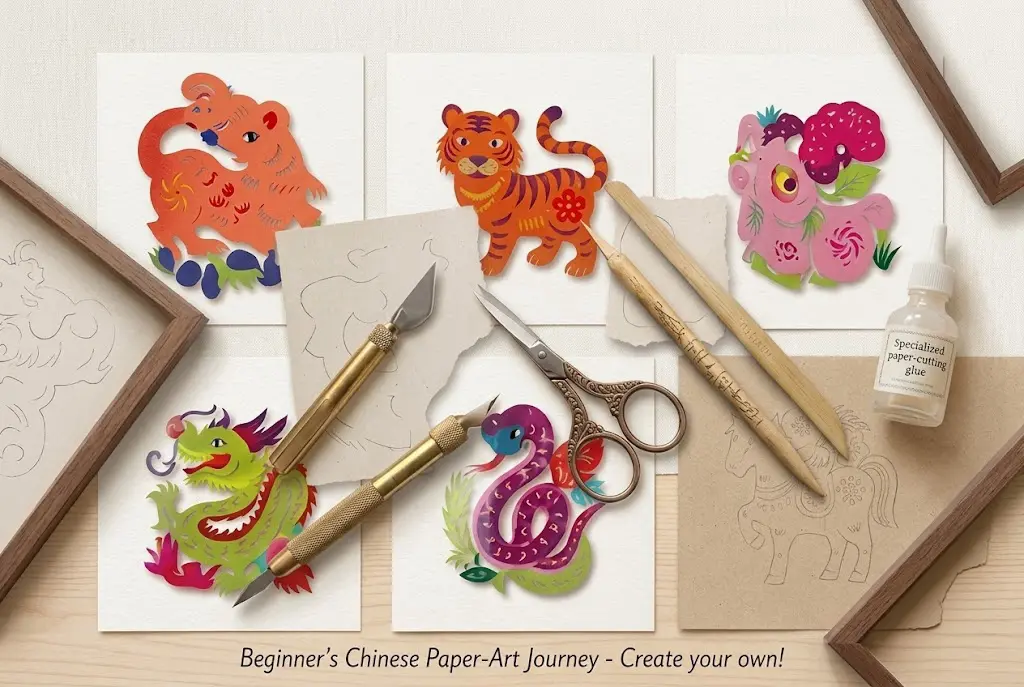
These Chinese New Year paper cutting ideas are designed for beginners, families, and classroom activities. Each project includes a realistic time estimate, difficulty level, and cutting focus.
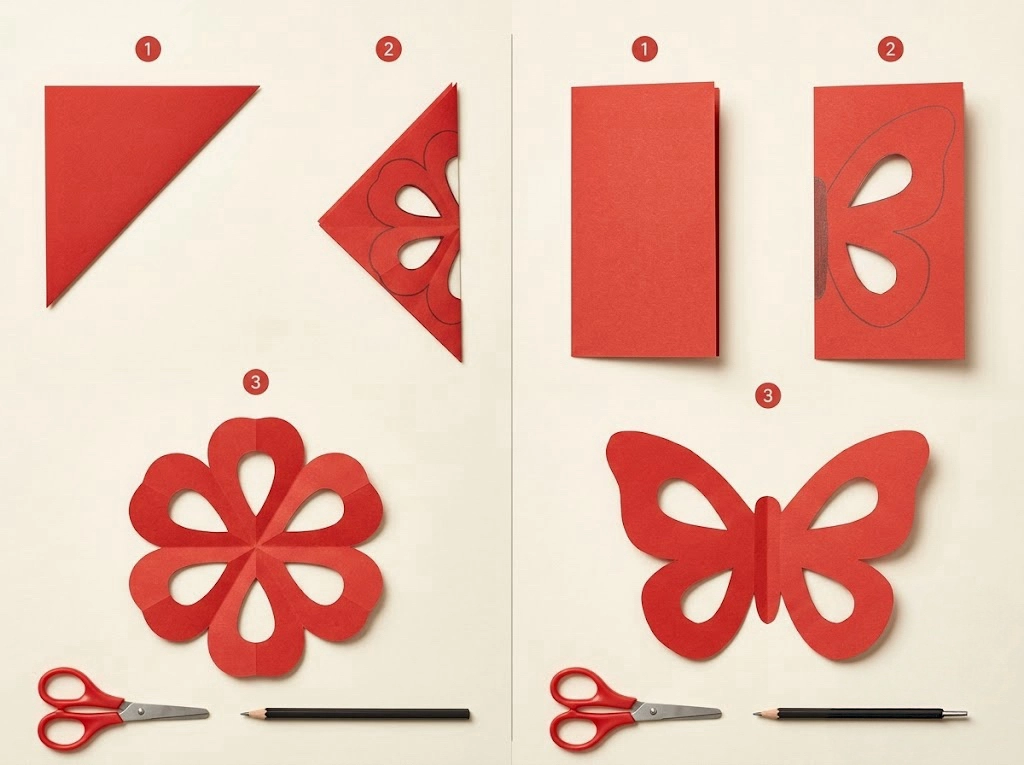
Folded Flower Window Decoration
- Fold a square sheet in half, then again.
- Draw one broad petal and one or two openings.
- Cut the contour and interior spaces.
- Unfold slowly and flatten.
Folded Butterfly Window Decoration
- Fold the paper in half.
- Draw half a butterfly with the body on the fold.
- Add two or three large openings.
- Cut and unfold carefully.
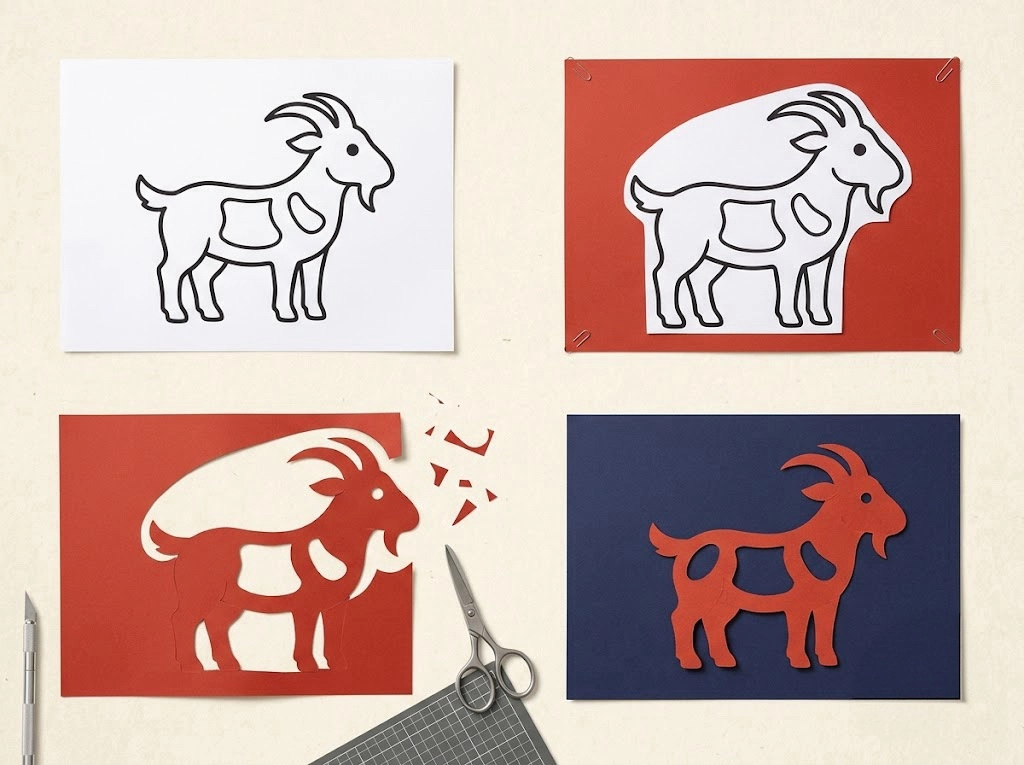
Large Zodiac Animal Silhouette
- Choose one zodiac animal.
- Print or draw a large side-view silhouette.
- Keep legs, ears, horns, and tail broad.
- Cut the contour first, then two or three interior details.
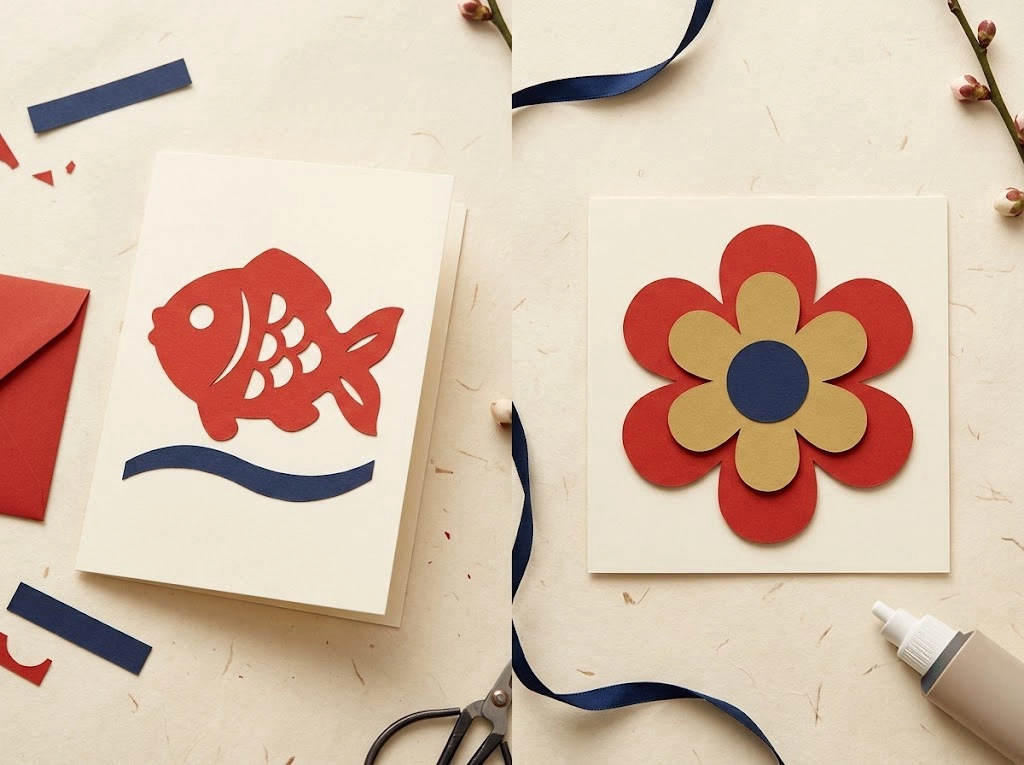
Fish and Wave Greeting Card
- Draw one broad fish shape.
- Add one wave and one or two scale openings.
- Cut and attach it to a folded card.
Layered Color Flower
- Cut one large flower from red paper.
- Cut a smaller flower from another color.
- Add a center circle and layer the pieces.
Chinese New Year Paper Cutting for Kids
Chinese New Year paper cutting for kids works best when the template uses thick lines, large shapes, broad connections, and only a few interior cuts.
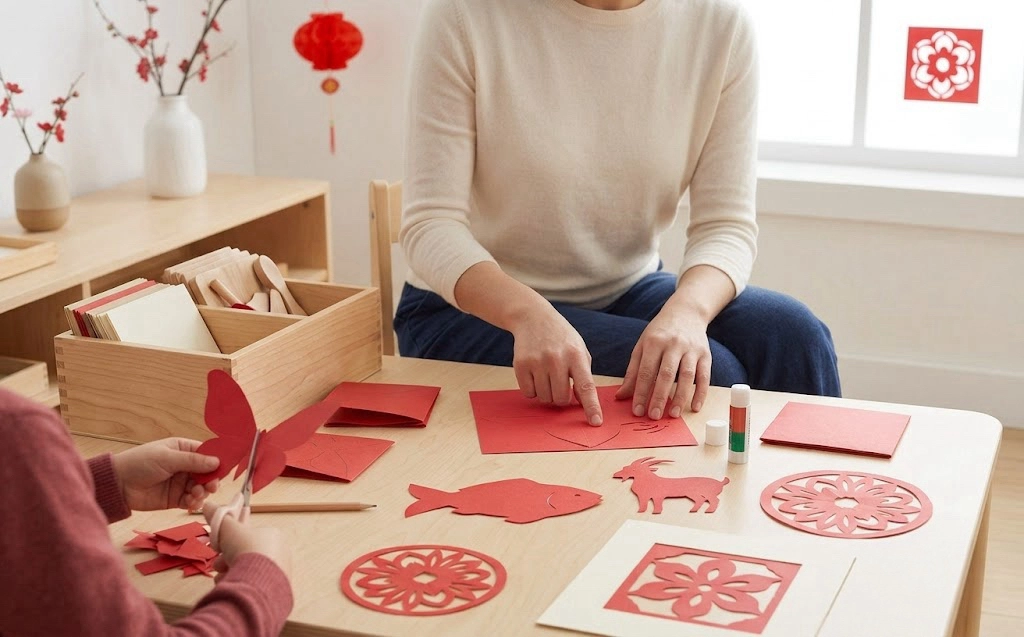
Choose child-friendly templates
- Thick lines and broad connections
- Large shapes and rounded corners
- Few interior cuts
- One clear subject
Add cultural learning
- What does the design show?
- Where might it be displayed?
- Which parts must remain connected?
- Is it traditional, modern, or inspired by tradition?
Paper, Printing, and Display Tips
- 80–100 gsm for folding and practice
- 100–120 gsm for sturdier cards
- Avoid heavy cardstock at first
- Print at 100% scale
- Confirm A4 or US Letter
- Test on ordinary paper first
- Check the smallest bridges
- Use removable tape on windows
- Glue only broad connected areas
- Use contrasting backing paper
Common Beginner Mistakes
Choosing too much detail
Start with one main silhouette rather than tiny holes, faces, hands, or fur.
Cutting through a bridge
Identify which strips must remain before removing interior spaces.
Using paper that is too thick
Heavy cardstock makes tight turns difficult.
Shrinking a template too far
Simplify before reducing it to tag size.
Starting with tiny details
Plan large contours first and keep the paper supported.
Treating meanings as universal
Interpret the complete composition and context.
Traditional Paper Cutting and Modern Printable Templates
Traditional Chinese paper cutting may be made with scissors, knives, or engraving tools. Modern printable templates can help beginners learn symmetry, connected structure, cutting order, scale, and display methods.
What a printable can teach
- Symmetry and connected structure
- Positive and negative space
- Cutting order and bridge width
What should be labeled clearly
- Handmade or digitally illustrated
- Newly redrawn or inspired by a historical motif
- Machine cut, laser cut, or AI-assisted
Learn more from UNESCO
Chinese paper-cut was inscribed on UNESCO’s Representative List of the Intangible Cultural Heritage of Humanity in 2009. Read the official UNESCO overview of Chinese paper-cut and watch the accompanying Chinese paper-cut heritage video.
Start with a Simple Zodiac Project
A zodiac animal is a practical first project because it connects the festival with the yearly cycle and a recognizable visual subject.
Choose a beginner-friendly structure
- One animal and one large silhouette
- Broad legs and tail
- Few interior openings
- A simple contrasting background
Continue through the cluster
Compare difficulty in the Chinese Paper Cutting Patterns and Templates Guide, then test a design with the free Chinese zodiac templates.
Frequently Asked Questions
What is Chinese New Year paper cutting?
It is festive cut-paper art used to decorate windows, doors, walls, lanterns, cards, and gifts during the Spring Festival.
What are Chinese window paper cuts called?
They are commonly called window flowers, or chuanghua.
Why are Chinese New Year paper cuts red?
Red is associated with celebration, happiness, vitality, and good fortune, and it creates clear contrast on windows and pale surfaces.
Is butterfly paper cutting traditional in China?
Yes. Butterflies appear in Chinese folk and decorative arts, including paper cutting, often with flowers or in symmetrical designs.
Is a butterfly a main Chinese New Year symbol?
Not usually. It works better as a secondary festive or spring-themed motif.
Is paper cutting suitable for children?
Yes, with simple designs, broad connections, and age-appropriate scissors.
Can ordinary printer paper be used?
Yes. Ordinary A4 or US Letter printer paper works well for practice.
Do all paper cuts use templates?
No. Experienced makers may cut freehand or from memory; beginners may use folds, drawn guides, or printables.
What is the easiest Chinese New Year paper cutting project?
The easiest Chinese New Year paper cutting projects are usually folded flowers, folded butterflies, simple fish, and large zodiac silhouettes with broad connected shapes.