Batik vs Tie Dye Difference: Wax Resist vs Folding and Binding
The main batik vs tie dye difference is how each technique blocks dye. Batik uses wax to protect selected parts of the cloth, while tie dye uses folding, tying, twisting, stitching, binding, or clamping to resist dye.
Batik usually produces more controlled lines, motifs, and borders. Tie dye usually creates softer transitions, rings, spirals, bursts, stripes, and irregular color movement.
Planning a tie dye project rather than only comparing techniques? Use the Tie Dye Guide for patterns, waiting time, rinsing, washing, fading, mistakes, and safety.
Open the guideBatik vs Tie Dye Difference at a Glance
Both are resist-dyeing methods, but the resist is created differently. Batik controls the image with wax. Tie dye controls the fabric with folds, ties, pressure, stitching, or clamps.
Technique, Pattern, and Best Use
Fast visual comparison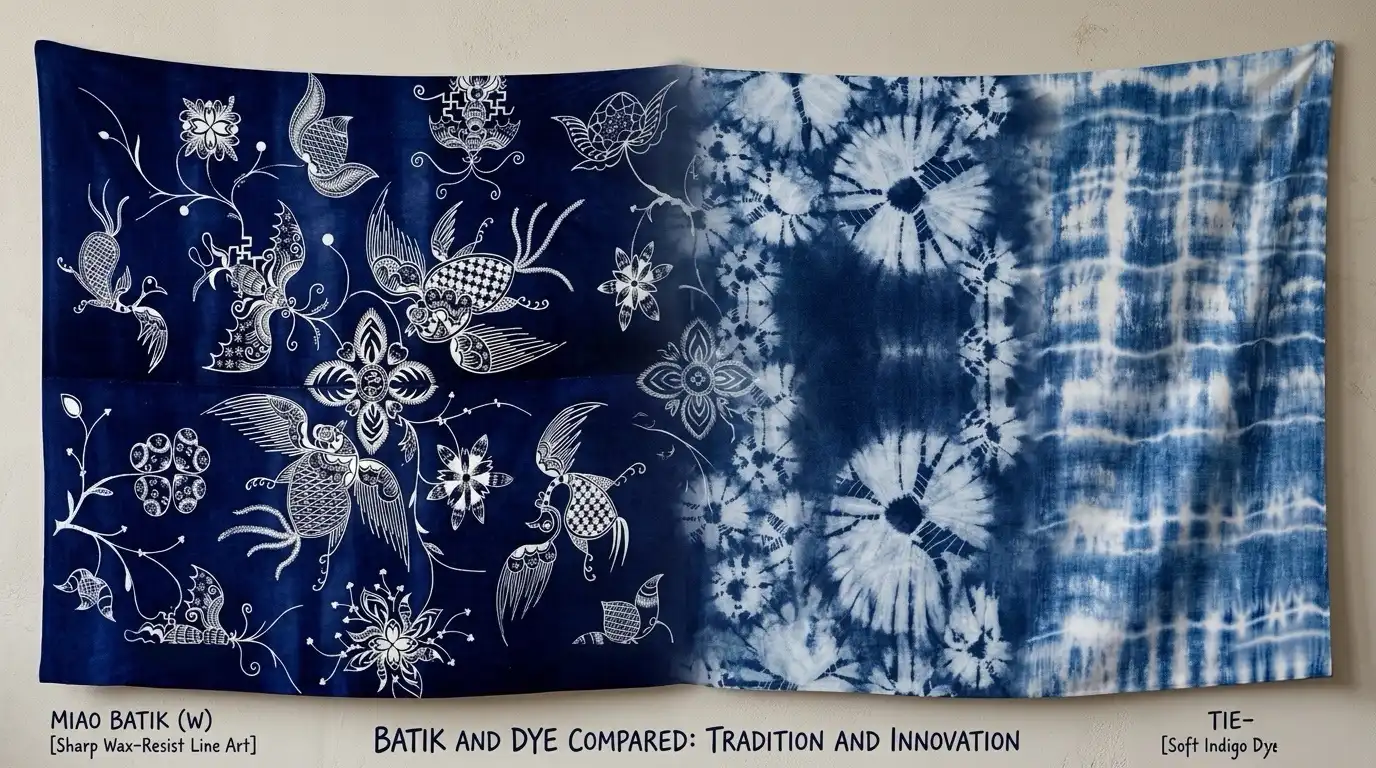
Batik
- Uses wax to block dye
- Creates crisp lines and motifs
- Offers more pattern control
- Often carries regional or symbolic meaning
Tie Dye
- Uses folding, tying, twisting, or binding
- Creates soft, flowing patterns
- Allows more surprise in the result
- Works well for beginner DIY projects
Wax Resist and Fold Resist Produce Different Results
Batik and tie dye both keep dye away from selected parts of a fabric. The difference between batik and tie dye lies in the method used to create that resistance.
What Is Batik?
Batik is a wax-resist dyeing technique. Wax is applied before dyeing, so the protected areas resist color and remain lighter or keep their previous color.
Because wax can be drawn, stamped, brushed, layered, or repeated, batik is especially suited to detailed motifs, borders, symbols, and controlled pattern placement.
What Is Tie Dye?
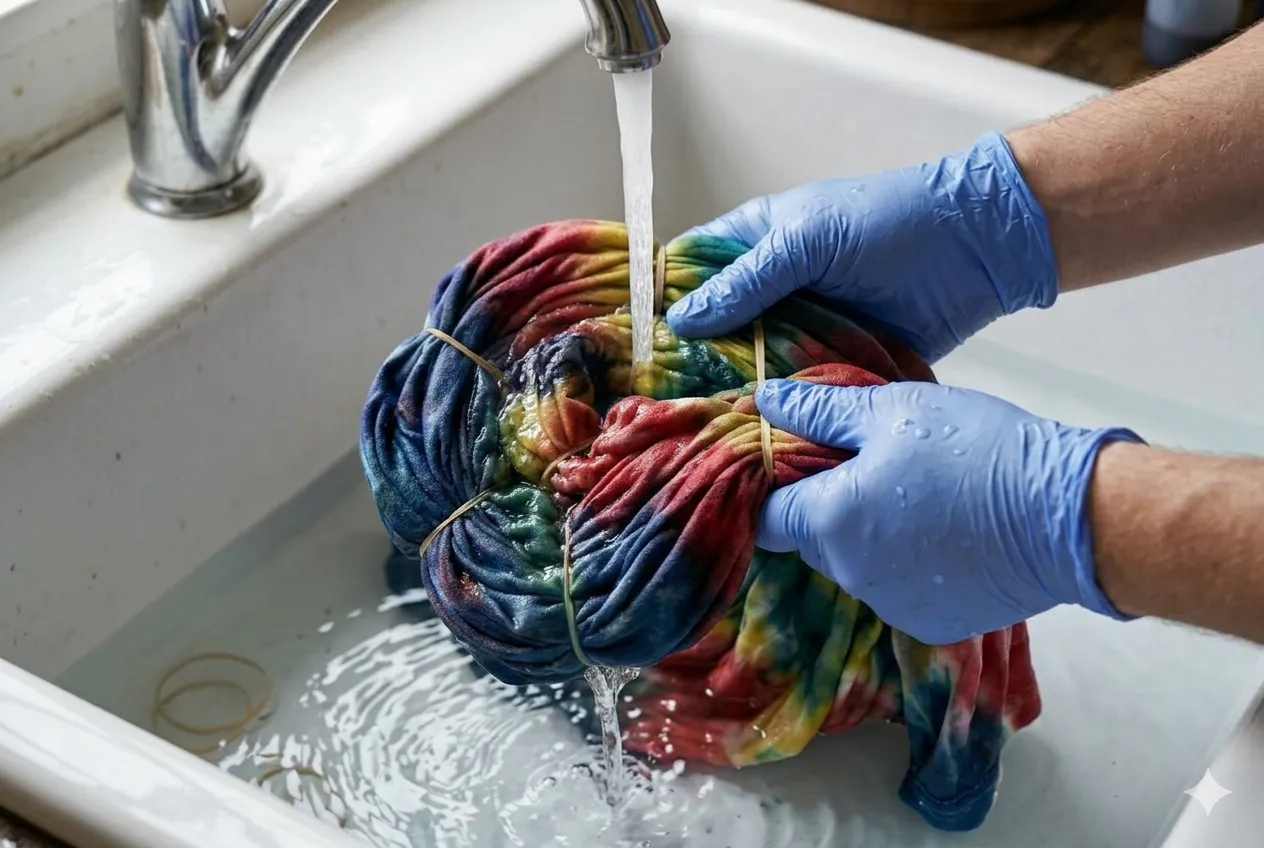
Tie dye is a resist-dyeing method that uses folding, twisting, tying, binding, stitching, scrunching, or clamping to limit where dye can reach.
The pattern comes from the shape of the folded fabric and the movement of dye through it. This often creates soft transitions, irregular edges, rings, spirals, stripes, clouds, or bursts.
Main Differences Between Batik and Tie Dye
The batik vs tie dye difference becomes clearest when technique, pattern control, tools, difficulty, and typical uses are compared side by side.
Wax is drawn, stamped, or brushed onto fabric before dyeing.
Fabric is folded, twisted, tied, stitched, scrunched, or clamped before dyeing.
Crisp lines, detailed motifs, repeated symbols, borders, and planned shapes.
Soft edges, gradients, spirals, clouds, bursts, stripes, and abstract patterns.
Higher control over motifs, outlines, repetition, and placement.
Medium control. The fold can be planned, but dye movement still adds variation.
Usually more advanced because wax temperature, application, layering, and removal take practice.
Usually easier for beginners because basic patterns need fewer tools and less precise control.
Wax, heat source, brush, stamp or canting-style tool, dye, and fabric.
Fabric, dye, gloves, rubber bands or string, bottles or dye bath, and a rinsing area.
Heritage textiles, scarves, decorative fabric art, symbolic motifs, and cultural gifts.
T-shirts, casual fashion, family crafts, home DIY projects, and one-of-a-kind color experiments.
Best when you want a slower craft process and are comfortable learning wax tools.
Best when you want faster results, fewer tools, and a forgiving first project.
How to Tell Batik from Tie Dye by Looking at the Fabric
Visual clues often reveal the process. Batik usually looks controlled and motif-based. Tie dye usually looks softer and more shaped by fabric movement.
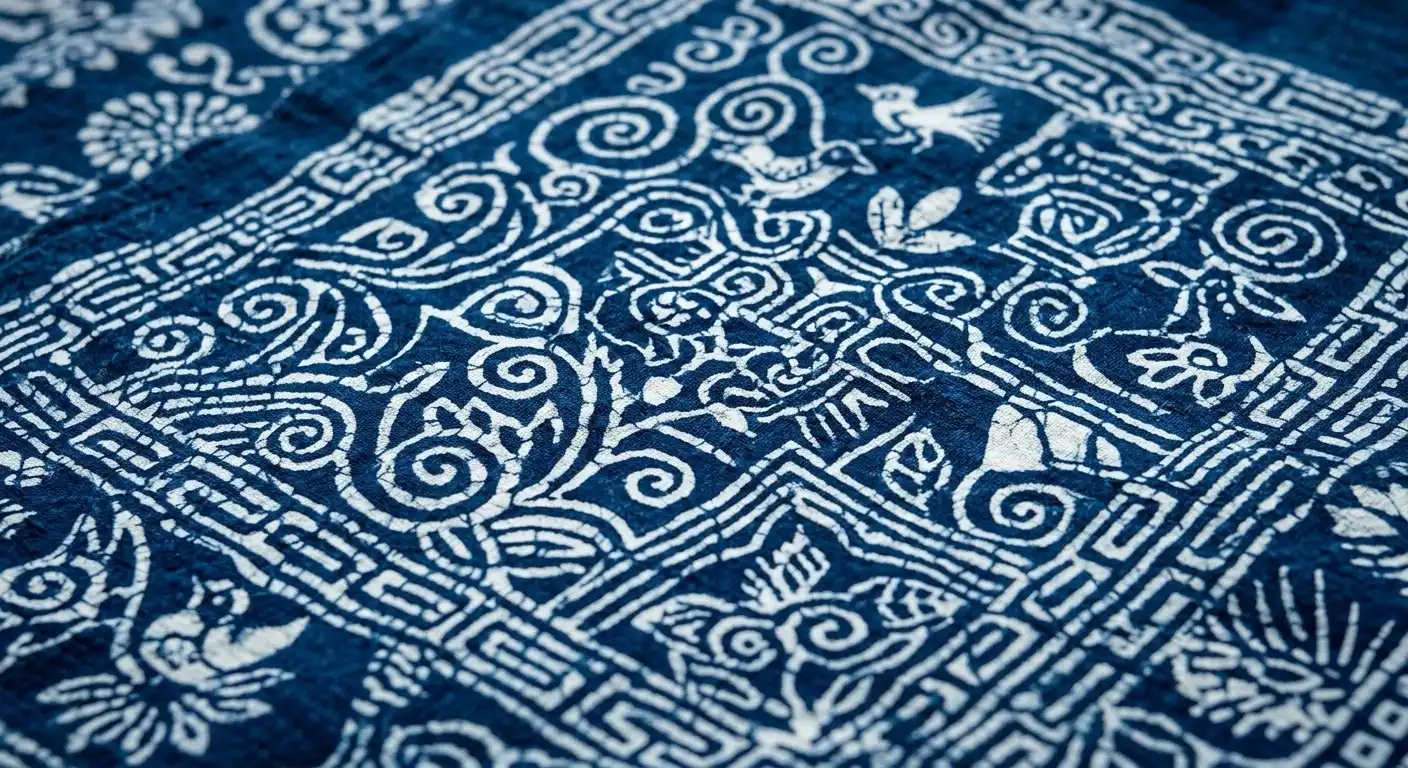
Batik visual clues
- Crisp edges: wax creates cleaner boundaries.
- Motifs: flowers, animals, spirals, borders, or symbolic forms.
- Repeated structure: the pattern often looks planned.
- Fine line work: hand-drawn or stamped wax can create detailed marks.
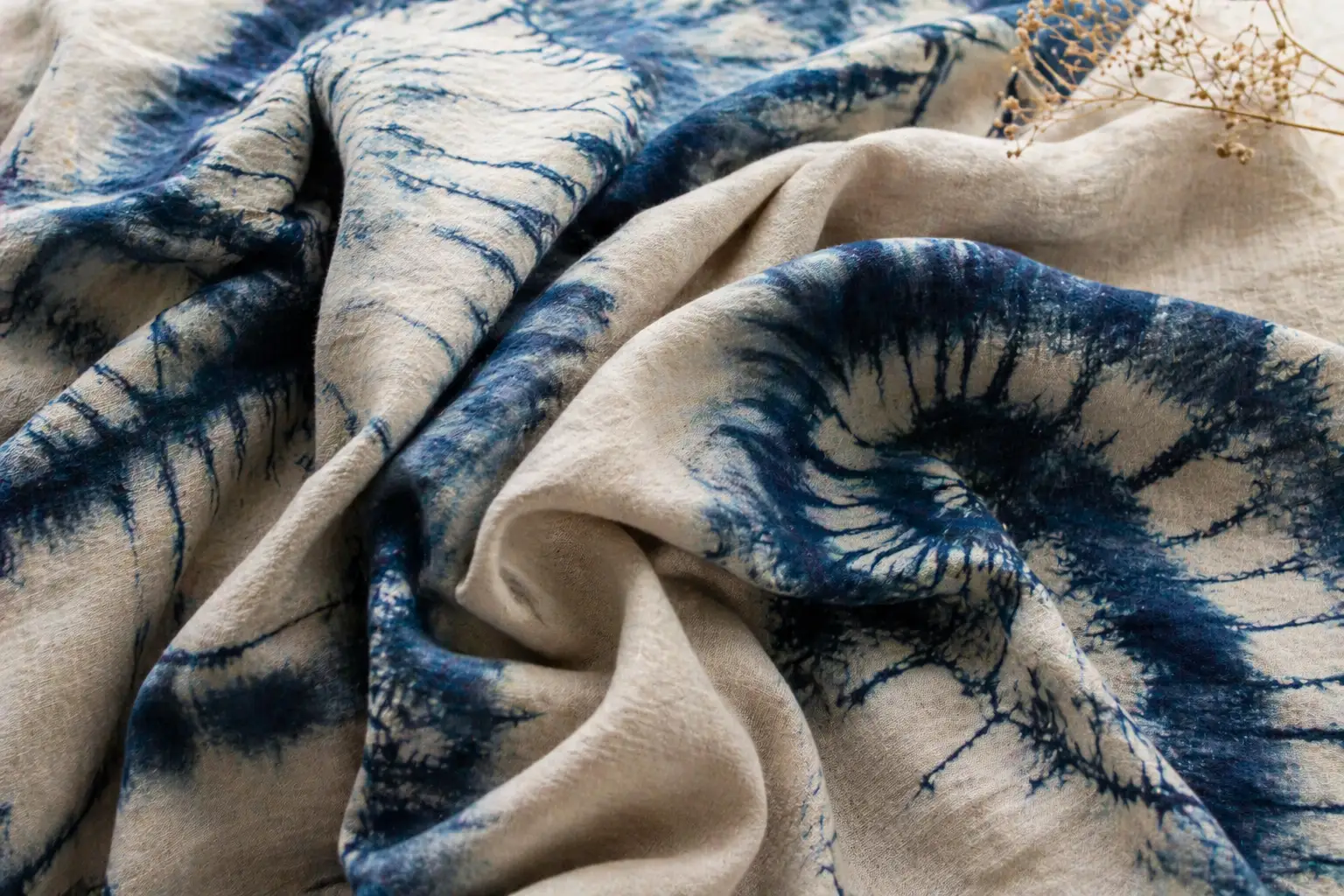
Tie dye visual clues
- Soft transitions: colors often blend gradually.
- Fold marks: rings, stripes, bursts, spirals, or clouds.
- Irregular shapes: each result often looks unique.
- Casual energy: the pattern usually feels more experimental.
Should You Choose Batik or Tie Dye?
The right choice depends on whether you want detailed design control, an easy first project, or a textile with stronger cultural and gift context.
Choose batik for detail
Batik is better for planned motifs, decorative panels, scarves, symbolic patterns, and projects where line placement matters.
Choose tie dye for easy DIY
Tie dye is better for beginners, family projects, T-shirts, casual experiments, and fast hands-on results.
Choose by learning style
Batik rewards patience and control. Tie dye rewards experimentation. For a simpler starting comparison, see the beginner batik vs tie dye guide.
Not sure whether a batik textile is handmade or printed? Check the reverse side, wax crack lines, dye depth, repeated motifs, and seller information.
Check batik authenticityChinese Batik and Tie Dye Traditions
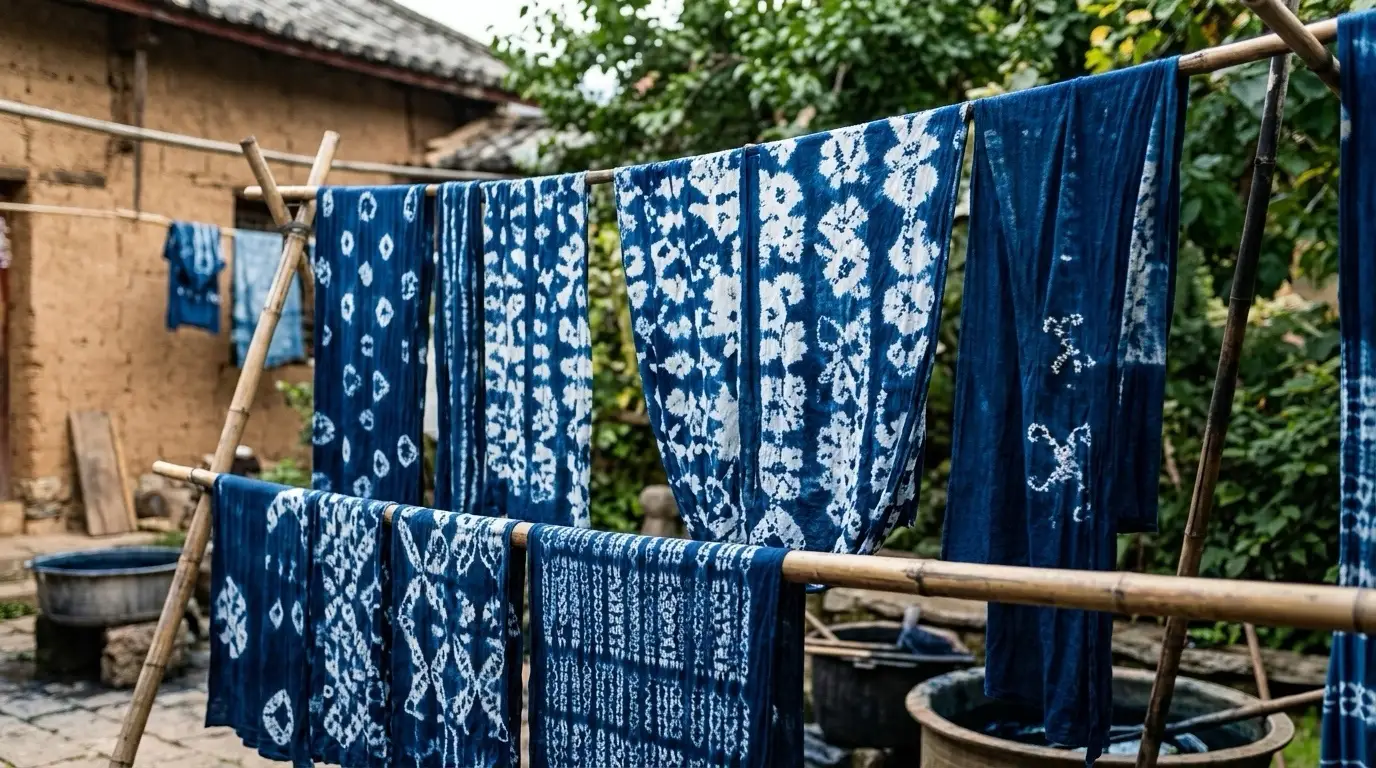
In China, wax-resist dyeing and indigo-based tie-dye traditions are connected with regional identity, ethnic textile culture, and inherited craft knowledge.
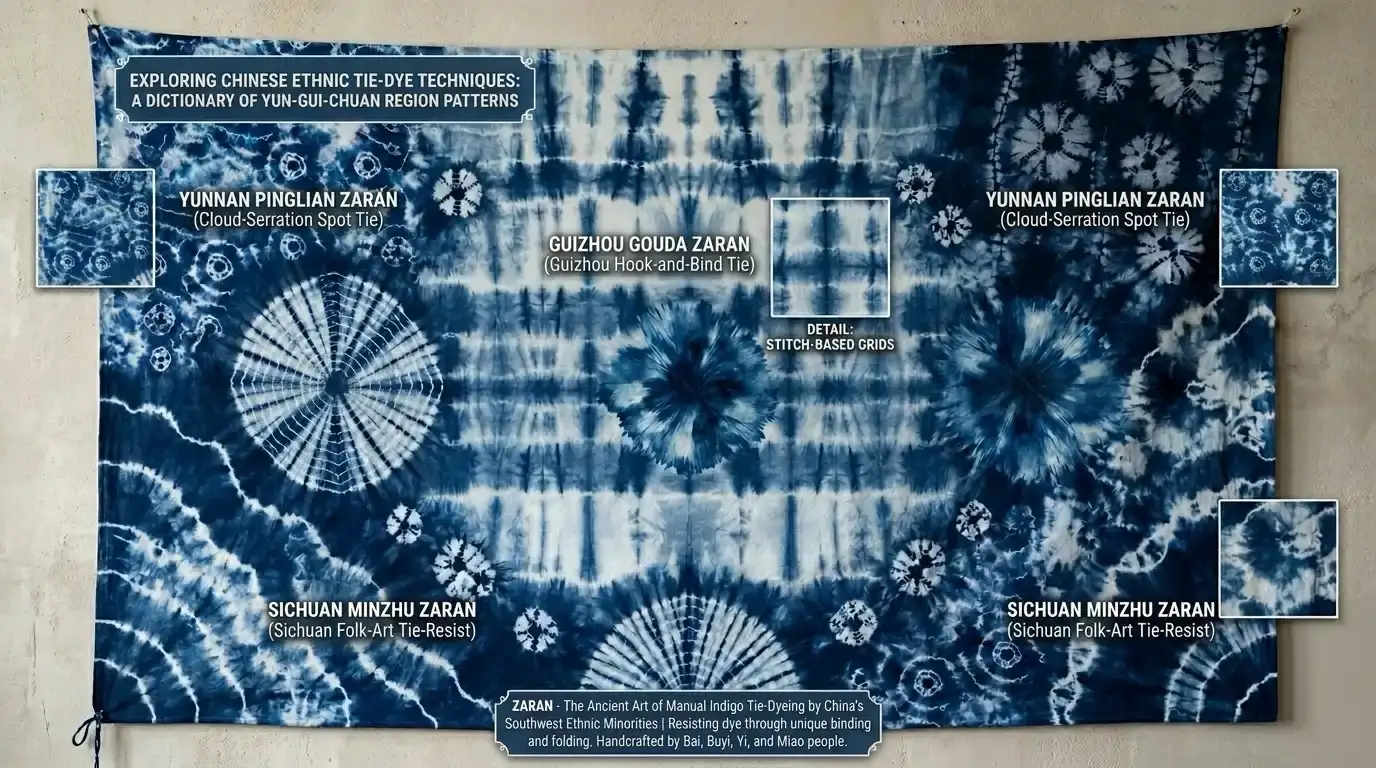
Why the Chinese context matters
Comparing batik and tie dye only as craft techniques misses part of the story. In regions such as Guizhou and Yunnan, resist-dye textiles may carry local memory, family practice, ethnic identity, and specialized handmade skill.
Continue with traditional Chinese crafts or explore Chinese tie dye and Dali Bai indigo craft.
Miao batik
Wax-resist line work, hand-drawn motifs, and regional pattern language.
Natural indigo
Traditional indigo textiles often show layered blue depth and handmade variation.
Dali Bai tie dye
Folding, binding, stitching, and indigo dyeing shape the finished pattern.
Gift value
Process and cultural background can make a resist-dyed textile more meaningful.
Batik vs Tie Dye Difference FAQ
These answers cover difficulty, tools, fading, sustainability, mixed techniques, and the basic definition of resist dyeing.
Is batik harder than tie dye for beginners?
Usually, yes. Batik requires wax application, heat control, pattern planning, and wax removal. Tie dye is more forgiving because a beginner can create a visible result with simple folding, tying, and dyeing.
Can batik be done without traditional tools?
Simplified batik-style projects exist, but traditional batik normally uses wax, brushes, stamps, or a canting-style tool for controlled lines.
See Britannica’s batik overview for a general technical definition.
Do batik and tie dye fade easily?
Either can fade if the dye is poorly fixed or the fabric is washed aggressively. Use cool water, gentle detergent, and separate washing for fresh dyed fabric. See how to wash tie dye without ruining color.
Which technique is more eco-friendly?
It depends on the dyes, wax, water use, fabric, energy use, and waste handling. Natural materials do not automatically make a process sustainable, and synthetic materials do not automatically make it irresponsible.
Read Is Tie Dye Eco-Friendly? for a related fabric-dye guide.
Can batik and tie dye techniques be combined?
Yes. A maker may combine wax resist with folds, bindings, or layered dyeing. The main challenge is keeping the batik motif readable while allowing tie-dye movement to add color variation.
Is tie dye a resist-dyeing technique?
Yes. Tie dye uses folds, ties, stitches, or pressure to prevent dye from reaching selected areas. See Britannica’s tie-dyeing overview.
Continue Through the Textile Guide Cluster
Continue with practical care, Chinese textile context, beginner comparisons, or handmade authenticity checks.
Batik Gives You Detail. Tie Dye Gives You Movement.
Use the difference to choose the right path: batik for planned, symbolic, and controlled pattern work; tie dye for flexible, beginner-friendly fabric projects.
Open the Tie Dye Guide
Find the next article for patterns, waiting time, washing, fading, mistakes, and safety.
Open guide →Find Cultural Gift Ideas
Use batik, tie dye, embroidery, and paper cutting as starting points for more meaningful gifts.
Open gift guide →Is Tie Dye Eco-Friendly?
Understand how dyes, water, materials, and washing affect environmental impact.
Read eco guide →Traditional Chinese Crafts
Place resist dyeing beside embroidery, paper cutting, ceramics, and other craft traditions.
Explore crafts →