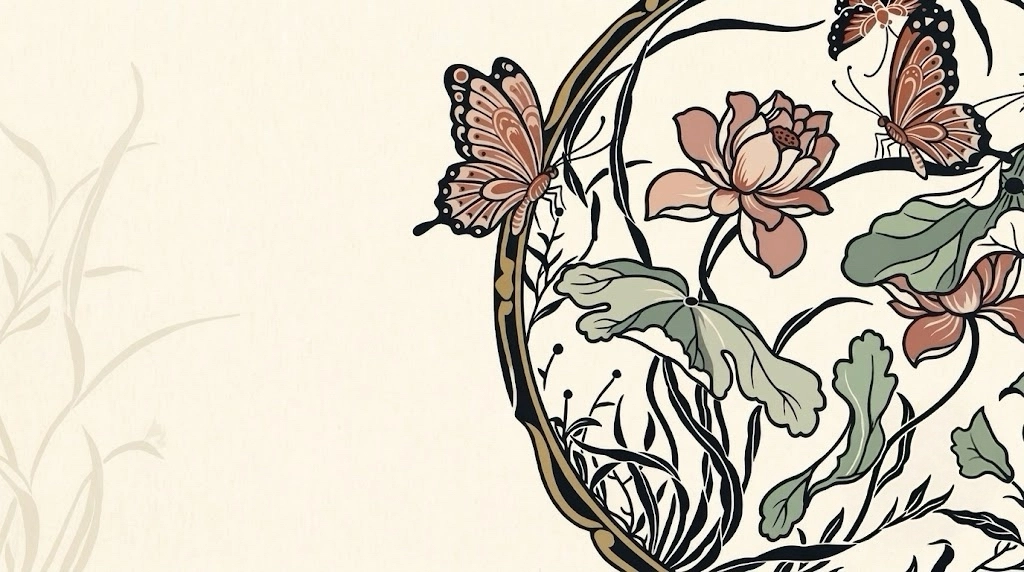
Chinese Butterfly Patterns: From Folk Art to Paper Cutting
Chinese butterfly patterns are more than decorative drawings of an insect. Across embroidery, ceramics, lacquerware and paper art, the butterfly often appears inside a larger world of flowers, leaves, curved stems and carefully shaped space. This visual language gives Chinese-inspired butterfly paper cutting patterns a character that ordinary butterfly outlines rarely provide.
What Makes a Chinese Butterfly Pattern Distinctive?
Unlike a simple butterfly template, a Chinese butterfly design is rarely defined by the outer wings alone. Its identity is created through the surface it occupies, the flowers and lines around it, and the atmosphere produced by visible forms and open space.
More Than an Insect Outline
The butterfly is often combined with flowers, leaves, borders or geometric ornament. These surrounding elements create movement, balance and a complete decorative setting.
Designed for a Surface
A motif may be arranged for a garment panel, a circular dish, a textile edge, a narrow border or a paper-cut composition. The surface helps determine the design.
Built Through Line and Space
Dots, curves, broad color fields, dark silhouettes and open areas work together. Empty space can be as active as the visible butterfly.
Focused on Atmosphere
Many patterns are less concerned with identifying a species than with suggesting a butterfly moving through flowers, leaves and an imagined natural setting.
Where Chinese Butterfly Patterns Appear and How Materials Shape Them
Butterfly motifs appear across many forms of Chinese decorative art. The same visual idea changes when it is stitched into cloth, painted on a curved vessel, placed on a lacquered object or rebuilt as connected cut paper.
Embroidery and Textiles
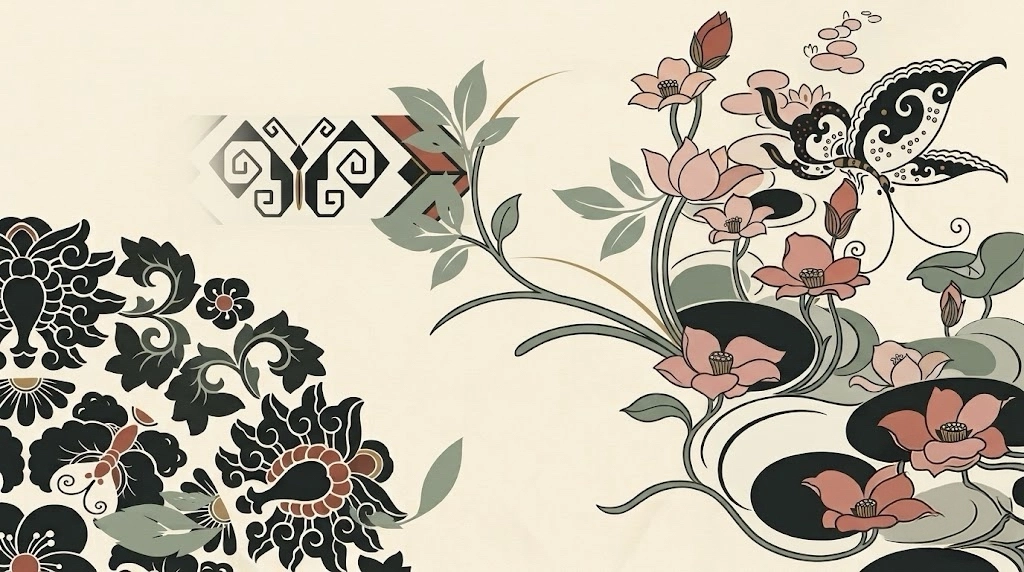
Embroidery gives the butterfly a richly worked surface. Colored thread can divide the wings into petals, spirals, dots and repeated bands, while contrasting edges keep the silhouette readable.
On garments and textile panels, butterflies may appear alone, in pairs, beside flowers or as part of an all-over pattern. Their position responds to seams, borders and the direction of the fabric.
In textiles, the butterfly becomes part of a wider system of rhythm, color and repeated ornament.
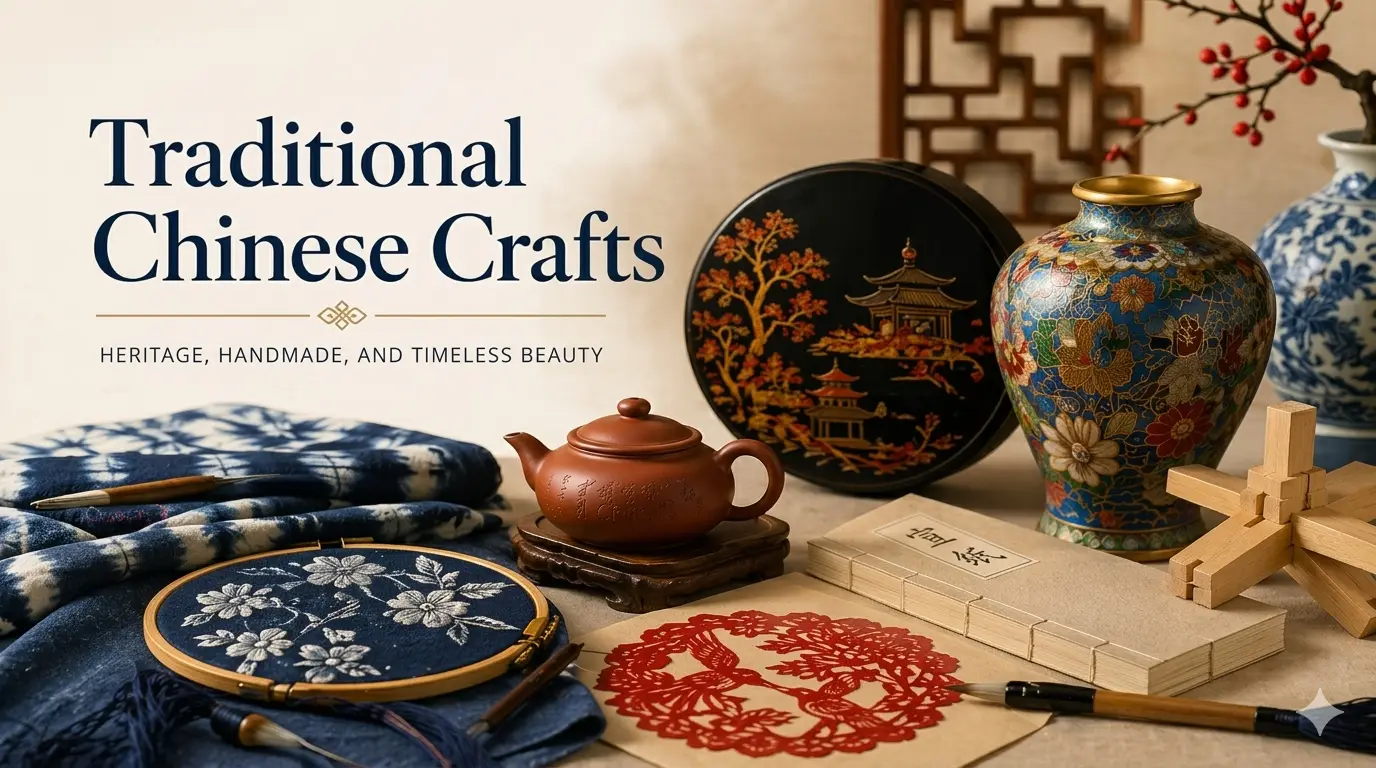
Similar relationships between material and ornament appear throughout other traditional Chinese crafts.
Ceramics and Enamel
On a plate, bowl or vase, a butterfly must respond to the shape of the object. A central motif on a round dish behaves differently from one moving around a bottle.
Open porcelain can suggest air and distance, while enamel supports stronger color separation and denser ornamental detail.
The vessel determines whether the pattern circles, rises, wraps or settles into a central composition.
Lacquerware and Personal Objects
Lacquered surfaces often use strong contrast, polished depth and tightly controlled ornament. A butterfly may appear as painted decoration, inlay or even as the silhouette of an object.
On a compact item, wing divisions and floral details must remain readable without overwhelming the form.
Dark grounds and bright details can give a small butterfly motif unusual visual intensity.
Paper Cutting and Printed Surfaces
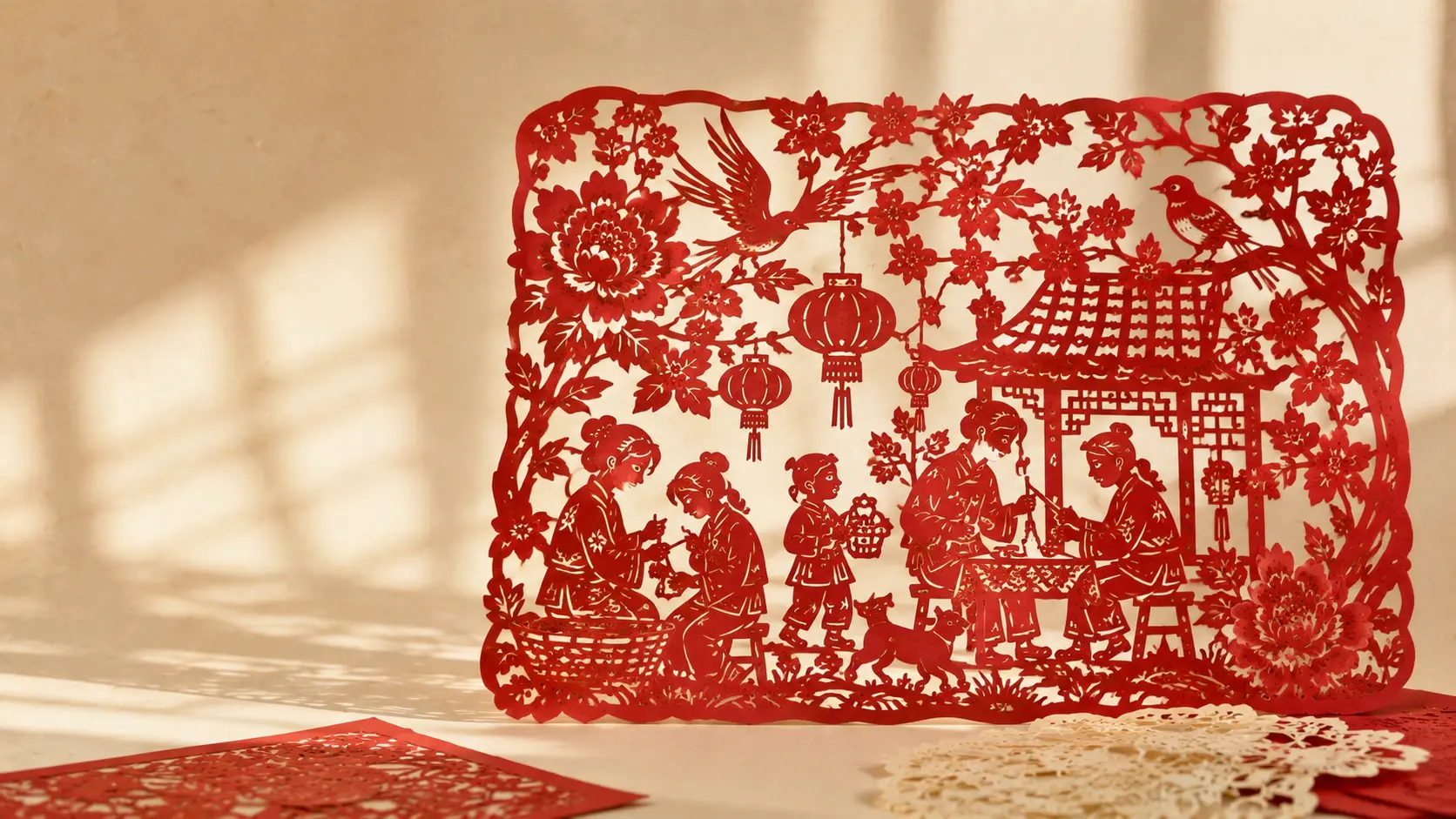
Paper changes the butterfly from an image into a physical structure. A painted line can be extremely thin, but a cut-paper line must remain connected and strong.
A wing vein may become a bridge, a flower center may become an opening, and a leaf may connect separate parts of the composition.
The material does not merely carry the motif. It changes the way the motif must be built.
Butterflies and Flowers as One Decorative Language
Chinese butterfly motifs are often combined with flowers, leaves, fruit, curling stems or garden-like elements. This is not simply because both subjects are attractive. Each element performs a visual function.
The butterfly introduces movement. Its wings can point upward, turn toward a flower or lead the eye across the composition. Flowers create visual weight and establish a place for that movement to occur.
Stems and leaves connect separate elements. A curved branch can link the flower group to the butterfly, soften strict symmetry and guide the viewer through the scene.
The shapes also echo one another. A butterfly wing may resemble a petal, a curled antenna can repeat the curve of a stem, and a lower wing may follow the direction of a leaf.
Symbolic associations vary according to the object, accompanying motifs, region and historical context. The most consistent visual principle is the relationship between the butterfly and its environment.
Four Ways Chinese Butterfly Patterns Are Organized
One butterfly can behave very differently depending on how it occupies a surface. Four structures help explain the difference between a single motif, a repeated field, a shape-specific composition and a continuous border.
Independent Butterfly Motifs
An independent motif reads as one complete unit. It may contain one butterfly, a balanced pair or a butterfly combined with a compact group of flowers and leaves.
The silhouette remains clear and does not depend on a continuous background. Slight asymmetry can add movement without disturbing the overall balance.
All-Over Ground Patterns
In an all-over pattern, butterflies, flowers and leaves repeat across a broad surface. The eye moves through changing directions and areas of different density rather than one dominant center.
Repetition creates unity, while variations in scale, spacing and orientation keep the surface from becoming mechanical.
Shape-Adapted Compositions
A shape-adapted composition is planned for a particular outline, such as a circle, fan, corner, vertical panel or curved vessel.
The butterfly, flowers and stems are arranged from the beginning to fit the space rather than being cropped afterward.
Borders and Repeating Bands
Borders arrange motifs along a line. Butterflies may alternate with flowers, sit between geometric units or become simplified until the wings form a continuous rhythm.
Narrow formats usually require stronger silhouettes and fewer internal details than independent motifs.
The Visual Language of Chinese Butterfly Patterns
The character of a butterfly pattern is not determined only by the subject. Point, line, shape, empty space and color transform a recognizable insect into a decorative composition.
Point
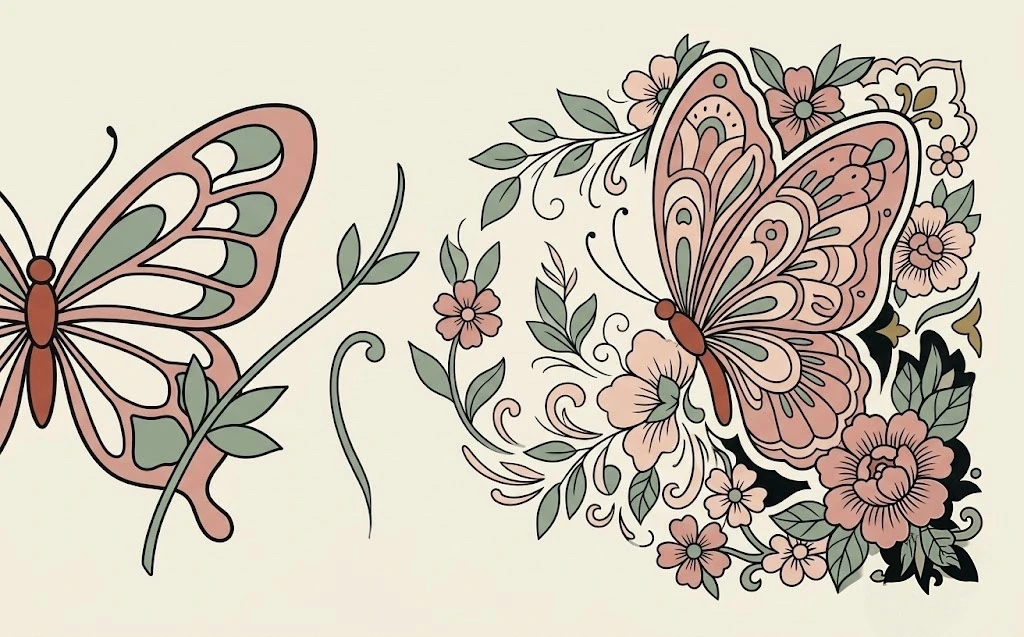
Dots and small circular forms can represent wing markings, flower centers, seeds or visual pauses. Dense groups create weight and texture, while isolated points create openness.
In paper cutting, a point may become a small opening or a connected solid circle. Its position must be planned so it does not become an unsupported fragment.
Line
Lines define antennae, wing divisions, stems, curls and movement. They may become cloud-like curves, scalloped bands or repeated waves rather than copying natural anatomy exactly.
A strong decorative line can describe form, connect elements and direct the eye at the same time.
Shape
Broad shapes give a complex design stability. A dark outer wing can contain smaller pale sections, while flowers and leaves can echo the shapes inside the wings.
Flat color areas often replace realistic shading, creating a clearer system of petals, bands and ornamental divisions.
Positive and Negative Space
In black-and-white design, visible paper and open areas work together. Empty space inside a wing can form petals, curves or floral openings rather than functioning as passive background.
Too much solid paper makes a design heavy. Too many small openings make it fragile. Strong patterns balance stable forms with detailed areas that allow the image to breathe.
Black, White and Color
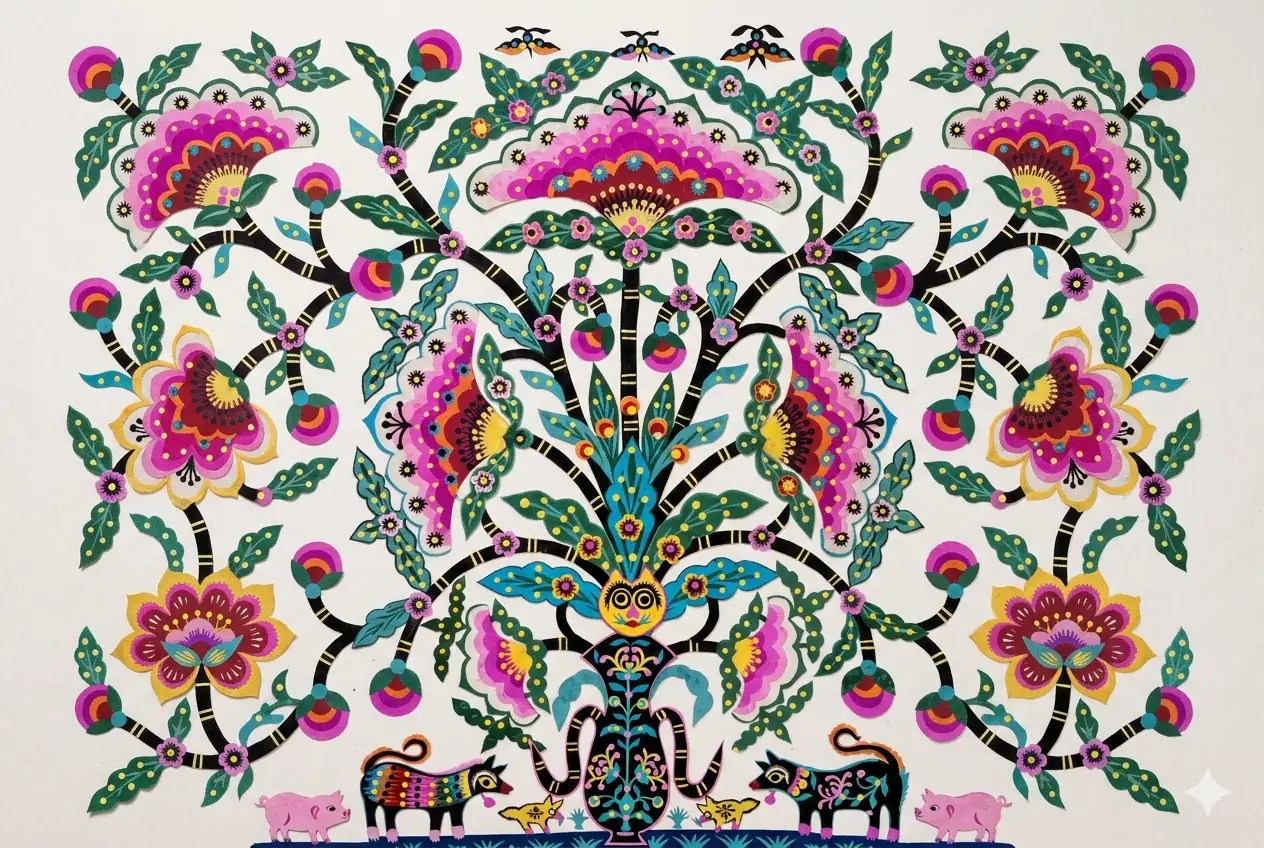
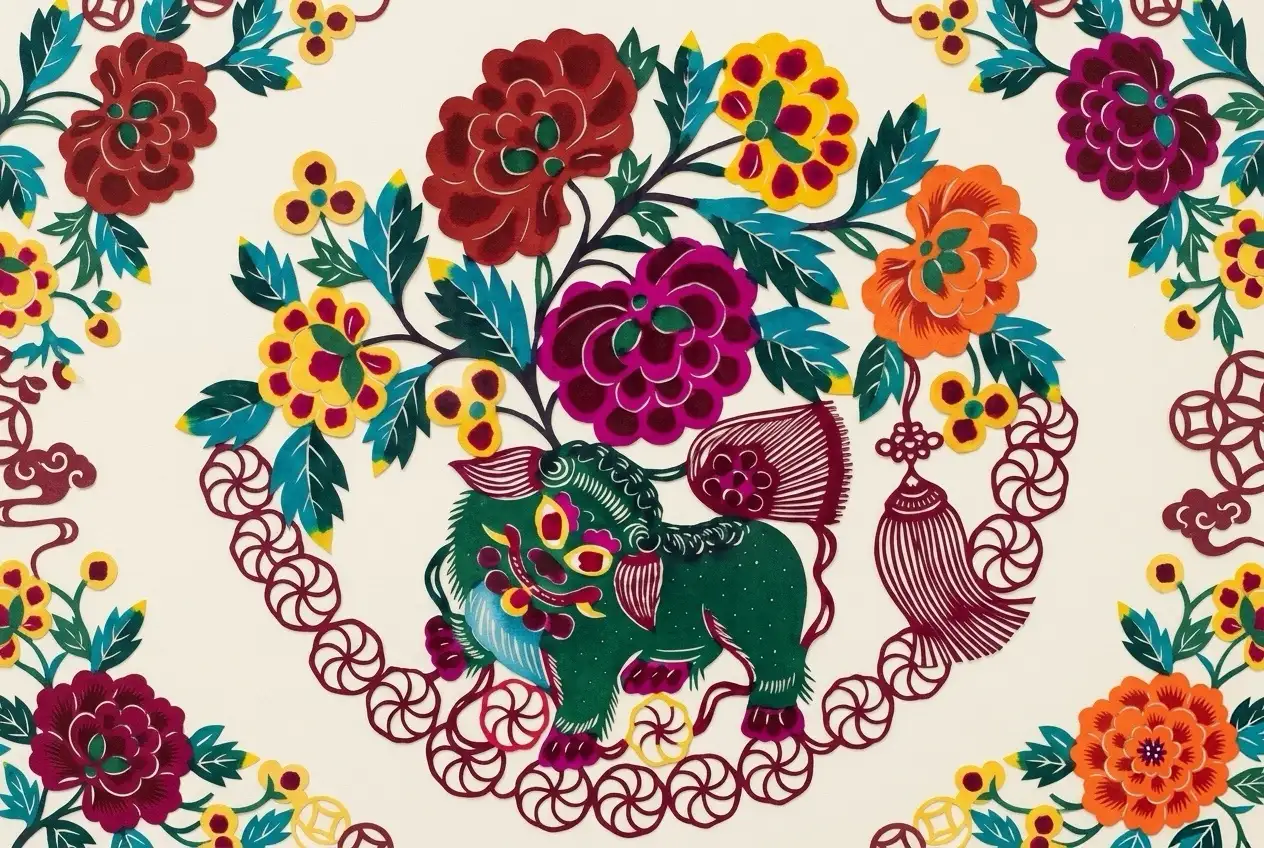
Black-and-white designs emphasize silhouette, connected cutwork and internal space. Colored designs introduce another level of organization through thread, glaze, enamel or layered paper.
There is no single fixed palette for Chinese butterfly motifs. Color changes with material, region, object and artistic purpose.
A Chinese butterfly pattern may be less concerned with describing a species than with creating a world around the butterfly.
Creating a Poetic Atmosphere
A decorative butterfly does not always try to identify a particular species. Its purpose may be to suggest a butterfly turning toward a flower, pausing among leaves or moving through an imagined garden.
A tilted wing suggests motion. A flower leaning in the opposite direction creates balance. A curved stem draws the viewer into the composition, while empty space allows the butterfly to feel suspended rather than fixed.
The viewer may imagine more flowers beyond the border or another butterfly outside the frame. This mood comes from balancing movement and stillness, detail and openness, symmetry and variation.
From Traditional Motif to Contemporary Paper Art
Adapting a traditional decorative language does not mean copying an old pattern line by line. The process begins by observing how the wings are divided, where the design becomes dense, where it leaves space and how flowers connect to the butterfly.
The essential silhouette can then be separated from secondary detail. Crowded lines may be simplified, broken curves rebuilt and flowers repositioned so they support the butterfly instead of competing with it.
Symmetry can also be adjusted. The overall butterfly may remain balanced while the internal ornament varies from one wing to the other. Color can move from thread, glaze or lacquer into flat paper layers.
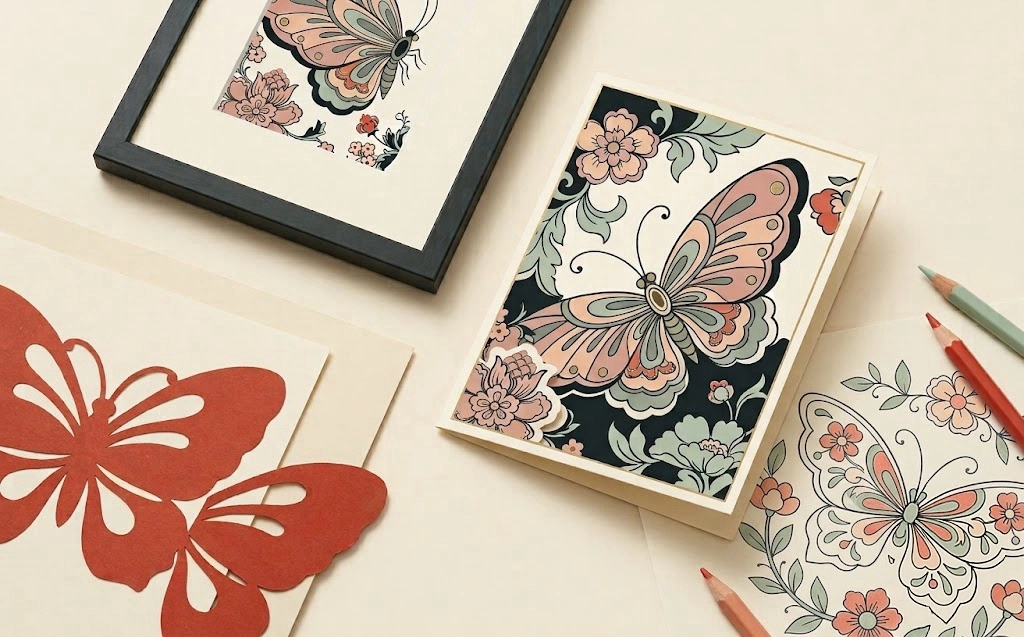
A circular vessel composition can become framed wall art. A textile border can become a card edge. An independent butterfly motif can become a paper-cut centerpiece.
These Chinese paper cutting ideas work best when the relationships between line, flower, wing and space remain coherent. Adding random ornament to a generic butterfly outline does not create cultural depth.
From Decorative Motif to Butterfly Paper Cutting Pattern
A decorative image becomes usable paper art only after its lines, connections, openings and colored layers have been adjusted for the physical behavior of paper.
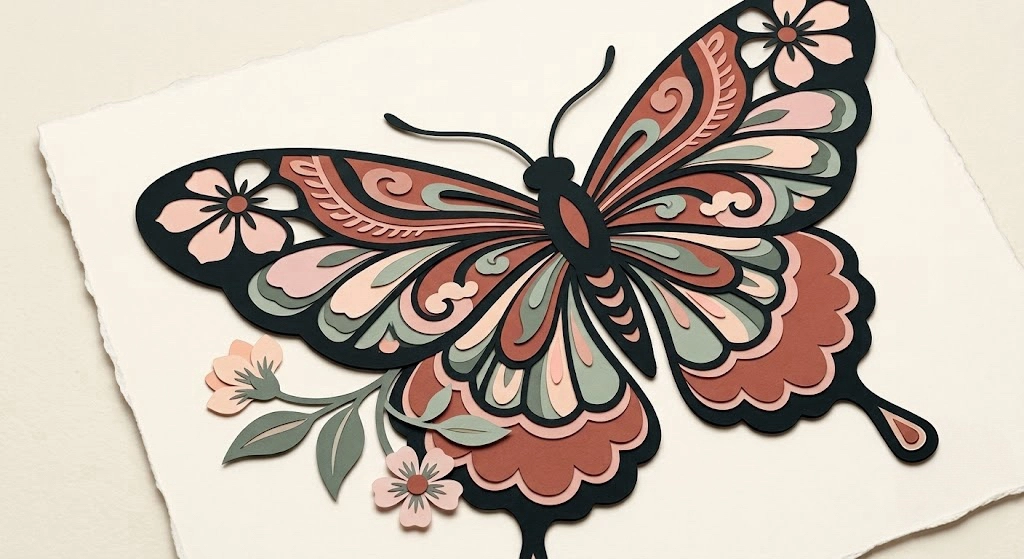
A beautiful decorative image is not automatically a workable paper-cutting pattern. The body must connect securely to both pairs of wings, and antennae or narrow wing tips must remain strong enough to survive cutting and handling.
Details that work in embroidery or painted decoration may be too thin for paper. Some lines need to become wider bridges, while dense areas may need larger openings.
Small detached ornaments cannot remain as unsupported islands. They must be removed, joined to a structural bridge or placed on a separate colored layer.
This structural editing reflects the foundations of Chinese paper cutting. Black-and-white designs rely on connected cutwork, while colored designs can divide the motif into overlapping layers.
Studying traditional Chinese paper cutting patterns also shows how solid paper and open spaces can work together as one stable image.
A Contemporary Collection of Chinese-Inspired Butterfly Patterns
A coordinated butterfly collection can explore more than one silhouette. It may include independent butterflies, flower-and-butterfly compositions, circular medallions, shape-adapted designs, repeating arrangements, decorative borders and layered artwork.
Variation comes from composition as well as detail. One design may emphasize a strong wing outline, another may place the butterfly inside a flower group, and a third may adapt the motif to a circular or vertical space.
Together, these butterfly paper cutting patterns show how one decorative language can move between traditional visual ideas and modern creative applications.
- Independent motifs
- Flower-and-butterfly designs
- Circular medallions
- Vertical compositions
- Decorative borders
- Layered paper art
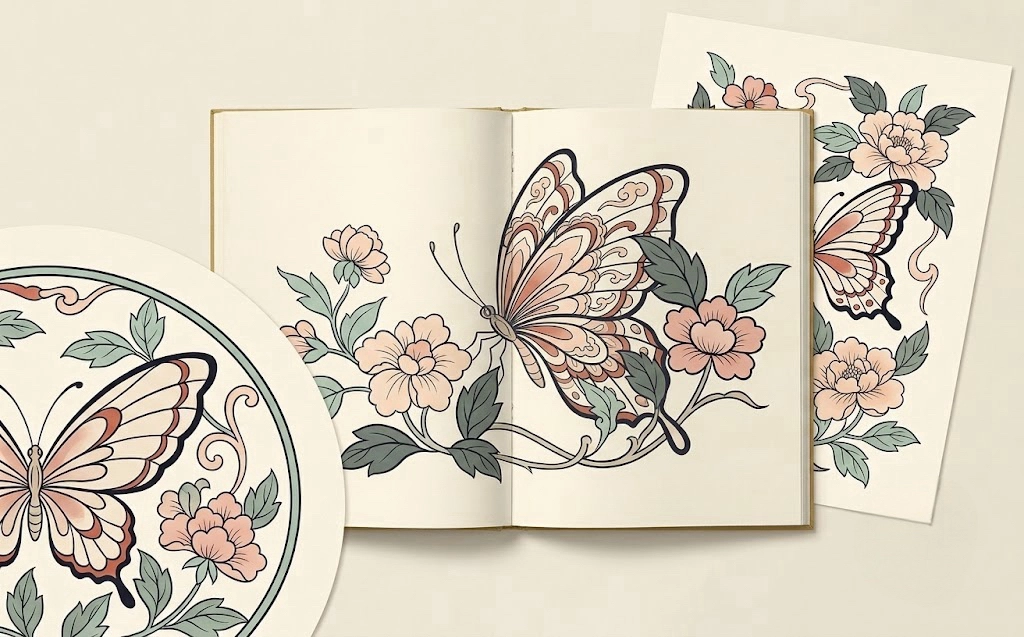
Explore the Chinese-Inspired Butterfly Collection
Discover coordinated ornamental butterfly designs developed through floral composition, pattern structure and contemporary paper-art applications. The collection offers a more distinctive direction than isolated generic butterfly outlines.
Frequently Asked Questions
Where do butterfly motifs appear in Chinese decorative art?
Why are butterflies often combined with flowers in Chinese patterns?
What is the difference between an independent motif and an all-over butterfly pattern?
Are Chinese butterfly patterns always symmetrical?
Why do some Chinese butterfly designs use black and white while others use color?
Can traditional butterfly motifs be adapted into butterfly paper cutting patterns?
Related Reading
Explore the wider craft traditions, visual structures and modern project ideas connected with Chinese paper cutting.